


Stay Cool at Night: Stack Three No AC Tactics You Can Use Tonight
To stay cool at night without central air, stack three levers at once: move air, block daytime heat, cool your own body, then finish with breathable bedding that lets sweat evaporate instead of pooling. Tonight, that means cross-breeze fans, a lukewarm shower an hour before bed, a frozen water bottle at your feet, and cotton or linen sheets instead of polyester. Linen and hemp sleepwear can carry that moisture-wicking effect straight onto your skin.
TL;DR:
- Using cross-breeze fans and closing blinds during peak heat can reduce room temperature by several degrees without air conditioning.
- Humid climates diminish evaporative cooling techniques, while dry areas enhance their effectiveness, making climate a key factor in method selection.
- Opting for breathable bedding like linen or hemp, and sleeping in loose, moisture-wicking sleepwear, significantly improves comfort in hot conditions.
- Memory foam mattresses and pillows trap heat; upgrading to gel-infused or latex options can improve airflow and reduce night sweating.
- Structural improvements such as reflective window film, exterior shading, and attic ventilation provide long-term relief from heat buildup.
Table of Contents
- What Should You Try First to Sleep Cooler Tonight?
- Move Air Without Air Conditioning
- How Do You Keep Your Bedroom Cool During the Day?
- Fast Ways to Cool Your Body Before Sleep
- Which Bedding and Sleepwear Actually Keep You Cool?
- Can Your Mattress or Pillow Be Making You Hotter?
- When Does Overheating at Night Need Medical Attention?
- Does Your Sleep Position Affect How Hot You Get?
- Should You Use a Dehumidifier to Sleep Cooler?
- Does What You Eat Before Bed Affect How Hot You Sleep?
- What Long-Term Upgrades Actually Reduce Bedroom Heat?
- Start With the Three-Lever Routine
- Why Breevar’s Linen and Hemp Sleepwear Belong in Your Cooling Routine
- Sources
What Should You Try First to Sleep Cooler Tonight?
Work through these in order. Each one buys you a few more degrees of relief, and together they add up fast.
- Close blinds and curtains now, even if it’s already dark. Trapped daytime heat radiates out of walls for hours.
- Set up two fans in a cross pattern — one pulling outside air in, one pushing room air out.
- Take a shower that’s warm, not hot, about 60 to 90 minutes before bed.
- Swap your top sheet for cotton or linen if you’re currently sleeping under polyester or a thick comforter.
- Freeze a water bottle or a damp sock and tuck it near your feet once you’re in bed.
If your climate is humid, skip anything relying on evaporation (damp sheets, ice-and-fan combos) since they barely work when the air is already saturated. In dry climates, those same tricks perform noticeably better. Avoid pointing a fan directly at your face all night if you have asthma, sinus issues, or dry eyes. It can worsen congestion and irritation by morning.
Move Air Without Air Conditioning
Fans don’t lower the temperature of a room. They speed up evaporation off your skin, which is why moving air feels cooler even when the thermostat hasn’t budged. That distinction matters for how you set them up.
A two-fan cross-ventilation setup works far better than one fan alone. Put one fan in a window blowing outward and a second fan in a different window (or doorway) pulling air in from outside. This creates an actual current through the room instead of just recirculating warm air. If you only have one window, aim a fan at it during the cooler overnight hours to pull in outside air, and switch it to exhaust mode by afternoon.
- A ceiling fan set to spin counterclockwise in summer pushes air downward for a wind-chill effect.
- Bouncing a fan’s airflow off a wall rather than blasting it directly at your body reduces dry-eye and sinus irritation while still moving air across the room.
- Placing a shallow bowl of ice or a frozen water bottle in front of a fan can drop the air a few degrees as it melts, though this only helps meaningfully in dry climates.
- Box fans in a window are noisier than tower fans but move far more volume, which matters more on the hottest nights.
Pro Tip: Run your cross-breeze setup for 20 to 30 minutes before you get in bed. It gives the room time to actually exchange its air, not just stir the same hot layer around.
How Do You Keep Your Bedroom Cool During the Day?
The caveman method, closing every blind and curtain the moment the sun hits your windows and keeping them shut until evening, is one of the simplest passive cooling habits you can build. It works because a huge share of daytime heat gain in a bedroom comes from direct solar radiation through glass, not from the air outside leaking in.
- Close curtains, blinds, or blackout shades on sun-facing windows by mid-morning and leave them shut through peak afternoon heat.
- Skip the oven, dryer, and dishwasher in the late afternoon. Any appliance that generates heat adds to what your bedroom has to shed later.
- Wait until evening or nightfall to open windows, once outdoor temperatures actually drop below indoor ones.
- Seal obvious gaps around windows and door frames where warm air seeps in during the day.
- Dry laundry outside or in a vented space instead of hanging it indoors. Wet fabric releases moisture into the air as it dries, and that added humidity makes evaporative cooling less effective all night.
Think of it as banking cool air during the hours you can’t feel a difference, so you’re not fighting an uphill battle by 10 p.m.
Fast Ways to Cool Your Body Before Sleep
A warm shower, not a cold one, roughly 60 to 90 minutes before bed is one of the most reliable tricks in hot-weather sleep guidance. The warm water dilates blood vessels near your skin, and as that heat radiates off you afterward, your core temperature drops right when your body needs it to start winding down for sleep.
- Time your shower for the 60 to 90 minute window before bed, not right as you’re climbing under the sheets.
- Press a frozen water bottle or a damp, chilled washcloth against pulse points, wrists, neck, and the inside of your ankles, for quick relief without soaking the mattress.
- Wrap frozen items in a thin towel first. Direct contact with bare skin for too long, or letting condensation drip onto your mattress, causes its own problems.
- Try the “one foot out” trick, letting a single foot stick out from under the sheet, since your feet regulate body temperature disproportionately well.
- The inverse hot-water-bottle hack (a bottle filled with ice water instead of hot water, placed at your feet) gives you targeted cooling that lasts longer than a frozen sock.
Which Bedding and Sleepwear Actually Keep You Cool?
Cotton percale, linen, hemp, and bamboo-viscose all outperform polyester and tight synthetic blends because they allow sweat to evaporate rather than trapping it against your skin, a point echoed across recent bedding and sleep coverage. Polyester traps moisture and heat, which is exactly what you don’t want when you’re already overheating.
Percale cotton has a crisp, matte feel and a tighter, plainer weave that breathes better than sateen, which is woven denser for a silkier, warmer drape. If you love the smoothness of sateen, save it for cooler months and switch to percale or linen for summer.
- Choose sheets and sleepwear in cotton percale, linen, or hemp over anything labeled “microfiber” or blended with polyester.
- Look at fabric weight, not just fiber type. A lightweight linen sheet in the 130 to 170 gsm range breathes far better than a heavy 300+ gsm cotton.
- Try breathable, moisture-wicking sleepwear instead of cotton T-shirts and shorts, which trap sweat once they’re damp.
- Chill your pillowcase in the freezer for five to ten minutes before bed for an instant, temporary cold surface.
Breevar’s men’s short-sleeve linen sleepwear and women’s linen sleepwear are both built around this same principle: loose weave, natural fiber, and a fit that doesn’t cling once you start sweating.
Pro Tip: If you’re not ready to replace your whole sheet set, start with a linen pillowcase and top sheet. Those two touch the most skin overnight and make the biggest felt difference for the smallest cost.
Can Your Mattress or Pillow Be Making You Hotter?
Memory foam is the biggest offender here. Its dense structure traps body heat instead of letting it dissipate, which is why so many people report sleeping hot on foam mattresses regardless of the room’s temperature.
- A perforated or gel-infused foam topper, or a natural latex topper, adds airflow channels that plain memory foam lacks.
- Full bed-climate systems that actively regulate mattress-top temperature are a bigger upfront cost, but they solve the problem for good rather than just for an hour or two.
- If a new topper isn’t in the budget yet, a breathable mattress protector and rotating your mattress seasonally both help in the short term.
- Cooling pillow inserts made from gel-infused foam or shredded latex resist heat buildup better than standard poly-fill pillows.
Toppers are the cheaper fix. A full mattress swap is the more permanent one, but it’s worth waiting on until you’ve tried the layers above it first.
When Does Overheating at Night Need Medical Attention?
Sip water through the evening instead of chugging a large glass right before bed, and skip alcohol and caffeine in the hours before sleep since both interfere with your body’s ability to regulate temperature overnight.
Occasional night sweats from heat are normal. Dizziness, fainting, or sudden, severe sweating that doesn’t match the room temperature is not, and it’s worth a call to your doctor rather than assuming the weather is to blame. Older adults, infants, and anyone on medications that affect sweating or heart rate should treat persistent overheating as a signal to check in with a healthcare provider, not just a comfort issue.
Does Your Sleep Position Affect How Hot You Get?
Sprawling out, what sleep specialists sometimes call the “starfish” position, exposes more of your skin surface to open air than curling up tight, and that alone can make a measurable difference on a hot night. Side sleeping with your limbs slightly apart from your torso gives sweat somewhere to evaporate instead of trapping it between skin surfaces.
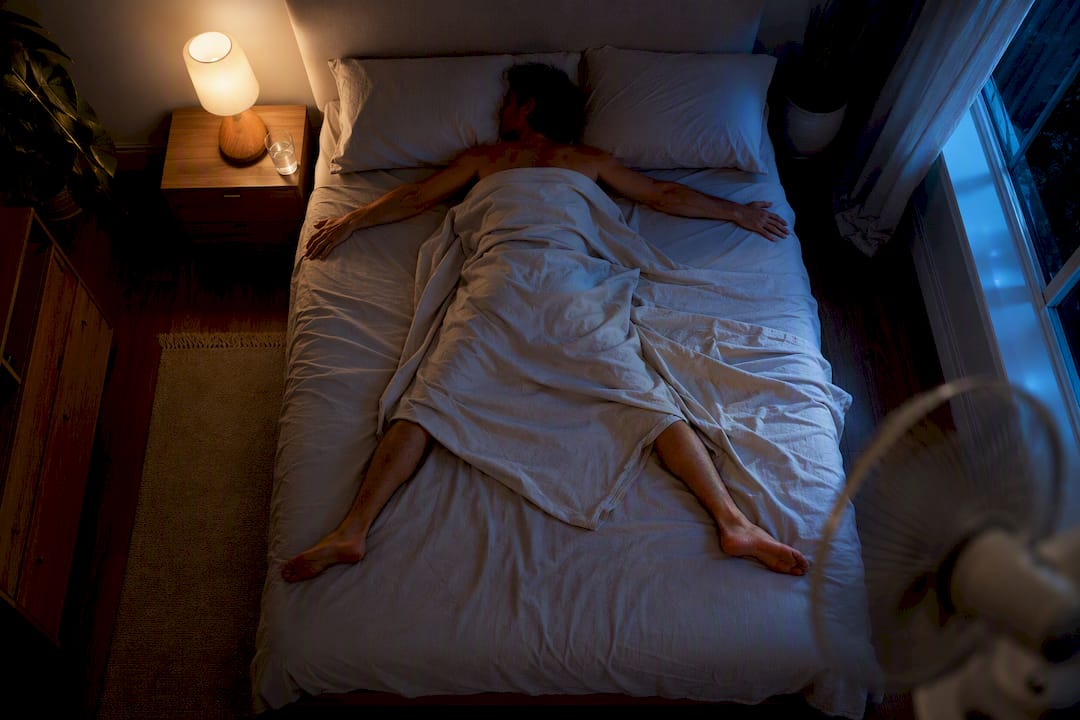
Stomach sleeping tends to run warmer for most people because more of your body is pressed flat against the mattress, cutting off airflow underneath you. If you’re a habitual stomach sleeper struggling with summer nights, try shifting onto your side with a pillow between your knees. It’s a smaller adjustment than it sounds and it opens up airflow along your back and legs.
Avoid sleeping in a tight fetal curl if you’re already running hot. Pulling your knees to your chest concentrates body heat in a smaller surface area and traps it there.
One underrated fix: switch which side of the bed you sleep on, or rotate your body 180 degrees, if one side of your room gets noticeably more airflow from a window or fan. People often default to the same sleep position out of habit long after their room’s airflow pattern has changed, whether from a new fan placement or a rearranged room.
If you sleep with a partner, consider a bigger mattress or even separate blankets. Shared body heat under one comforter is a bigger contributor to overheating than most couples realize, and it’s one of the easiest problems to solve without any new equipment.
Should You Use a Dehumidifier to Sleep Cooler?
Humidity is the hidden variable that makes hot nights feel unbearable even when the thermometer isn’t especially high. Sweat cools you by evaporating off your skin, and in humid air, that evaporation slows dramatically, which is why 78 degrees on a humid night can feel worse than 85 on a dry one.
A dehumidifier pulls excess moisture out of the air, which lets sweat evaporate more efficiently and makes fan-based cooling tactics actually work as intended. This matters most in coastal regions, basements, and any bedroom that already runs musty or damp. Running one for a few hours before bed, rather than all night, is usually enough to make a difference without adding noise you have to sleep through.
If a dehumidifier isn’t in the budget, moisture-absorbing products, silica gel packs, calcium chloride tubs, or charcoal bags placed in closets and corners, pull some humidity out of a small room over time. They’re slower and less powerful than a dehumidifier, but they’re near-silent and cost very little.
Avoid the opposite mistake in genuinely dry climates. Some people add a humidifier for comfort reasons and inadvertently sabotage their own evaporative cooling. If you live somewhere arid and rely on evaporative tricks like damp sheets or swamp coolers, skip the humidifier entirely; you want as much dryness as you can get for those methods to work.
Check your humidity level with an inexpensive hygrometer before investing in equipment.
Does What You Eat Before Bed Affect How Hot You Sleep?
Digestion generates heat. Your body’s metabolic rate rises after a meal to break down and process food, a process called the thermic effect, and that heat has to go somewhere, usually straight into making you feel warmer right as you’re trying to fall asleep.
Heavy, protein-dense, or spicy meals close to bedtime raise your core temperature more than a light meal does, and they raise it for longer. Spicy food specifically triggers capsaicin receptors that mimic a heat response in your body, which is genuinely counterproductive on a night when you’re already trying to cool down. If you love spicy food, shift it to lunch during summer months rather than dinner.
Alcohol feels like it cools you down initially because it dilates blood vessels near your skin, but that effect reverses within a couple of hours and tends to disrupt the deeper stages of sleep your body needs to actually regulate temperature overnight. Caffeine has a similar late problem: it raises heart rate and can delay the natural core-temperature drop your body needs to fall asleep in the first place.
Smaller, lighter dinners a few hours before bed, think a salad or light protein rather than a heavy pasta dish, give your body less digestive heat to manage right when you want to be cooling down. Cold or room-temperature foods and drinks in the evening also give you a small head start, since you’re not asking your body to warm anything up internally before it can start cooling off.
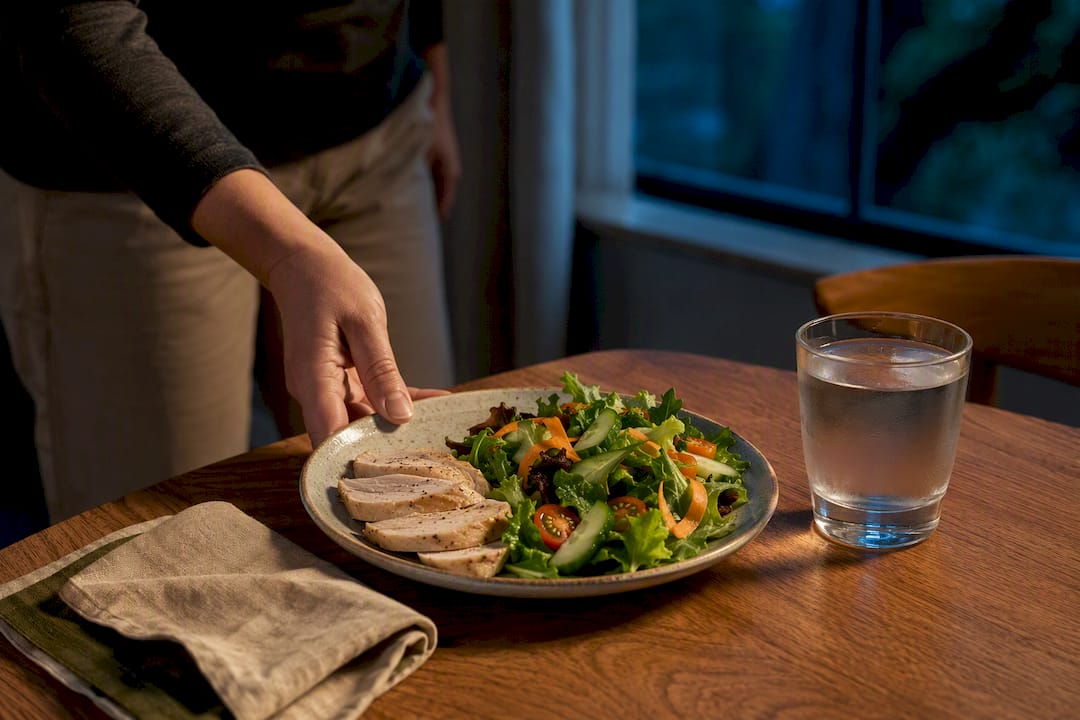
Timing matters as much as content. Eating your last substantial meal three to four hours before bed gives your digestive system time to do most of its heat-generating work before you’re actually trying to fall asleep.
What Long-Term Upgrades Actually Reduce Bedroom Heat?
Nightly hacks only go so far if your bedroom is architecturally built to trap heat. A few structural changes pay off across every hot season rather than just one bad week.
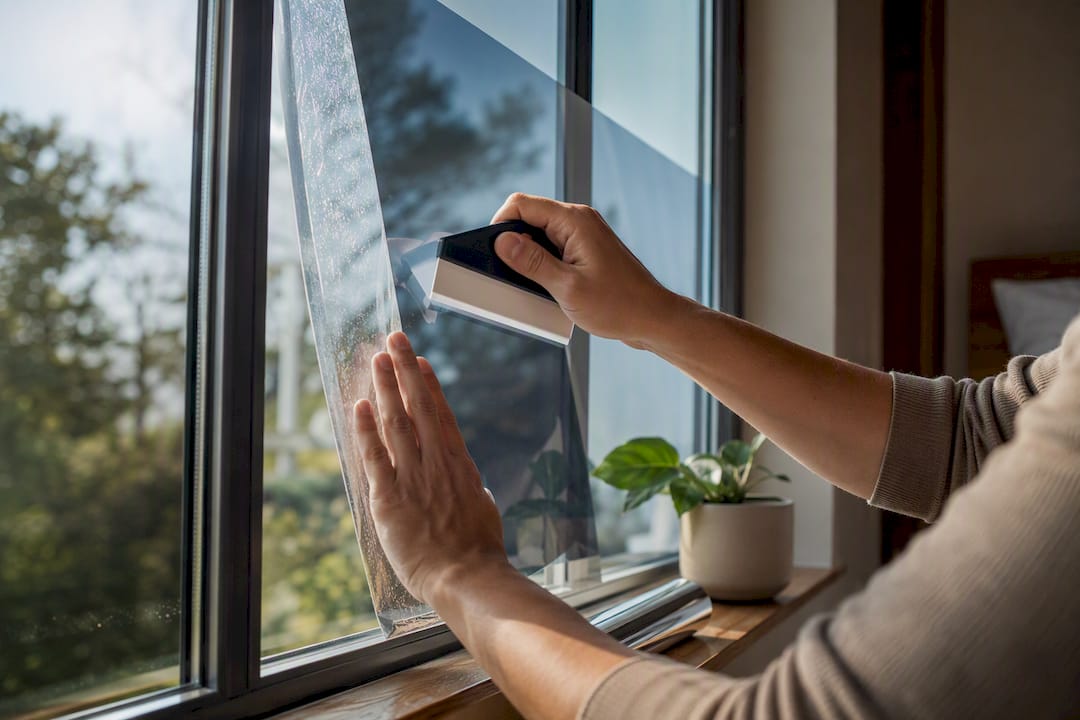
Reflective window film blocks a significant portion of solar heat gain before it ever enters the room, and unlike blackout curtains, it works even when you want natural light during the day. It’s a same-afternoon DIY project on most standard windows and typically costs far less than replacing glass entirely.
Exterior shading, awnings, deciduous trees, or even shade sails, stops heat before it hits the glass at all, which is more effective than any interior treatment since interior curtains still let heat radiate into the room after passing through the window. Light-colored or reflective roofing materials, sometimes called cool roofs, and green roofing systems both reduce how much heat a building’s top surface absorbs and re-radiates into the rooms below, particularly relevant if your bedroom sits directly under the roof.
Attic insulation and ventilation upgrades matter more than most homeowners assume, since a poorly ventilated attic can turn into an oven that radiates heat down into upper-floor bedrooms all night long. These fixes cost more upfront than a fan or a topper, but they compound. Every hot night for years, instead of just the ones you remember to prep for.
Start With the Three-Lever Routine
If you only do three things tonight, make it this: shade your windows by noon, run a cross-breeze fan setup an hour before bed, and take a warm shower 60 to 90 minutes before you turn in. Everything else, chilled pillowcases, frozen socks, humidity control, is a multiplier on top of that base routine, not a replacement for it. Small habit changes compound faster than most people expect once the fundamentals are already in place.
— Jason
Why Breevar’s Linen and Hemp Sleepwear Belong in Your Cooling Routine
Fans and shading strategies fix the room. What touches your skin all night still matters just as much, and that’s where most people stop short. Breevar builds its men’s short-sleeve linen sleepwear and women’s linen sleepwear from breathable, moisture-wicking natural fibers instead of the polyester blends that trap sweat against your body.

The Cool & Fresh Essentials Underwear & Socks Gift Box rounds out the same idea for the parts of a hot-sleeper’s wardrobe people forget about, moisture-wicking socks and underwear that don’t trap heat at your feet and waistband while you’re stacking every other tactic in this guide. None of this replaces good ventilation or a cooler bedroom. It’s the layer that works with those tactics instead of against them, and it’s a practical starting point if you’re rebuilding your summer sleep setup from scratch. Browse the current lineup at Breevar and pick the piece that matches how you actually sleep hot.
Sources
- How to stay cool while sleeping (Women’s Health)
- Powerful passive design strategies (Archiroots)
- Keep your cool – and stay healthy – with these hot-weather sleep tips (American Heart Association)
- From the ‘caveman method’ to the ‘frozen salt water fan trick’ — 7 expert-approved ways to cool your bedroom (Tom’s Guide)


Leave a comment