


Start at 65°F: Regulate Sleep Temperature with Breathable Fabrics
Set your bedroom to a cool baseline, roughly 60 to 67°F, and swap heavy synthetic pajamas for breathable, moisture-wicking natural fabric. That single change addresses the biggest driver of nighttime overheating: trapped heat with nowhere to go. Add one more move if you fall asleep slowly: a warm shower 60 to 90 minutes before bed, timed so the drop in skin temperature afterward mimics the body’s own signal to sleep.
TL;DR:
- Ensuring your sleep environment remains stable and slightly cooler, ideally between 60 to 67°F, improves sleep depth by supporting natural core and extremity temperature regulation.
- Managing the warmth touching your skin with breathable, moisture-wicking fabrics like linen, hemp, or bamboo is crucial for preventing overheating and promoting vasodilation necessary for sleep onset.
- Using a warm shower or bath 60 to 90 minutes before bed can accelerate core temperature drop, aiding faster sleep initiation without the need for extra cooling devices.
- A consistent, moderate room temperature combined with appropriate bedding and sleepwear is more effective than aggressive cooling strategies that risk disrupting REM sleep through thermal instability.
- For many, personalized adjustments—such as choosing sleepwear based on body temperature needs and tracking sleep responses—yield better results than relying solely on general recommendations.
Table of Contents
- What Sleep Temperature Regulation Actually Controls in Your Body
- How Body Temperature Changes Overnight, and Why It Matters for Deep Sleep
- What Temperature Should Your Bedroom Be?
- Bedding and Sleepwear: The Fabric Choices That Actually Move the Needle
- Timing Tricks: How to Use a Warm Bath, Exercise, and Diet to Cool Down Faster
- Should You Buy a Cooling Mattress, Topper, or Fan?
- When to Adjust Your Approach or Talk to a Doctor
- How Breathable Fabric Choices Fit Into a Temperature-Smart Sleep Setup
- Try One Change This Week, Not Five
- Ready to Sleep Cooler Tonight? Start With What Touches Your Skin
- Sources
- FAQ
What Sleep Temperature Regulation Actually Controls in Your Body
Your body doesn’t cool down passively at night. It runs an active process, and understanding it explains why some people freeze their bedroom and still wake up sweating.
Roughly two hours before your usual bedtime, your core body temperature begins a scheduled decline, driven by the circadian clock and coordinated by a cluster of neurons in the hypothalamus called the preoptic area. This region acts like a thermostat with a sleep switch attached. When it senses the right combination of falling core temperature and rising skin temperature, it flips circuits that promote drowsiness and eventually NREM sleep.
The mechanism behind that drop matters more than most people realize. Your body doesn’t just lose heat evenly. It redirects blood flow toward your hands and feet, dilating blood vessels near the skin so heat radiates outward from the extremities. Sleep scientists call this the distal-to-proximal gradient: your fingers and toes warm up on the surface while your core cools down underneath. That gradient, not just a cold room, is what tells your brain it’s time to sleep, and distal vasodilation is one of the strongest predictors of how quickly you’ll fall asleep.
This is where a lot of “just crank the AC” advice misses the point. A cold room helps your core temperature drop, but if your feet are also cold, the vasodilation your brain needs never happens properly. You end up curled up, tense, and awake, waiting for a signal that isn’t arriving. Warm feet and a cool core aren’t contradictory. They’re the actual recipe.
A few distinctions worth keeping straight:
- Skin warmth is helpful. Warm hands and feet trigger the vasodilation that supports sleep onset.
- Core heat is harmful. A core body temperature that stays elevated delays or fragments sleep.
- Ambient cooling alone isn’t enough. Without managing what’s touching your skin, room temperature can’t do its job efficiently.
- The hypothalamus reacts to both signals together, not either one in isolation.
Once you separate those two zones in your head, most of the rest of this guide is just execution.
How Body Temperature Changes Overnight, and Why It Matters for Deep Sleep
Core body temperature keeps dropping after you fall asleep, typically bottoming out about two hours after lights-off, before climbing back toward your daytime baseline near wake time. That curve isn’t decorative. It’s tied directly to how much slow-wave sleep, the deep, restorative N3 stage, you actually get.
Controlled research on conductive cooling backs this up with real numbers. In trials using high-heat-capacity cooling mattresses, participants who lost body heat more efficiently through conduction saw slow-wave sleep increase by an average of 7.5 minutes over a 7.5-hour night, along with a heart rate drop of about 2.36 beats per minute, a sign of deeper parasympathetic rest.
A measurable link: Efficient conductive heat loss during sleep is associated with both more slow-wave sleep and a slower heart rate, suggesting that how your body sheds heat physically through the mattress and bedding, not just through the surrounding air, shapes sleep depth.
That distinction between conductive heat loss (heat moving through direct contact with your mattress and sheets) and convective or ambient cooling (heat moving through air) explains why two people in the same room temperature can sleep very differently. Someone on a heat-trapping mattress with synthetic sheets is fighting their own bedding all night, even if the thermostat reads 65°F.
REM sleep adds another wrinkle. During REM, your body’s thermoregulatory control weakens substantially. You lose some of your ability to shiver or sweat in response to temperature swings, which makes REM periods more thermally fragile than deep NREM stages. A microclimate that swings wildly, a room that’s freezing at midnight and stuffy by 4 a.m., disrupts REM more than a room that stays boringly, consistently cool.
The practical takeaway isn’t complicated: stability matters almost as much as the actual number on the thermostat. A steady, moderately cool environment tends to protect both deep sleep and REM better than aggressive cooling that forces your body to overcorrect. This is also why people who overheat at night often describe waking up multiple times without knowing why. Their sleep stages are getting interrupted by exactly this kind of thermal instability, not by any single dramatic spike in heat.
What Temperature Should Your Bedroom Be?
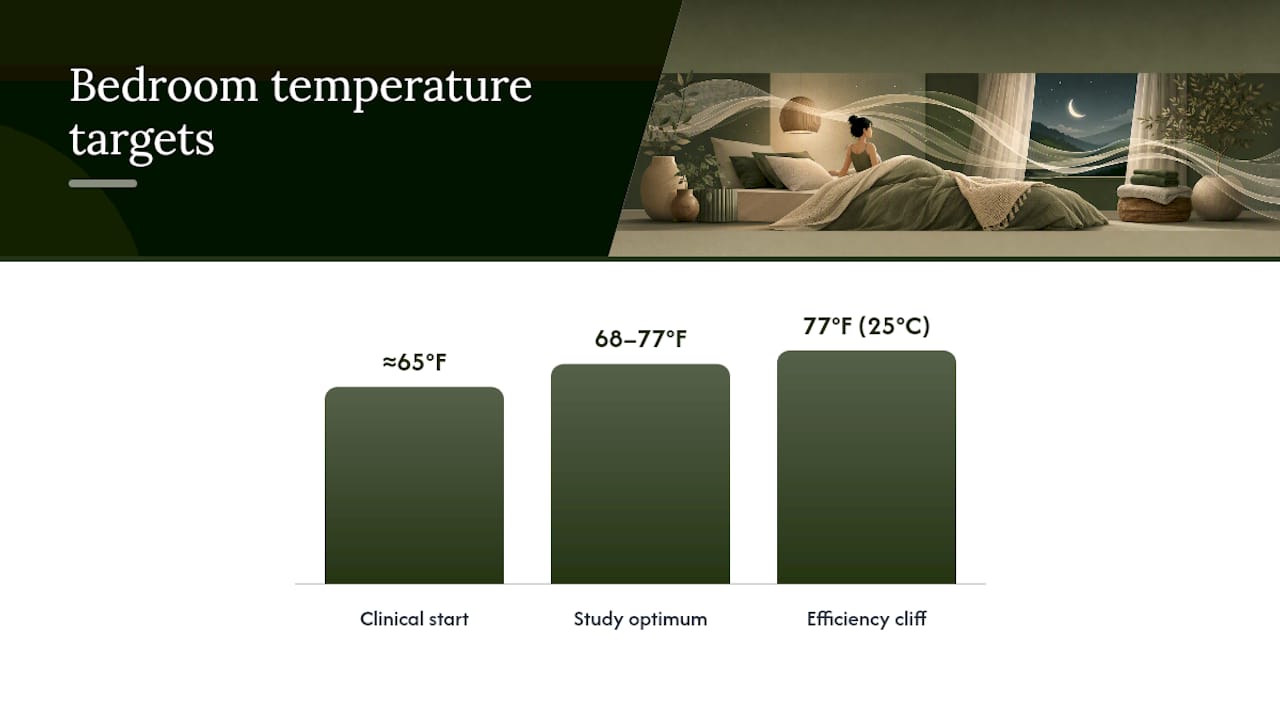
Clinical guidance generally lands in a tight range: about 60 to 67°F (15 to 19°C) for most adults, according to the Cleveland Clinic. That’s the number to start with if you’ve never paid attention to your thermostat before bed.
Experimental data adds nuance. A 2023 study tracking nighttime ambient temperatures found that a slightly warmer band, 20 to 25°C (68 to 77°F), produced the most efficient sleep overall, but efficiency dropped sharply once temperatures climbed further.
The efficiency cliff: Sleep efficiency fell by 5 to 10% when nighttime temperatures rose from 25°C to 30°C (77°F to 86°F), a meaningful decline for something as simple as a few degrees on a thermostat.
The gap between the clinical range and the study’s slightly warmer optimum isn’t a contradiction. It reflects the difference between a conservative recommendation meant to work for nearly everyone and a data-driven sweet spot observed in specific conditions. In practice, most people do well starting near 65°F and adjusting from there based on how they actually sleep.
Humidity changes the equation too. High humidity slows evaporative cooling, the sweat-based mechanism your body relies on when the air itself is too warm to shed heat passively. A bedroom that’s technically 66°F but sitting at 70% humidity will feel and function warmer than a 66°F room at 40% humidity. A basic hygrometer, the kind sold near thermostats, tells you where you stand in about five seconds.
Some groups need adjusted targets:
- Infants sleep best slightly warmer than adults, generally in the upper 60s to low 70s°F, and should never be bundled as heavily as adults tend to assume.
- Older adults often have reduced ability to sense or respond to cold, so a room that feels fine to a younger sleeper may leave them undercooled.
- People going through menopause frequently deal with night sweats driven by hormonal shifts, not room temperature at all, and may need a lower baseline plus breathable bedding to compensate.
- Anyone on certain medications, including some antidepressants and blood pressure drugs, can have altered thermoregulation and may need to experiment outside the standard range.
Seasonal variation matters as well. Research on ideal thermal environments has found that the combination of temperature and humidity people find most comfortable actually shifts between winter and summer, which is one more reason a fixed thermostat setting doesn’t work equally well year round.
Bedding and Sleepwear: The Fabric Choices That Actually Move the Needle
Room temperature gets most of the attention, but what’s touching your skin all night does at least as much work. Fabric affects heat regulation through three properties: breathability (how easily air and vapor pass through the weave), moisture-wicking capacity (how fast a fabric pulls sweat away from skin and lets it evaporate), and thermal conductivity (how efficiently the material transfers heat away from your body versus trapping it against you).
Synthetic fabrics like polyester tend to trap both heat and moisture. Once sweat has nowhere to go, your skin stays damp, which interferes with the evaporative cooling your body depends on. That’s the mechanism behind waking up sticky and overheated at 3 a.m. even in a properly cooled room.
Natural fibers behave differently, and not all natural fibers behave the same way:
- Linen has one of the most open weave structures of any common fabric, which makes it exceptionally breathable and quick to release trapped heat. It’s a strong pick for anyone sleeping in a warm climate or through summer.
- Hemp shares linen’s breathability while adding more durability and a slightly heavier drape, which some sleepers prefer for a more substantial feel against the skin without sacrificing airflow.
- Bamboo-derived fabric tends to be softer against skin and has strong moisture-wicking properties, making it a good match for people who run warm but want a smoother, less textured feel than linen or hemp.
A practical layering approach follows directly from the distal-to-proximal gradient covered earlier. Keep your torso in a breathable, moisture-wicking base layer, since the torso holds most of your core heat and benefits most from airflow. If your feet run cold even in a cool room, add a light pair of socks rather than turning up the thermostat for the whole bed. That targeted approach protects the vasodilation your body needs without reheating your core.
Pro Tip: If you wake up overheated but your partner is comfortable in the same room, the fix is almost never the thermostat. It’s usually the sleepwear. Different body compositions and metabolic rates mean two people can need two different microclimates in the same bed.
Short-sleeve designs in breathable fabric work well for people who run hot most nights, while longer sleeves and looser linen cuts suit colder bedrooms or shoulder-season sleeping when a bit more coverage without heat retention makes sense. The goal is matching garment weight to your actual thermal profile, not defaulting to whatever pajama set looks good in a catalog. For a deeper look at how fabric choice interacts with sleep quality more broadly, breathable sleepwear affects far more than comfort.
Timing Tricks: How to Use a Warm Bath, Exercise, and Diet to Cool Down Faster
The warm bath effect sounds counterintuitive until you connect it to the vasodilation mechanism already covered. A warm shower or bath doesn’t cool you down directly. It pulls blood toward your skin’s surface, and once you step out into cooler air, that surface heat radiates away fast, producing a rapid core temperature drop that mimics your body’s natural pre-sleep decline.
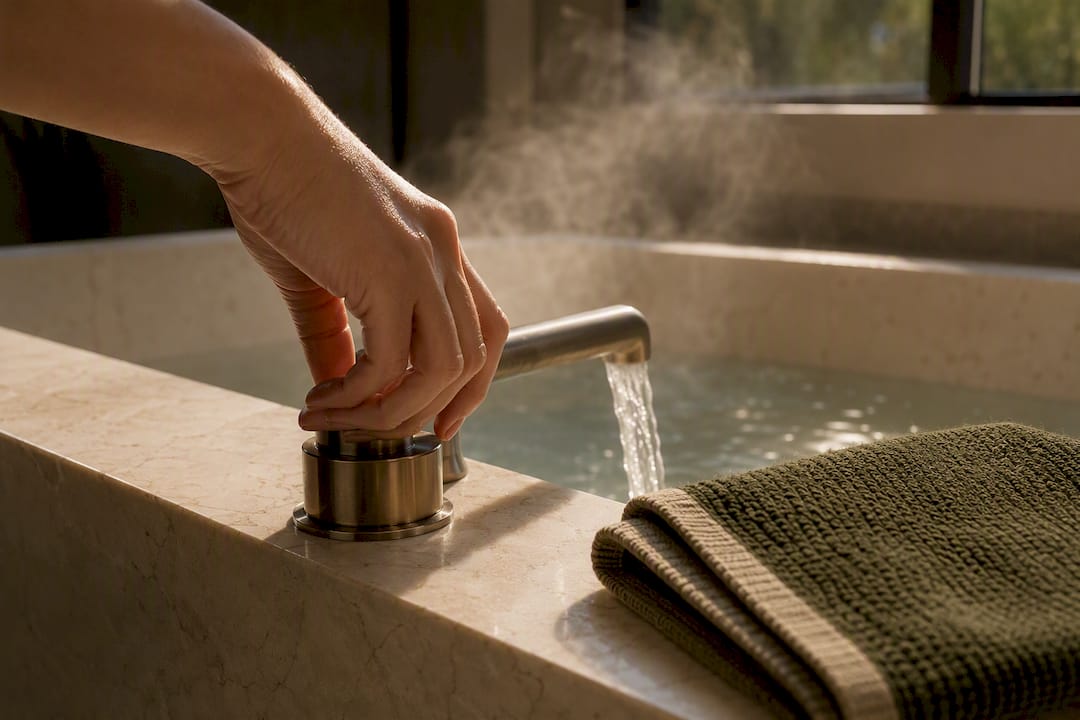
A systematic review summarized by researchers at the University of Texas found that timing the bath or shower 60 to 90 minutes before bed produces the strongest effect on sleep onset, since that window gives the post-bath heat dump time to finish before you actually try to fall asleep. Get in the shower right before bed instead, and you’re still running warm when your head hits the pillow.
A short checklist to run through tonight:
- Time your bath or shower for 60 to 90 minutes before lights-off, not immediately beforehand.
- Finish vigorous exercise at least three hours before bed. Intense activity raises core temperature and keeps it elevated well past the workout itself.
- Skip heavy meals within two to three hours of bedtime. Digestion generates metabolic heat that works against the natural core temperature decline.
- Watch alcohol timing carefully. It can feel relaxing initially, but it disrupts thermoregulation later in the night and is a common, underrated cause of 3 a.m. sweating and waking.
- Cut caffeine at least six hours before bed, since it interferes with the vasodilation process that helps trigger sleep onset in the first place.
None of these require special equipment. They just require shifting the clock on habits you probably already have.
Should You Buy a Cooling Mattress, Topper, or Fan?
Once ambient temperature and sleepwear are dialed in, the next question is usually hardware. Cooling mattresses and toppers work through conductive heat transfer, meaning they pull heat away from your body through direct contact rather than relying on air movement. That’s the same mechanism behind the N3 sleep improvements seen in high-heat-capacity cooling mattress trials.
Active cooling devices, gel pads with pumps, bed fans, or air conditioning, work faster but come with real trade-offs:
- Noise from pumps and fans can itself fragment sleep, undoing some of the benefit.
- Energy cost adds up quickly if you’re running AC or a cooling unit all night, every night.
- Overcorrection risk is real: aggressive active cooling can swing a room too cold, which, as covered earlier, threatens REM stability just as much as overheating does.
Passive options, breathable mattress materials, moisture-wicking sheets, and lighter sleepwear, cost less and don’t introduce noise, but they act more slowly and have a lower ceiling on how much heat they can remove in extreme conditions.
If you’re deciding whether a specific change is worth the money, run a simple test before buying anything expensive: track your sleep for a week using whatever method you have, a basic sleep tracker, a phone app, or even a written log of bedtime, wake time, and number of awakenings. Change one variable. Track another week. Compare. That single-variable approach tells you far more than swapping five things at once and guessing which one helped.
When to Adjust Your Approach or Talk to a Doctor
Seasonal shifts call for real adjustments, not just tolerance. Summer humidity might push you toward lighter linen sheets and a lower baseline temperature, while winter dryness might call for a humidifier alongside your usual thermostat setting. Breathable layers give you room to adapt without needing a different mattress for every season.
Persistent overheating that doesn’t respond to any of the fixes above deserves a closer look. A few common, often overlooked causes:
- Menopause and perimenopause, where hormonal shifts trigger night sweats independent of room conditions.
- Undiagnosed infections or fevers, especially if the heat feels sudden or comes with other symptoms.
- Certain medications, including some antidepressants, hormone therapies, and blood pressure medications, that alter thermoregulation as a side effect.
- Thyroid conditions, which can shift baseline metabolic heat production up or down.
If overheating or thermal discomfort is disrupting your sleep several nights a week despite reasonable adjustments to your room and bedding, that’s worth raising with a clinician. Bring a simple record: nightly temperature readings if you have them, a basic sleep diary noting bedtime, wake time, and awakenings, and any pattern you’ve noticed, like timing relative to your menstrual cycle or medication schedule. That kind of specific information gets you a faster, more useful conversation than describing the problem from memory.
How Breathable Fabric Choices Fit Into a Temperature-Smart Sleep Setup
Everything covered above points to one practical conclusion: your torso needs airflow, your extremities need warmth, and the fabric between you and the mattress does real physiological work.
Certain companies build sleepwear and undergarments from hemp, linen, and bamboo specifically because those fibers move moisture and heat away from skin rather than trapping it, which supports the exact evaporative and conductive cooling processes your body relies on overnight.
A few shopping cues worth keeping in mind:
- Hot sleepers generally do better in lighter-weight linen or hemp weaves and short-sleeve cuts that maximize airflow.
- Colder sleepers or colder climates may prefer heavier hemp weights or longer sleeves without losing breathability.
- Sizing that runs slightly loose, rather than snug, allows more air circulation between fabric and skin, which matters more for heat management than most people assume.
Choosing sleepwear this way isn’t a minor styling decision. It’s the direct, wearable version of the physiology covered throughout this guide, and it’s worth reading more about in how to choose sleepwear built for your actual sleep pattern.
Try One Change This Week, Not Five
Most people trying to fix nighttime overheating change their thermostat, their sheets, their pajamas, and their evening routine all in the same week, then have no idea what actually worked. Pick one variable. Track three things: how long it takes you to fall asleep, how many times you wake up, and how rested you feel the next morning.
Swap your pajamas for a breathable fabric for seven nights before touching anything else. Add socks if your feet run cold. Small, isolated experiments tell you more about your own thermal profile than any general guideline, including this one, ever will.
— Jason
Ready to Sleep Cooler Tonight? Start With What Touches Your Skin
You’ve read the physiology. The room temperature matters, but the fabric against your body does at least as much of the real work, and it’s the variable most people never actually change. This swap is made simple with sleepwear and undergarments cut from hemp, linen, and bamboo, the same breathable, moisture-wicking fibers this guide has walked through from the science down to the shopping list.

If you run hot most nights, the Men’s Short-Sleeve Hemp Sleepwear Set gives your torso the airflow it needs without sacrificing coverage. Warm-weather sleepers and anyone dealing with summer humidity tend to do well in the Men’s Short-Sleeve Linen Sleepwear or the Women’s Linen Sleepwear, both cut from one of the most breathable weaves available. For distal warmth control, the kind that supports the vasodilation your brain uses to trigger sleep, the Bamboo Men’s Boxer Brief manages moisture at the skin level all night.
Shopping for someone else, or want to try more than one option before committing? The Naturally Better Underwear & Socks Essentials Gift Box and the Naturally Better Underwear & Socks Deluxe Gift Box bundle the fabric fundamentals covered in this guide into one order. Every purchase also supports Breevar’s ongoing climate and social responsibility partnerships, so the swap does double duty. Pick the piece that matches how you sleep tonight, and start your one-week fabric test this weekend.
Sources
The guidance in this article draws on a mix of physiology reviews, clinical recommendations, and controlled sleep studies. A few are worth reading directly if you want the full detail behind any specific claim:
For readers focused on the broader bedroom environment beyond temperature, a well-designed room supports the same goals, and color and lighting choices for a restful bedroom can complement the thermal strategies covered here.
FAQ
Is 72°F Too Warm for Sleeping?
For most adults, yes. Clinical guidance generally recommends 60 to 67°F, and research on ambient sleep temperatures found efficiency declining as nighttime temperatures climb past 77°F, so comfort starts to slip for a lot of sleepers.
What Is the 3-3-3 Rule for Sleep?
This isn’t a standard, research-backed sleep guideline, and definitions of it vary widely online. Rather than repeating an unverified rule, focus on the evidence-based basics covered in this guide: a cool ambient range, breathable sleepwear, and consistent timing.
Is 99.5°F a Normal Body Temperature in the Evening?
Body temperature naturally runs slightly higher in the evening before beginning its pre-sleep decline, so a reading somewhat above normal is not automatically abnormal. If elevated readings persist alongside night sweats or trouble sleeping, it’s worth mentioning to a clinician along with a temperature log.
Why Can’t I Regulate My Body Temperature While Sleeping?
Difficulty regulating temperature at night often traces back to hormonal changes like menopause, certain medications, heat-trapping bedding or sleepwear, or a bedroom that swings between too hot and too cold instead of staying stable. Switching to breathable, moisture-wicking fabric and keeping ambient temperature consistent resolves this for many people; persistent cases warrant a conversation with a doctor.
What’s the Best Sleepwear Fabric for Sleep Temperature Regulation?
Linen and hemp offer the most breathability for hot sleepers, while bamboo-derived fabric adds strong moisture-wicking with a softer feel. All three outperform synthetic fabrics like polyester, which trap heat and moisture against the skin.


Leave a comment