

Thermal vs Breathable Pajamas: How to Choose for Your Sleep
Thermal pajamas are built to hold your body heat in. Breathable pajamas are built to let heat and moisture out. If you sleep cold, thermal wins. If you sleep hot, wake up damp or deal with night sweats, breathable wins. Most people land somewhere between, and for them the answer is a breathable natural fabric in the right weight, not a heavy insulating layer.
The rest of this guide explains what each term really means, which fabrics and knits sit on each side, and how to pick a pair without guessing.
TL;DR
- Thermal pajamas insulate (brushed flannel, fleece, wool). Breathable pajamas move air and moisture (linen, hemp, modal, loose lightweight knits).
- Fabric is only half the story: weave, weight and fit can make two sets in the same fiber sleep very differently.
- Hot sleepers should avoid heavy brushed fabrics and polyester, which can trap heat. Cold sleepers can still choose breathable fibers in a slightly heavier weight.
- Mild night sweats often ease with loose, lightweight sleepwear, but persistent or disruptive sweats deserve a conversation with a healthcare provider.
Table of Contents
- What “thermal” and “breathable” actually mean
- How fabric choice shifts warmth and airflow
- Weave, weight and fit matter as much as fiber
- Which should you choose?
- Perspective: why we lean breathable
- Shop breathable sleepwear built for warm sleepers
- Matching fabric to your own temperature
- When night sweats are more than a pajama problem
- Caring for pajamas so they keep performing
- FAQ
- Sources
What “thermal” and “breathable” actually mean
The two words describe different jobs.
Thermal pajamas are about insulation. They slow the loss of body heat, usually by being thick, dense, brushed or fuzzy. Think flannel, fleece and wool. The goal is a warm pocket of air next to your skin.
Breathable pajamas are about exchange. They let warm air and sweat vapor pass through the cloth so your skin doesn’t stay hot or wet. Think linen, hemp, modal and open, stretchy knits.
The two are not strict opposites. Researchers at the University of Sydney describe sleep thermal comfort as an interplay of a fabric’s thermal conductivity, its ability to absorb moisture and how easily moisture vapor passes through it. In plain terms, a fabric can be warm and still manage moisture well, or feel cool and still hold dampness against you. A label like “thermal” tells you about one property only.

How fabric choice shifts warmth and airflow
Fabrics that lean warm
Flannel and fleece. University of Kentucky extension guidance notes that tightly woven, brushed flannel may keep you warmer. Brushing raises a soft nap that traps air. That is great on a cold night and miserable on a warm one.
Polyester. The same bulletin describes polyester pajamas as durable and easy to care for, but they can trap body heat. Whether that is a feature or a flaw depends on how you sleep. For a hot sleeper it is usually a flaw.
Wool. Wool surprises people because it is not only for cold sleepers. A 2016 study found wool sleepwear significantly shortened the time it took to fall asleep compared with cotton at 17°C. A separate 2019 study at 30°C found that participants aged 65 and older fell asleep faster in wool than in cotton or polyester. So wool can help in a cool room and, for older sleepers, even in a warm one. It is a niche choice, though, and not the first thing most hot sleepers should reach for.
Fabrics that lean breathable
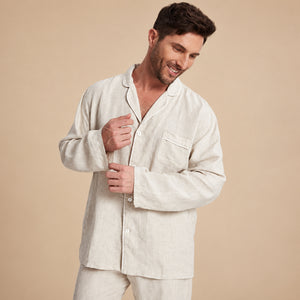
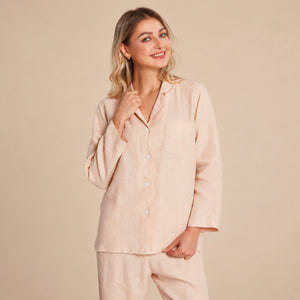
Linen and hemp. Both are natural bast fibers with an open, airy hand. Cleveland Clinic lists loose-fitting, lightweight cotton or linen pajamas among simple changes that may help mild night sweats. These are the two fibers we build our sleepwear around. For a deeper comparison, see our guide to linen and hemp versus temperature regulating pajamas.

Modal, lyocell and Tencel. These are wood-pulp fibers. AATCC, the textile professionals’ association, describes Tencel as a durable, breathable fabric from wood pulp that dries faster than 100% cotton. Faster drying matters if you sweat, because damp cloth is what makes a night feel clammy. We compare the moisture numbers in modal versus cotton pajamas for hot sleepers.
Rayon and “bamboo.” The Kentucky bulletin says rayon, sometimes marketed as bamboo, has comfort properties similar to cotton but does not stay damp, which makes it a reasonable choice for people who sweat. How it compares with linen is covered in why linen often sleeps cooler than bamboo.
Cotton. Soft and familiar, and breathable in a light jersey or poplin. Heavy cotton, or cotton brushed into flannel, moves toward the thermal side.
Quick comparison
| Fabric | Leans | Best for | Watch out for |
|---|---|---|---|
| Brushed flannel | Thermal | Cold bedrooms, cold sleepers | Overheating on mild nights |
| Fleece / polyester | Thermal | Very cold rooms | Can trap body heat |
| Wool | Thermal, but versatile | Cool rooms; older sleepers in studies | Cost, care, itch for some |
| Cotton jersey | Middle | Year-round, mild sleepers | Heavy weights run warm |
| Modal / lyocell / Tencel | Breathable | Sweaty sleepers, humid nights | Very thin knits can cling |
| Linen | Breathable | Hot sleepers, warm climates | Wrinkles; softens with washing |
| Hemp | Breathable | Hot sleepers who want durability | Feels crisp at first |
Weave, weight and fit matter as much as fiber
Two sets in the same fiber can feel nothing alike. The Kentucky bulletin makes the contrast directly: tightly woven, brushed flannel may keep you warmer, while loose-knit, stretchy fabric may keep you cooler. Here is how to read a garment beyond the fiber tag.
- Weight. A light fabric lets air pass and gives heat less to hide in. A dense, heavy fabric of the same fiber behaves more like a thermal layer.
- Weave or knit. Open, loose structures breathe. Tight, brushed or napped structures insulate.
- Fit. Loose cuts leave an air gap that lets heat escape and sweat evaporate. Cleveland Clinic notes that lightweight, loose-fitting garments can bring similar sleep quality to sleeping naked. That is a useful benchmark: a good breathable set should feel close to wearing almost nothing.
- Seams and cut. Flat or seamless construction avoids pressure points and chafing where skin stays warm and damp, such as waistbands and underarms.
- Length. Shorts and short sleeves expose more skin than full-length sets. We look at that trade-off in pajama shorts versus nightgowns.
Which should you choose?
The University of Kentucky guidance is refreshingly simple: comfort varies by person, so start from whether you tend to sleep hot or cold. Use the scenarios below as a starting point.
You sleep hot or wake up damp
Go fully breathable. Choose linen, hemp or modal in a loose, lightweight cut and skip polyester and heavy brushed fabrics. If you are also weighing the bedding side, our comparison of cooling sheets versus pajamas shows which change usually helps more. For fabric-by-fabric detail aimed at sweaty nights, read fabrics for night sweats.
You sleep cold
Thermal is a fair choice, but you don’t have to give up airflow completely. A flannel set will do the job if your bedroom is chilly. If you find yourself kicking the blanket off at 3 a.m., you have likely overshot, and a mid-weight natural fabric under a blanket you can adjust gives you more control than a heavy set you can’t take off.
Your bedroom temperature swings with the seasons
This is where most people live. A reasonable approach is a breathable base set that works year-round, with warmth added through bedding that you can remove, rather than through the pajamas themselves. Layers you can shed beat a fixed insulating garment. We cover this in winter breathable pajamas that keep you warm, not sweaty.
You share a bed with someone who runs on a different thermostat
When one partner runs hot and the other cold, matching the pajamas to each person is easier than compromising on the room. Our piece on sustainable pajamas for couples goes through how to split the difference.
Pregnant, nursing or going through menopause
Body temperature can shift a lot in these stages, and breathability usually becomes the priority. See breathable maternity pajamas for fabric and cut ideas.
Perspective: why we lean breathable
We started Breevar around a simple observation: most people who complain about their pajamas are not cold, they are overheated. The market is full of products sold as “cozy” or “warm,” and very little of it is designed for the person who wakes up tossing the covers.
So we work with natural fibers like hemp, linen and modal, and we add seamless, anti-chafe construction because comfort at night is also about what you don’t feel. Our view is that you can add warmth with a blanket in seconds, but you can’t take warmth out of a garment you’re wearing without waking up.
That is why we treat the word “thermal” with some caution. For a cold bedroom it is a perfectly honest description. For a hot sleeper it is a warning label. Read the fabric, the weight and the cut, not just the marketing word on the tag.
We also think sleepwear should do some good beyond the bedroom. Every purchase supports nonprofit initiatives focused on climate action and social responsibility, and natural fibers are part of how we think about that.
— Jason
Shop breathable sleepwear built for warm sleepers
If you’ve decided breathable is the right side of this choice, you can browse linen sleepwear and hemp sleepwear, or go straight to women’s sleepwear or men’s sleepwear. We also make underwear and socks from breathable fibers, since heat builds up in those layers too. Text monogram personalization and curated gift sets are available if you’re buying for someone else, and subscription purchase options exist for replenishment items.

Matching fabric to your own temperature
Once you know which side you lean toward, a general fabric guide helps narrow the field. A guide to lightweight fabrics and why they work walks through how different weights and fibers feel in warm conditions, which transfers well to sleepwear shopping.
A simple test works at home. Wear a candidate set for a few nights in your normal bedroom. Notice whether you wake up damp, whether you reach for the covers or push them away, and whether the fabric clings when you sweat. Comfort varies by person, so your own notes beat any chart.
When night sweats are more than a pajama problem
Pajamas can help with mild cases. Cleveland Clinic says mild night sweats can often be managed at home with a cool sleeping environment, fans and lightweight, breathable sleepwear. The same page advises seeing a healthcare provider if night sweats disrupt your sleep or keep coming back.
If you are soaking through sets regularly, waking drenched most nights, or the sweating comes with other symptoms, don’t try to solve it with a fabric swap alone. Book a visit with your primary care provider. Better pajamas are a comfort measure, not a diagnosis or a treatment.
Caring for pajamas so they keep performing
The Kentucky guidance suggests washing pajamas after a few sleeps, or more often if you sweat, and airing them out during the day, and following the care label. A few practical additions follow from that:
- Rotate two or three sets so each can air out between wears.
- Wash sweaty sets promptly rather than leaving them in a hamper, since damp fabric is where odor builds.
- Skip heavy fabric softeners on moisture-managing fabrics if the care label discourages them, since coatings can dull absorbency.
- Expect linen and hemp to soften with each wash. That is the fabric working as intended, not wearing out.
For the broader view of how summer fabrics compare, our guide to sustainable summer sleepwear fabrics is a good next read.
FAQ
Are thermal pajamas bad for hot sleepers?
Usually, yes. Thermal pajamas are designed to retain heat, so on a warm night or for someone who overheats they can make sleep worse. If you run hot, choose a lightweight breathable fabric in a loose cut instead, and add warmth through bedding you can remove.
What is the warmest fabric for pajamas?
Tightly woven, brushed flannel is one of the warmest everyday options, according to University of Kentucky guidance. Fleece and wool are also insulating. Pick based on your bedroom temperature and how warm you sleep.
Is it good to sleep in polyester pajamas?
Polyester is durable and easy to care for, but it can trap body heat. If you tend to feel warm at night, a natural or wood-pulp fiber such as linen, hemp or modal is usually the more comfortable pick. If you sleep cold, polyester may be fine.
Can the right pajamas stop night sweats?
They can help with mild cases, since loose, lightweight cotton or linen is among the simple changes Cleveland Clinic suggests. They won’t fix an underlying cause. If night sweats disrupt your sleep, see a healthcare provider.
Can I wear breathable pajamas in winter?
Yes. Breathable fibers work year-round when you control warmth with bedding. Cold sleepers can choose a slightly heavier weight of a natural fabric rather than a fully insulating set.
Sources
- How do sleepwear and bedding fibre types affect sleep (University of Sydney researchers, PMC)
- The impact of sleepwear fiber type on sleep quality under warm ambient conditions (PMC)
- Pamper With Pajamas, University of Kentucky health bulletin
- Sleeping Soundly: Textiles for a Good Night’s Sleep, AATCC
- Is It Healthy To Sleep Naked? Cleveland Clinic
- Night Sweats: Menopause, Other Causes & Treatment, Cleveland Clinic


Leave a comment