


Lasts 2–3× Longer: Hemp Underwear Benefits Backed by Science
Hemp underwear combines superior moisture management, long-term durability, and a smaller cultivation footprint than conventional cotton, backed by peer-reviewed textile testing and life-cycle studies. The trade-off is processing: how a brand degums and retts hemp fiber determines whether you get those benefits at full strength or a diluted version. Get the fiber quality and construction right, and you end up with underwear that manages sweat better, resists odor longer, and outlasts cotton by a wide margin.
TL;DR:
- Hemp underwear benefits from superior moisture-wicking and quick-drying performance, especially when blended with cotton or Tencel in open-weave constructions.
- Chemical processing like degumming and retting can diminish hemp’s natural antibacterial and odor-resistant properties, affecting long-term freshness.
- Durability of hemp fibers leads to garments lasting two to three times longer than cotton, provided the construction and stitching are well-made.
- Lower environmental impact is possible if hemp is processed with enzymatic or mechanical methods, reducing the carbon footprint compared to heavily processed hemp.
- Hemp’s initial stiffness requires several washes to soften, and higher upfront costs mean choosing it is best for those prioritizing durability, moisture control, or sustainability.
Table of Contents
- Hemp Underwear Benefits at a Glance
- Comfort and Moisture Management: What the Research Says
- Antibacterial and Odor Control: Strengths, Processing Loss, and Modern Fixes
- Durability and Long-Term Value
- Sustainability Explained: Cultivation, Processing, and What the LCA Data Shows
- Care and Expectations: Washing, Softening, and What to Expect
- Why This Guide Draws on Real Textile Science
- Who Should Actually Buy Hemp Underwear
- Breevar’s Hemp Lineup for Sustainable Comfort
- Sources
- FAQ
Hemp Underwear Benefits at a Glance
Before digging into the research, here’s the map of what hemp actually delivers, and where it falls short of the marketing copy.
- Moisture-wicking and breathability: hemp-blend fabrics pull sweat away from skin faster than plain cotton, especially in open-weave constructions.
- Odor resistance: hemp’s fiber structure resists bacterial buildup longer than cotton, though heavy chemical processing can weaken this trait.
- Durability: hemp bast fibers are mechanically stronger than cotton, which usually means a longer wear life for the garment.
- Softening over time: hemp starts firmer than cotton but softens with each wash, particularly in hemp-cotton or hemp-Tencel blends.
- UV protection and thermal comfort: hemp fabric offers natural UV absorption and tends to feel cooler against skin in warm conditions.
- Lower farming impact: hemp cultivation generally needs less water and fewer pesticides than cotton, though the water and pesticide gap varies by region and method.
Each of these comes with an asterisk worth understanding before you buy, which is exactly what the next few sections unpack.
Comfort and Moisture Management: What the Research Says
Textile scientists measure how well a fabric handles sweat using something called the OMMC index, short for Overall Moisture Management Capacity. It scores wicking speed, air permeability, and drying time in a single number. A 2024 study in the journal Materials found that hemp-blend fabrics consistently outperformed standard cotton on OMMC scores, moving moisture away from skin faster and drying quicker afterward.
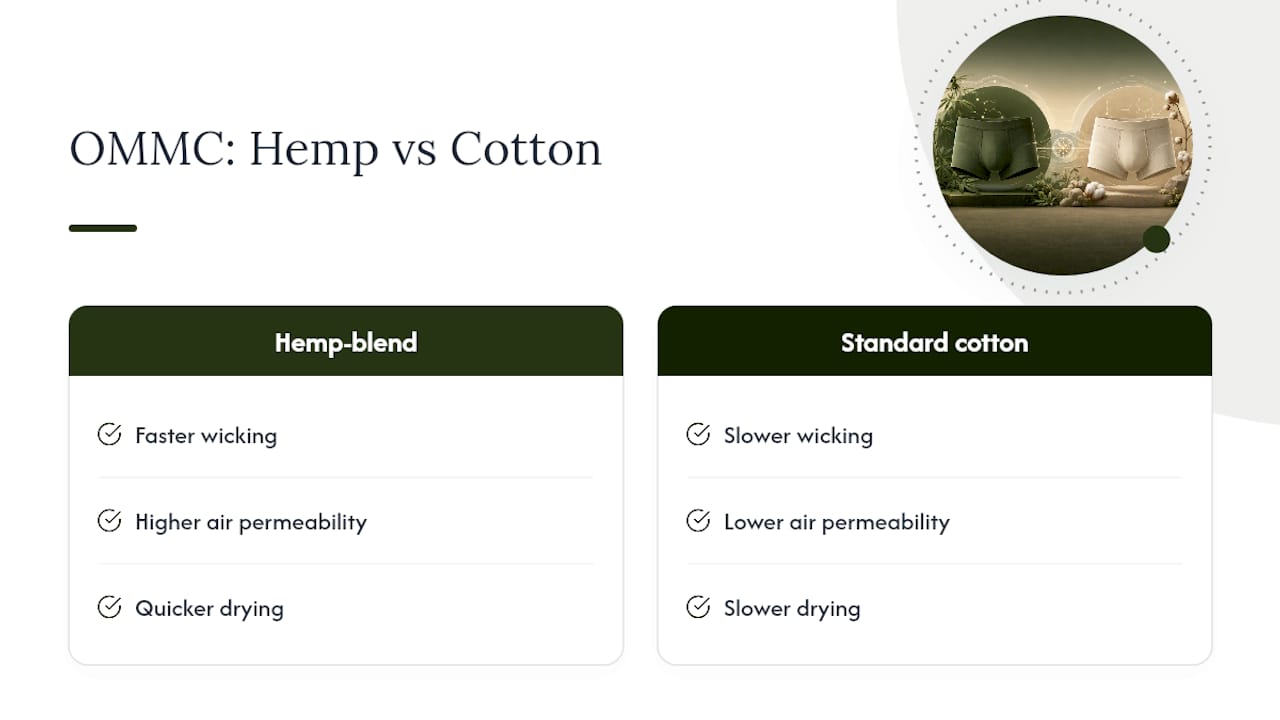
Weave and yarn structure matter as much as fiber choice. A tight, dense weave traps heat and moisture regardless of what it’s made from; an open or twill weave lets hemp’s natural advantages show. Blending hemp with cotton or Tencel softens the hand-feel while keeping most of the wicking benefit, which is why you’ll see more hemp-cotton blends in underwear than pure hemp. Separate testing on hemp-blended yarns found the same pattern in denim and performance fabrics: adding hemp fiber to a blend measurably improved air permeability and drying speed. If you run hot at night or spend a lot of time on your feet, this is the category where hemp earns its keep.
Antibacterial and Odor Control: Strengths, Processing Loss, and Modern Fixes
Hemp fiber has a hollow, porous structure, and it retains trace amounts of lignin and phenolic compounds from the plant. Together, those two things give raw hemp a natural resistance to the bacteria that cause odor, and comparative studies on hemp textile comfort note that hemp fabrics tend to stay odor-neutral longer than cotton in daily wear.
Here’s the catch nobody puts on the label: degumming and retting, the processes used to separate hemp fiber from the woody plant stalk, can strip out a lot of those same antibacterial compounds. A garment labeled “antibacterial hemp” that went through heavy chemical processing may not perform much better than cotton in that department. This is why unqualified antibacterial claims deserve a skeptical eye.
Some manufacturers now add functional treatments, such as tannic acid combined with copper or quaternary ammonium compounds, to restore antibacterial performance after processing. Research on these treated fibers shows antibacterial ratios holding above 90% even after repeated washing. The trade-off is added chemical processing and, in some formulations, a cytotoxicity risk that researchers flag as worth monitoring. For underwear specifically, worn against sensitive skin for hours at a time, that’s a detail worth asking a brand about directly.
Durability and Long-Term Value
Hemp bast fiber has a higher tensile strength than cotton fiber, plain and simple. That mechanical advantage is why well-constructed hemp garments commonly last two to three times longer than cotton equivalents in daily rotation. Over a few years of ownership, that durability edge changes the math on cost-per-wear even if the upfront price is higher.
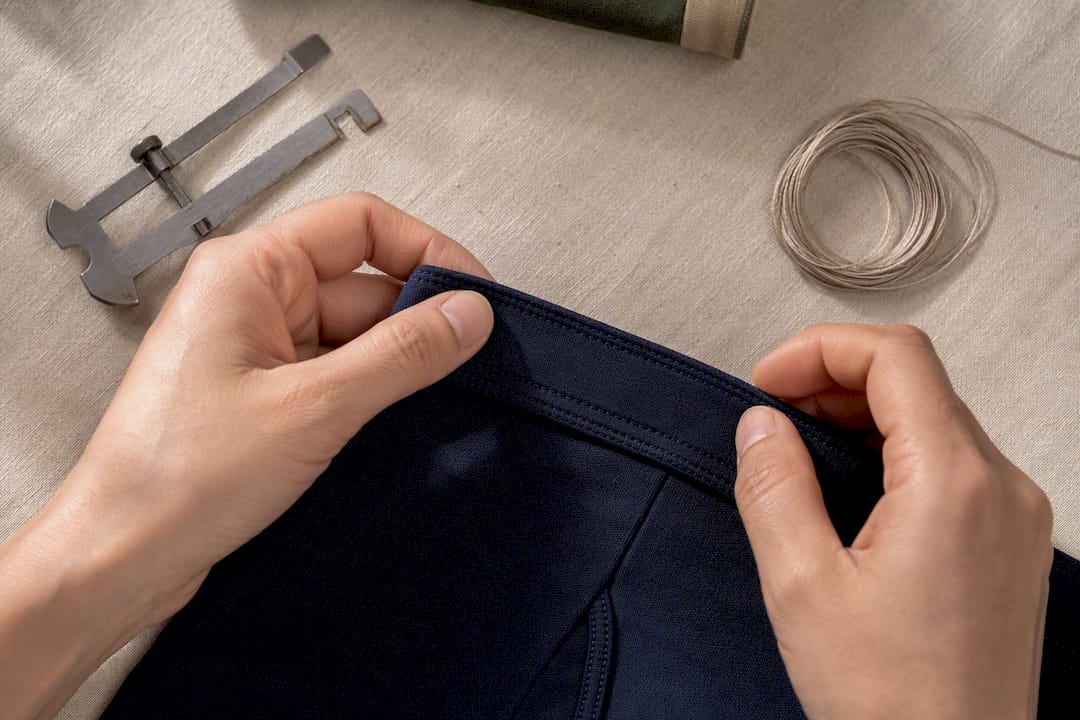
Two caveats keep this from being a blanket rule. First, “cottonized” hemp, fiber that’s been mechanically processed to mimic cotton’s shorter staple length, sacrifices some of the strength advantage that long-fiber hemp retains. Second, a garment is only as durable as its weakest seam. Reinforced stitching and midweight fabric matter more for underwear than for outerwear, since underwear takes repeated stress at the waistband and leg openings with every wash cycle. When you’re comparing options, look for brands that specify yarn type and weave, not just “hemp” as a generic ingredient label. Breevar’s own comparison of hemp and cotton walks through how those construction details play out in real garments.
Sustainability Explained: Cultivation, Processing, and What the LCA Data Shows
Hemp requires less irrigation and far fewer synthetic pesticides than conventional cotton to grow at scale, and it grows quickly enough to make efficient use of farmland. Life-cycle assessments comparing the two fibers back this up at the field level. A peer-reviewed LCA comparison found hemp fiber production typically produces lower global warming potential and eutrophication impact than cotton across several tested scenarios, though the margin depends heavily on region and processing method.
That last part is the whole story — understanding the role of sustainable fabrics in modern fashion helps clarify why processing methods can make or break hemp’s environmental benefits. A materials science review of hemp fiber processing identifies degumming and retting as the real sustainability bottleneck in the hemp supply chain. Harsh chemical degumming can erode much of the environmental advantage hemp has at the farm level, while enzymatic retting or closed-loop mechanical extraction preserves it. Some industry researchers go further, arguing that hemp’s durability alone can make it the lower-carbon choice over a garment’s lifetime even when the initial manufacturing footprint looks comparable to cotton’s.
Practically, that means the fiber name on the tag tells you less than the processing method behind it. Look for brands that state how their hemp was retted, and treat vague sustainability language as a yellow flag. Standards groups like Textile Exchange publish benchmarks that some hemp suppliers use to substantiate these claims, which is a reasonable starting point if you want to verify beyond marketing copy. A broader industry review on hemp fiber processing from field to fabric also notes that spinning and processing infrastructure for hemp is still catching up to cotton’s century-old supply chain, so availability and consistency can vary by supplier.
Care and Expectations: Washing, Softening, and What to Expect
Hemp underwear needs less fuss than people assume, but it does reward a bit of patience during the first few washes.
- Wash cold or at 30 to 40 degrees Celsius with a gentle, residue-free detergent to protect fiber integrity.
- Skip the high-heat tumble dryer. Air-dry or use low heat, and reshape the garment while damp.
- Avoid fabric softener. It coats fibers with a residue that actually slows the natural softening process.
- Repeat gentle wash cycles for the first three to five washes rather than deep-cleaning aggressively right away.
- Expect a firmer initial hand-feel that loosens noticeably by wash five, faster if the garment is a hemp-cotton blend rather than pure hemp.
Pro Tip: If a hemp garment feels stiff out of the box, don’t judge it on wear one. Run it through two or three normal wash-and-dry cycles before deciding whether the fit and feel work for you. Most of the “hemp is scratchy” complaints online come from people judging fiber five wears too early.
Why This Guide Draws on Real Textile Science
This article was researched and written by Jason for Breevar, drawing on peer-reviewed textile and life-cycle studies rather than marketing claims alone. Breevar builds its hemp sleepwear and underwear lines around the same moisture-management and durability principles covered here, using natural fibers chosen specifically for people who run warm at night. The brand also directs a share of every purchase toward nonprofit climate action initiatives, which means the sustainability angle isn’t just editorial framing here, it’s built into how the products get funded.
Who Should Actually Buy Hemp Underwear
If you overheat at night, sweat through cotton by midafternoon, or care about your closet’s environmental footprint, hemp underwear solves a real problem. It’s a worse fit if you want cotton-soft on day one or you’re shopping purely on lowest sticker price, since hemp costs more upfront and needs a few washes to hit peak comfort. Go with 100% hemp for maximum durability and UV protection; choose a hemp blend if immediate softness matters more to you than squeezing out every fiber advantage. Either way, the underlying construction and processing quality matter more than the fiber percentage on the tag.
— Jason
Breevar’s Hemp Lineup for Sustainable Comfort
The underwear and sleepwear line is built around one idea: natural fiber that performs, not just natural fiber that markets well.
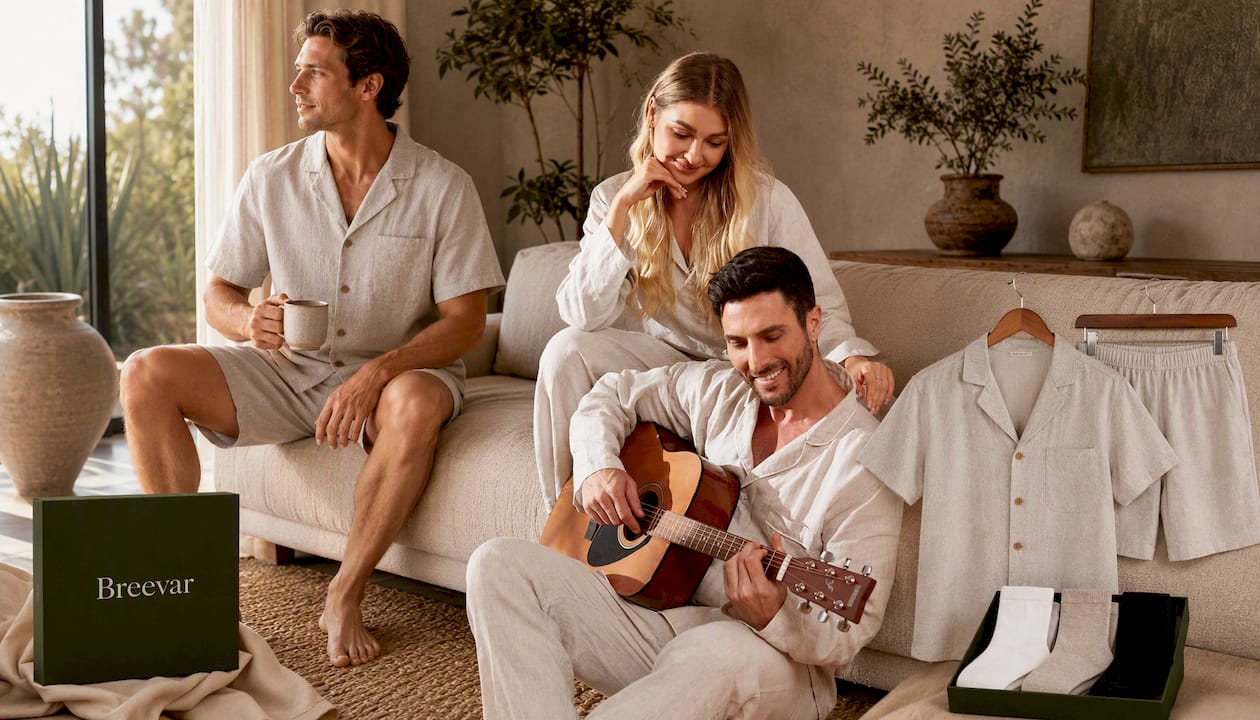
The Men’s Short-Sleeve Hemp Sleepwear Set is built for people who overheat at night, using hemp’s moisture-wicking properties to keep you cooler through the hours you actually need it. For anyone shopping for two, the Hemp Lovers’ Sleepwear Set for 2 pairs matching hemp sleepwear pieces into a gift that reads as thoughtful rather than generic. And for the everyday wear-and-wash grind, the Personalized 3-Pack Men’s Hemp Crew Socks put hemp’s durability and odor resistance to work where cotton usually gives out first, at the heel and toe.
A portion of sales supports nonprofit climate action work, linking the sustainability case for hemp beyond the fabric itself. Browse the full hemp sleepwear collection or check out men’s underwear and everyday socks to find the piece that fits your routine, and add a text monogram if you’re buying it as a gift.
FAQ
What are the downsides of wearing hemp clothing?
Hemp fabric starts stiffer than cotton and needs several washes to reach its softest feel, which puts off some first-time buyers. Pure hemp also tends to cost more upfront than cotton, and heavily processed hemp can lose some of its natural antibacterial properties, so checking how a brand rets and degums its fiber matters more than the “hemp” label alone.
What is the healthiest type of underwear to wear?
Breathable, moisture-wicking natural fibers like hemp, linen, and organic cotton are generally considered healthier choices than synthetic blends, since they let skin breathe and reduce trapped moisture that can cause irritation. Hemp specifically stands out for its OMMC-tested wicking and drying performance, which makes it a solid pick for anyone prone to overheating or chafing.
What are the pros and cons of hemp underwear compared to cotton underwear?
Hemp underwear generally wicks moisture faster, resists odor longer, and lasts longer than cotton thanks to its stronger fiber structure. The trade-offs are a firmer initial feel, a higher price point, and performance that depends heavily on how the hemp was processed, something cotton buyers rarely have to think about.
Is hemp really better than cotton?
For durability, moisture management, and cultivation footprint, hemp usually outperforms cotton, supported by life-cycle assessment data showing lower environmental impact in several categories. Cotton still wins on immediate softness and lower shelf price, so the “better” answer depends on whether you’re optimizing for comfort on day one or value over years of wear.
Does Breevar make 100% hemp underwear or blends?
Breevar’s underwear and sleepwear lines use natural fibers including hemp, linen, and modal, chosen for breathability and moisture-wicking performance. Specific fiber blends vary by product, so check the underwear collection for details on each item’s fabric composition.


Leave a comment