

B Corp Clothing Brands: How to Find Them and Judge Them
A B Corp clothing brand is an apparel company that B Lab has assessed and certified for its social and environmental performance across the whole business. The certification does not rate a single shirt or fabric. To find current ones, search B Lab’s public B Corp Directory by industry and location, then read each brand’s profile. This guide explains what the badge covers, names the types of brands that hold it in the U.S., and shows what else to check before you buy.
TL;DR
- B Corp certification judges a company’s overall impact, verified by a third party. It is not a product label for fabric or fit.
- Certified apparel brands must reach a verified minimum score of 80 on the B Impact Assessment and commit legally to considering stakeholders.
- Check any brand yourself in B Lab’s official directory, because certification status can change.
- Pair the badge with product-level labels such as GOTS or OEKO-TEX, and with questions about durability, repair and materials.
- We at Breevar do not present ourselves as a B Corp. We make natural-fiber sleepwear, underwear and socks, and we support nonprofit climate and social initiatives with every purchase.
Table of Contents
- What B Corp certification means for a clothing brand
- Types of B Corp clothing brands you will find in the U.S.
- How to check whether a brand is B Corp certified today
- Questions shoppers ask about specific brands
- What certification leaves out
- Our perspective
- Sleepwear built on natural fibers
- Underwear and socks deserve the same scrutiny
- A practical way to shop
- FAQ
- Sources
What B Corp certification means for a clothing brand
B Corp certification is an integrated business certification. B Lab assesses and verifies a company’s social, environmental and governance impact against its standards, and the review is independently audited by a third party. For a clothing company, that review looks at how it treats workers, how it governs itself, what it does about its environmental footprint, and how it serves its community and customers.
Three requirements are worth knowing. A company has to complete the B Impact Assessment, and it needs a verified minimum score of 80. It also has to make a legal commitment to consider stakeholders, not only shareholders, in decision-making. Many U.S. companies do this by becoming a public benefit corporation, which is why some certified brands carry “PBC” in their legal name.

That is a strong signal about a company’s behavior. It is not a guarantee about any individual garment. A certified brand can still sell a polyester jacket that sheds microfibers, and an uncertified small maker can produce excellent linen shirts. Treat the badge as evidence about the business, then look at the product separately.
What the logo does and does not tell you
B Lab’s own brand rules require the B Corp logo to sit close to the certified company’s logo or name, so it is clear which company holds the certification. That wording matters when a brand owns several labels or sells other companies’ goods. A badge next to a parent company’s name does not automatically cover every label it sells or every supplier behind it. Read the directory profile to see exactly which entity is certified.
Types of B Corp clothing brands you will find in the U.S.
Certified apparel in the U.S. is a broad field. B Lab’s own fashion guide, 17 Ethical Fashion B Corps, lists U.S.-based apparel B Corps ranging from outdoor and activewear to everyday basics and designer womenswear. That 2021 guide is a snapshot, so use it as a starting point and confirm each name in the directory.
The directory also shows how varied the scores and join dates are. Recent apparel listings include a Washington-based company certified since January 2022, an Idaho company certified since June 2022 with an overall score of 82.8, and a California company certified since July 2024 with a score of 82.9. More recent additions include a California company certified in April 2025 at 90.2, another certified in September 2025 at 87.4, an Arkansas company certified in May 2025 at 111.2, a California company certified in July 2025 at 87.3, and another certified in October 2025 at 86.3.
Two lessons come out of that list. First, scores differ a lot above the 80 threshold, so a higher score is worth a look but does not tell you where the points came from. Second, the certified brands are not all large. Many are small and mid-sized labels, which means a directory search will turn up options you would never find by browsing big retailers.
Price is not a proxy for impact
Certified does not mean cheap or expensive. One U.S. women’s brand in this space lists an organic cotton top at $138 and another at $168 on its own site. That is a premium price point, and it reflects the brand’s positioning as much as its certification. Budget-conscious shoppers can still use the badge as one filter, but should compare cost per wear, fiber content and care instructions rather than assuming a higher price equals a better record.
How to check whether a brand is B Corp certified today
Brands sometimes mention certification in old blog posts, on product pages or in social bios, and those mentions can lag behind reality. The reliable method takes about two minutes.
- Open B Lab’s B Corp Directory, where you can search by keyword, location and more.
- Search the brand’s name, or filter by industry (apparel) and your state or country.
- Open the company profile. Every Certified B Corporation has a public profile on bcorporation.net.
- Check the certification date, the headquarters, the operating markets and the overall score.
- Confirm the profile names the same company that sells the product you are looking at.
If a brand claims to be “B Corp inspired” or “working toward certification,” that is not the same thing. Only a directory listing confirms current certification.
Questions shoppers ask about specific brands
People often search for big names to see whether they hold the badge. Two come up constantly.
The Body Shop announced B Corp certification in 2019. Corporate ownership and certification status can change over time, so confirm its current standing in the directory before relying on that older announcement.
Lululemon is widely reported as not being a certified B Corporation. If you see a claim either way, look for the profile in the directory rather than trusting a headline.
What certification leaves out
The badge is only one piece of a buying decision, and B Lab itself says so. Its fashion guide points out that reducing consumption, extending garment life, circularity, repair, sourcing, supply-chain management and the treatment of workers are separate questions shoppers should weigh alongside certification.
In practice, that means a short checklist:
- Fiber and fabric. Natural fibers such as hemp and linen are durable and breathable. Be careful with blended or semi-synthetic fibers. Our guide to TENCEL™ versus generic modal explains how to tell a responsibly made modal from a vague one.
- Product labels. Certifications on the fabric, such as GOTS and OEKO-TEX, speak to materials and chemical safety in a way the company-level badge does not. We break down the difference in GOTS versus OEKO-TEX and show how to verify an OEKO-TEX label in two minutes.
- Microplastics. Synthetic fabrics shed fibers in every wash. If you own a lot of polyester already, see how households can cut microplastics from clothes without replacing a wardrobe.
- Longevity and repair. The most sustainable garment is the one you keep wearing. A practical ethical fashion shopping checklist covers extending garment life, repair and circularity in more detail.
- Packaging and shipping. Plastic mailers add up. We wrote up a plastic-free packaging pilot for apparel brands that shows what changing this involves.
Our perspective
We get asked whether we are a B Corp, so here is a straight answer: we do not present Breevar as one, and you will not find that claim on our pages. What we can tell you is how we think about the question.
A certification is a useful third-party check, and we respect the work behind it. But when someone is lying awake at 2 a.m. because their pajamas trap heat, a company-wide score does not help. The fabric does. That is why we build sleepwear, underwear and socks from natural, breathable materials such as hemp, linen and modal, with moisture-wicking behavior and seamless, anti-chafe construction. Comfort is the product, and sustainability is the standard we hold the product to.

We also build giving into the business: every purchase supports nonprofit initiatives focused on climate action and social responsibility. We would rather you judge us on the fabric in your hands and on what we publish about materials, labels and packaging than on a badge.
Our advice to any shopper: use the B Corp Directory to narrow your list, then read the product page like a skeptic. Ask what the garment is made of, what it will do after 50 washes, and whether the brand tells you the truth about its limits.
— Jason
Sleepwear built on natural fibers
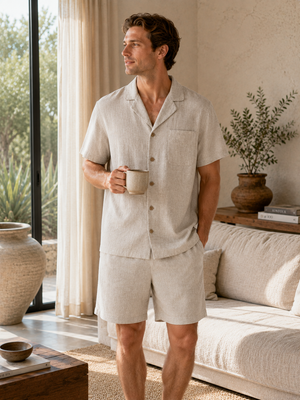
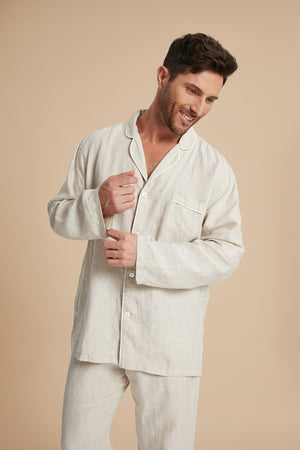
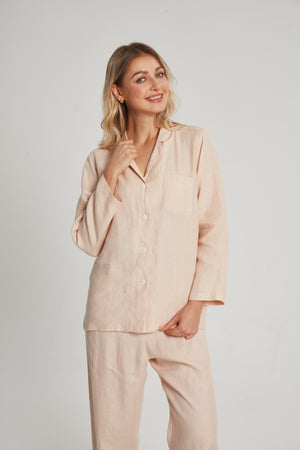
If your search for ethical clothing started because you sleep hot, begin with the fabric. Hemp and linen move moisture away from skin and let air through, which is why many people who overheat at night prefer them to cotton jersey or polyester. Our hemp sleepwear and linen sleepwear collections cover men’s and women’s styles, and you can browse by men’s sleepwear or women’s sleepwear.
Some starting points:
- Men’s short-sleeve hemp sleepwear set for warm sleepers.
- Women’s linen sleepwear for a light, airy feel.
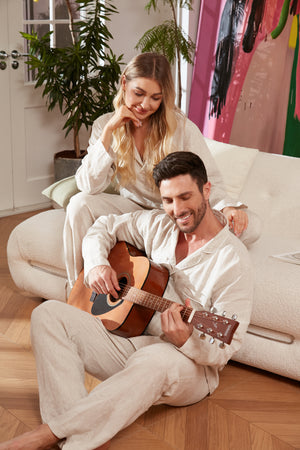
- Hemp Lovers’ sleepwear set for 2 if you are buying for a couple. Our guide to sustainable pajamas for couples explains the fabric choices.
We also offer a text monogram option and curated gift sets for people shopping for someone else, plus subscription purchase options for items you replace regularly. Prices are listed on each product page.
Underwear and socks deserve the same scrutiny
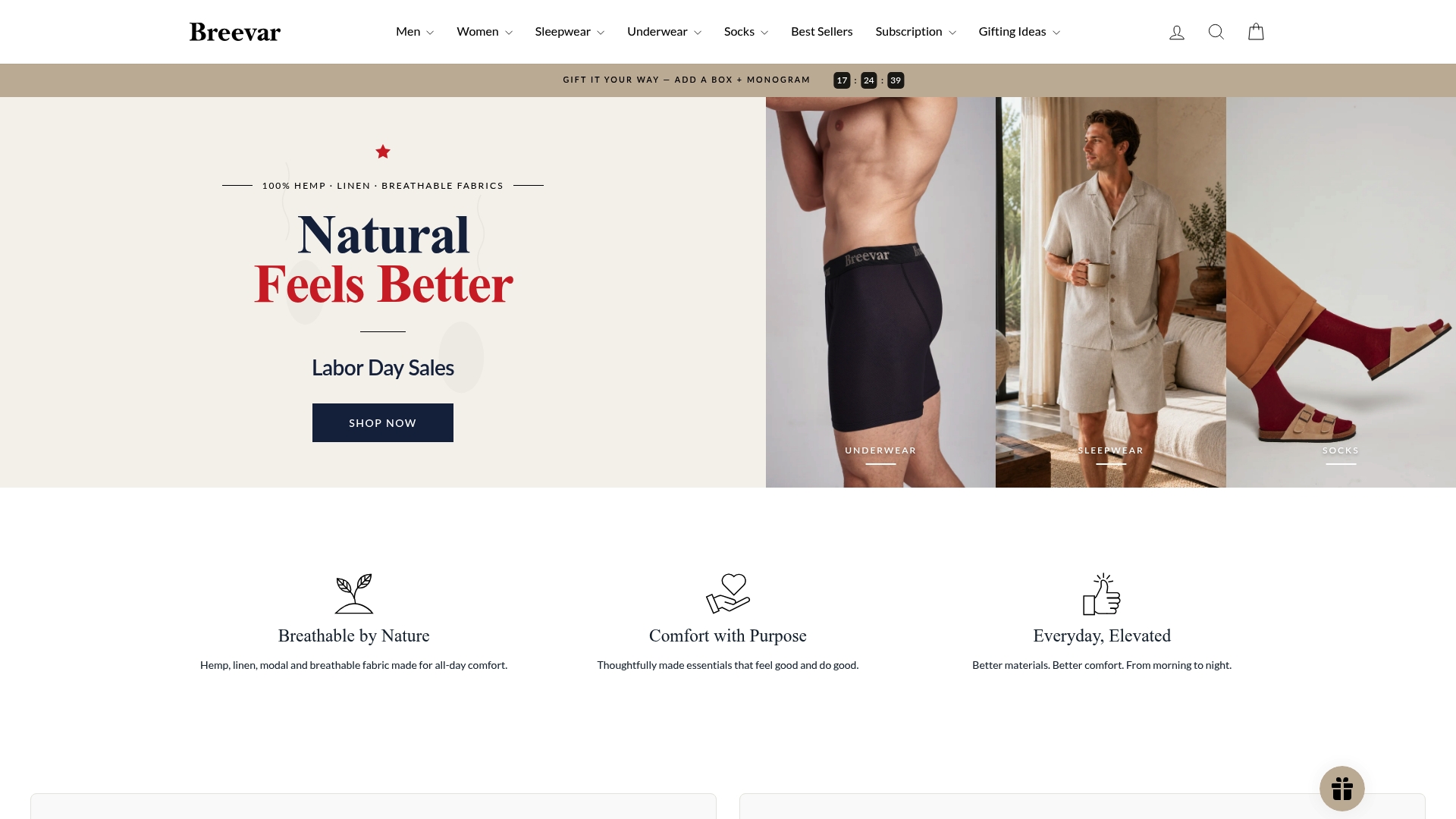
Basics are where shoppers tend to skip the research, yet they are worn the most and washed the most. Synthetic blends shed more fibers and hold odor. If you are replacing basics, look for natural or responsibly made semi-synthetic fibers and flat seams that do not rub. We carry underwear and socks, and our sock guide, The Eco-Friendly Guide to Socks, explains what to look for. For the thinking behind our fabric choices, read why we choose organic and recycled materials.
Subscriptions can reduce waste if they are built around items you actually replace and not around constant new purchases. We looked at that tension in are natural fiber sleepwear subscriptions sustainable.
A practical way to shop
Here is a simple order of operations that works for any category of clothing:
- Decide what you need. Buying fewer, better items beats a haul of “sustainable” extras.
- Shortlist with the directory. Search B Lab’s directory for certified apparel companies in your category.
- Read the profile and the product page. Confirm the certified entity, the date and the score, then check fiber content and care.
- Look for product-level labels. GOTS and OEKO-TEX speak to fabric in ways the company badge cannot.
- Plan for the long run. Ask about repair, return and what happens to the garment at the end of its life.
This takes ten minutes and filters out most vague green marketing.
FAQ
What are some B Corp clothing brands?
B Lab’s 2021 fashion guide names U.S.-based apparel B Corps including activewear, outdoor and women’s clothing labels, and the directory lists many more, including several certified in 2025. Because certification can change, confirm any brand in the official directory before you buy.
Does B Corp certification mean the fabric is sustainable?
No. The certification assesses the company’s overall social, environmental and governance impact, not each material. For fabric, look at fiber content and product labels such as GOTS or OEKO-TEX.
How do I know a brand is still certified?
Search for it in B Lab’s B Corp Directory, which has a public profile for every Certified B Corporation. The profile shows the company name, headquarters, certification date and score. If there is no profile, the brand is not currently certified.
Is Breevar a B Corp?
We do not claim B Corp certification. We make natural-fiber sleepwear, underwear and socks for men and women, and every purchase supports nonprofit initiatives focused on climate action and social responsibility.
Sources
- About B Corp Certification, B Lab
- What is a B Corp?, B Lab UK
- 17 Ethical Fashion B Corps, B Lab U.S. & Canada
- Frequently asked questions, B Corp Brand Book
- Are there B Corps in my area?, B Lab
- Frequently Asked Questions, B Lab U.S. & Canada
- The House of LR&C, PBC, B Lab profile
- Wild Rye, PBC, B Lab profile
- Cleobella LLC, B Lab profile
- Stick & Ball, B Lab profile
- Toad & Co. International, Inc., B Lab profile
- LIVSN Designs, B Lab profile
- Fervor and Zeal LLC, B Lab profile
- Eddy Aesthetic, B Lab profile
- Women’s Casual & Elegant Clothing, EILEEN FISHER
- The Body Shop achieves B Corp certification, Global Cosmetics News
- What Is Ethical Fashion? A Practical Shopping Checklist


Leave a comment