

Fabric and Sleep Temperature: What Actually Keeps You Cool
Fabric changes how much heat and moisture stay next to your skin overnight, and that shapes how comfortably you sleep. A 2024 review of sleepwear and bedding fibers found that fabric affects sleep by insulating the body and influencing skin temperature and thermal comfort. In warm conditions, fabric that lets sweat evaporate keeps skin drier. Fiber is only part of the story, though. Weave, weight, fit and the temperature of your room matter too.
TL;DR
- Choose fabric that lets sweat evaporate. High water-vapor permeability is the trait the research points to for warm conditions.
- Linen and hemp are loose, breathable natural fibers. Polyester and microfiber tend to trap heat and moisture.
- Weave and weight count as much as fiber: open, lightweight constructions breathe better than tight, heavy, brushed ones.
- The best bedroom temperature is around 65 to 68°F. Fabric helps, but it cannot fully offset a hot room.
- The science on any single “best” fiber is still mixed, so match fabric to your own sleep conditions.
Table of Contents
- How fabric affects temperature while you sleep
- Breathable, absorbent and wicking are not the same
- Fabric by fabric: what to expect
- Weave, weight and fit matter as much as fiber
- Is 74°F too hot to sleep?
- Is flannel too hot to sleep in?
- How to choose sleepwear for your situation
- Shop breathable natural sleepwear
- What the evidence does not settle
- FAQ
- Sources
How fabric affects temperature while you sleep
Your body drops its core temperature by about 1 to 2°F before sleep. Anything against your skin either helps that heat leave or holds it in. Two things happen at the fabric layer.
Insulation. Thick or dense fabric slows heat loss. This is welcome in winter and a problem in a warm bedroom. The Sleep Foundation notes that thick, insulating or non-breathable sleepwear can contribute to feeling hot.
Moisture handling. Sweat cools you only if it evaporates. The 2024 review linked above says high water-vapor permeability lets sweat evaporate and helps keep skin dry in normal or warm conditions. One mattress-and-bedding brand’s sleep science write-up adds that reducing the humid microclimate around the body can help avoid micro-arousals.
So the question is not “which fabric is cold?” It is “which fabric moves heat and moisture away from me, in my room, at my sweat level?”
Breathable, absorbent and wicking are not the same
These three words get mixed up on product pages, and the difference matters at 3 a.m.
- Breathable means air and vapor pass through the fabric.
- Absorbent means the fiber takes moisture in. Natural fibers are hygroscopic, meaning they absorb moisture into the fiber structure. According to the 2024 review, wool has the highest moisture regain, followed by cotton, while polyester absorbs very little.
- Wicking means moisture moves along the fabric to a surface where it can evaporate.
REI’s guide to breathable fabrics points out that cotton and linen are breathable but absorb moisture rather than wick it or dry quickly, while polyester and nylon generally wick and dry fast. It also says performance depends on construction as well as fiber. That is why a loosely knit natural-fiber garment and a mesh performance knit can both work for a hot sleeper, in different ways.
Fabric by fabric: what to expect
| Fabric | Warmth | Moisture behavior | Good for |
|---|---|---|---|
| Linen | Feels cool; loose weave lets air through | Absorbs moisture, dries relatively open and airy | Hot sleepers, summer, warm bedrooms |
| Hemp | Breathable natural bast fiber, similar feel to linen | Absorbs moisture, airy in light weaves | Hot sleepers who want a durable natural fabric |
| Cotton (percale or jersey) | Moderate | Absorbs moisture, slower to dry | Mild to warm rooms |
| Cotton sateen | About 1°F warmer than percale | Smoother, less airy | Cooler rooms |
| Flannel / brushed cotton | About 3 to 5°F warmer than percale | Traps warm air in the nap | Cold winter nights |
| Wool | Insulates, yet manages moisture well | Highest moisture regain | Cool rooms, some older sleepers in warmth |
| Polyester / microfiber | Can trap heat | Absorbs little, may feel clammy | Rarely the best choice for sweaty nights |
The temperature differences for sateen and flannel come from one bedroom-temperature guide, which is about bedding rather than pajamas, so treat them as rough guides to how the weave feels.
Linen and hemp
Wirecutter recommends cotton percale or linen for hot sleepers, and notes that linen, despite being heavier, feels cooler on skin than cotton thanks to its loose weave. The same bedding guide cited above says linen feels about 2°F cooler than cotton percale at the same room temperature. Hemp shares the airy, textured character of linen, which is why we use both for sleepwear.

Cotton
Cotton is a reasonable all-rounder, especially in a lightweight jersey or percale. It soaks up sweat, but it holds that moisture and dries slowly, so on very sweaty nights it can feel damp.
Wool: the surprise
Wool sounds like a bad idea for hot sleepers, but the evidence is interesting. In a study at 30°C and 50% relative humidity, older participants in wool sleepwear fell asleep in 12.4 minutes on average, versus 26.7 minutes in cotton and 21.6 in polyester. Poor sleepers also had less wakefulness in wool than in cotton. The 2024 review adds that wool sleepwear helped sleep onset in adults in cool conditions, and that linen bedsheets improved sleep quality in young adults in warm conditions.

The lesson is not “everyone should wear wool.” It is that moisture management can matter more than how “cool” a fabric feels in your hand.
Polyester and microfiber
One bedding guide reports that polyester and microfiber raise local body temperature by 1 to 3°F compared with natural fibers at the same loft. Synthetic performance knits are a separate case: engineered for wicking, they can work if the construction is open and lightweight.
Weave, weight and fit matter as much as fiber
Two linen garments can feel very different. Look at:
- Weave or knit. REI says tighter knits and weaves are less breathable, while open knits and looser weaves are more breathable. Thinner materials and finer yarns also change breathability.
- Weight. Flannel is a good example: a buyer’s guide calls 130 to 170 GSM mid-weight, 170 to 200 GSM noticeably warm, and 200+ GSM maximum warmth.
- Fit. A relaxed cut lets air circulate. Tight, clingy garments limit it.
- Seams and finishing. Flat or seamless construction reduces chafing and hot spots when you shift around.
The 2024 review makes the same point: thermal properties depend on fiber type, thickness and yarn structure, and fiber effects on sleep quality are complex.
Is 74°F too hot to sleep?
For most people, 74°F is warm but workable. The Sleep Foundation puts the best sleep temperature around 65 to 68°F, and notes that perception varies. One guide says that at 70 to 74°F there may be a mild reduction in slow-wave sleep that most people tolerate, while 75 to 79°F is linked to reduced REM sleep, more night sweating and more fragmented sleep.
This is where fabric earns its keep. If you cannot cool the room, a breathable, lightweight fabric is the easiest thing you control. It will not turn 78°F into 66°F, but it removes one source of trapped heat.
Is flannel too hot to sleep in?
Often yes, unless the room is cold. Wirecutter says flannel is very warm and fuzzy and can be comfortable on cold winter nights. The Sleep Foundation’s flannel guide says warmth depends on fiber, weave, nap and weight, with loose weaves improving breathability. If you love the feel but run hot, choose a lighter weight or layer it over something more breathable.
Our perspective
We started Breevar because so many people told us the same thing: the pajamas they owned made them hotter, not more comfortable. Our view is simple. For anyone who overheats, the first fix is what touches your skin.
That is why we work with hemp, linen and modal, and with moisture-wicking, seamless constructions. Natural fibers breathe, and the open texture of linen and hemp gives sweat room to evaporate. We design our pieces for people who want that luxurious natural feel without the clammy, stuck-to-the-sheets feeling.
We also think comfort and conscience belong together. Every purchase supports nonprofit initiatives focused on climate action and social responsibility, so a better night does not have to cost the planet.
Jason
How to choose sleepwear for your situation
- Start with your room. If it sits above 70°F, go for the lightest, most open fabrics: linen, hemp or a breathable modal knit.
- Match fabric to your sweat pattern. If you sweat heavily, favor moisture-handling fabrics and avoid heavy synthetics that hold heat. Persistent drenching night sweats, especially with fever, weight loss or other new symptoms, are worth raising with your doctor.
- Check the construction. Loose weave, relaxed fit, flat seams.
- Think in layers by season. Lightweight in summer, a bit more insulation in winter. Our guides on summer sleepwear fabrics and winter breathable pajamas go deeper.
- Mind the whole system. Sheets, pajamas and room temperature work together. See our comparison of cooling sheets vs. pajamas.
For a fuller walk through natural options, read our guide to fabrics for night sweats and our tips on regulating sleep temperature. If you are weighing styles, pajama shorts vs. nightgowns is a useful cut-by-cut comparison.
Shop breathable natural sleepwear
If you want to try this yourself, start with our linen sleepwear or hemp sleepwear. We also make women’s sleepwear, men’s sleepwear, underwear and socks, with monogram personalization and curated gift sets.

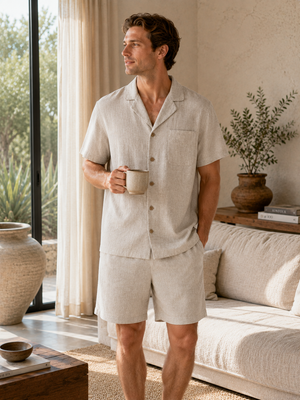
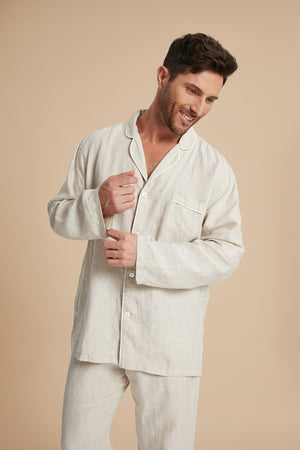
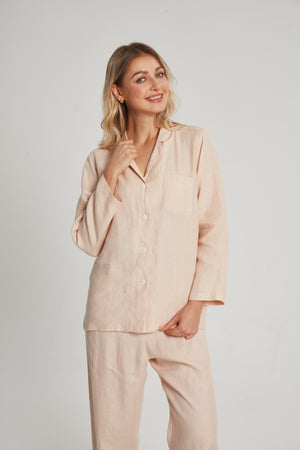
Pieces like our women’s linen sleepwear and men’s short-sleeve linen sleepwear are designed for warm sleepers who want natural, breathable comfort.
What the evidence does not settle
The research is honest about its limits. The 2024 review says fiber comparisons are difficult because the studies are diverse, and that more research is needed. Many studies test small groups under set temperatures. That is why the practical approach works best: pick breathable construction, adjust to your room, and notice how you actually sleep over a week or two.
FAQ
What is the healthiest fabric to sleep in?
There is no single proven winner. The 2024 review says the research is too varied to crown one fiber. Breathable, skin-friendly natural fibers such as linen, hemp and cotton are sensible choices for most people, and the best one depends on your room temperature and how much you sweat.
Is linen or cotton cooler for sleep?
For hot sleepers, linen usually feels cooler. Wirecutter says it feels cooler on skin than cotton because of its loose weave, and one guide puts the difference at about 2°F against cotton percale. Lightweight cotton jersey or percale is still a fine choice in mild rooms.
Does moisture-wicking sleepwear help with night sweats?
It can. Fabric that moves moisture away from skin and lets it evaporate reduces that damp, clammy feeling, and construction and fit decide how well it works. If night sweats are frequent or severe, talk with a doctor as well as changing your pajamas.
Is it better to sleep in nothing or in breathable pajamas?
That depends on your bedding and room. Breathable pajamas can absorb sweat and keep it off your sheets, which some hot sleepers find more comfortable. Try both for a few nights and see which gives you steadier sleep.
Sources
- How do sleepwear and bedding fibre types affect sleep (2024 review)
- The impact of sleepwear fiber type on sleep quality under warm ambient conditions
- Why Do I Get So Hot When I Sleep? (Sleep Foundation)
- Best Flannel Sheets (Sleep Foundation)
- What We Recommend for Hot, Sweaty Sleepers (Wirecutter)
- How to Mix and Match Your Bed Sheets for the Season (Wirecutter)
- How to Pick the Most Breathable Fabrics (REI)
- Bedroom Temperature for Sleep: The Science
- The Sleep Science Behind Fabric and Temperature
- Best bedding for hot sleepers
- Best Flannel Fabric for Shirts, Bedding, and Quilts


Leave a comment