

Sustainable Underwear Essentials: Build a Small Drawer That Lasts
Sustainable underwear essentials come down to three decisions: how many pairs you actually need, which fibers you choose, and which claims you trust. Most people do best with a small, well-chosen set of breathable pieces in natural or lower-impact fabrics. Wash them gently and rotate them, and they should outlast a drawer of cheap multipacks.
This guide walks through each decision in order, so you can build a capsule that fits your real week instead of a shopping list.
TL;DR
- Count your laundry cycle, not a magic number: enough pairs to last from one wash to the next, plus a small buffer.
- Choose cellulose-based fibers such as hemp, linen, cotton, modal and lyocell for breathability, and keep synthetic knits for hard workouts.
- Treat “eco,” “natural” and “bamboo” on a label as claims to check. Look for named certifications like GOTS or OEKO-TEX.
- Judge value by cost per wear. A pair that holds its shape and elastic for years beats a cheaper pair you replace each season.
- Wash cool, skip fabric softener and rotate pairs so no single piece wears out first.
Table of Contents
- What a sustainable underwear capsule actually contains
- Fabrics: what breathes, what lasts
- How to tell whether underwear is really sustainable
- Fit, construction and durability
- What to spend: judging value
- Shopping for someone else
- Washing and caring for your capsule
- Build your capsule with Breevar
- FAQ
- Sources
What a sustainable underwear capsule actually contains
A capsule wardrobe for underwear is the smallest collection that still covers your real week. That idea matters more than any fixed number, because the right count depends on how often you do laundry, your climate and how active you are.
Here is a simple way to work it out:
- Count the days between washes. If you do laundry weekly, you need seven pairs in rotation.
- Add two or three spares for a missed laundry day, a workout, or a pair that is still drying.
- Split that total across the situations you live in: everyday, sleep, exercise and dressier outfits.
For a weekly washer that usually lands around nine or ten pairs. If you wash every ten days or train most days, a larger set makes sense. Several minimalist guides suggest similar ranges, roughly 7 to 10 pairs for weekly laundry and more for less frequent washing or active routines. Treat those as starting points and adjust them to your own routine.
The core pieces
- Everyday briefs or boxer briefs in a breathable natural fiber. These do most of the work, so put your best fabric here.
- A seamless or flat-seam pair for tight trousers, leggings or anything that shows lines.
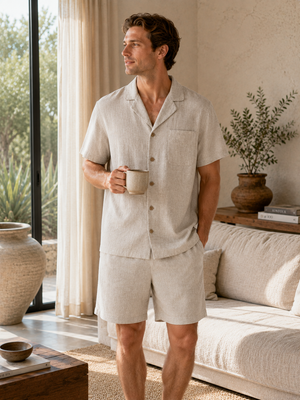
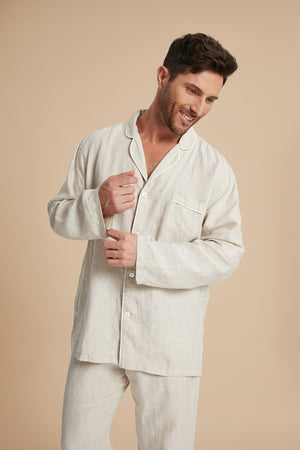
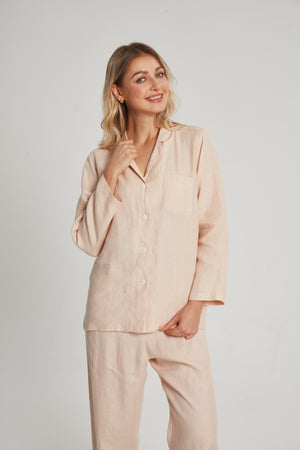
- A sleep layer. Overheating at night is mostly a fabric problem, so sleepwear and underwear should come from the same breathable family.
- Socks in a natural blend, since socks wear out as fast as underwear and are part of the same drawer.
- One or two special-occasion pieces only if your calendar truly calls for them.
If you like to plan your wardrobe as a whole, a wardrobe staples checklist is a handy way to test whether each new piece works with what you already own before you buy.
Fabrics: what breathes, what lasts
Fiber choice is where sustainability and comfort meet. A fabric you love wearing is one you keep, and keeping it is the most sustainable thing you can do.
Natural cellulose fibers
Linen, cotton, hemp and regenerated cellulose such as modal and lyocell all handle air and moisture well. The Alliance for European Flax-Linen & Hemp describes linen’s thermoregulating properties and its “second skin” comfort across seasons. Hemp behaves similarly. It is durable, softens with every wash and suits people who run warm. If you want a side-by-side, our own guide to hemp vs. cotton for breathability goes through the trade-offs.

Modal is a soft, smooth regenerated fiber that many people prefer for underwear because it drapes well and feels light. We explain how it handles moisture in is modal breathable for underwear, and how it stacks up against bamboo-based fabrics in modal vs. bamboo underwear.

Synthetics and recycled fibers
Recycled polyester and nylon have a place in sustainable fashion because they divert existing material from waste. A 2025 University of Manchester study of eco-friendly fabrics reported that recycled polyester had higher air permeability but lower moisture absorption than bamboo and Tencel, and that Tencel gave a smooth feel against the skin. In practice, that makes recycled knits a reasonable pick for hard exercise, while soft cellulose fibers suit all-day and overnight wear.
A quick fabric guide
| Fabric | Feels like | Best for | Keep in mind |
|---|---|---|---|
| Hemp | Textured at first, softens with wear | Hot sleepers, durability | Gets softer over time |
| Linen | Crisp, airy | Warm weather, sleepwear | Relaxed, naturally textured look |
| Organic cotton | Familiar, soft | Everyday basics | Slower to dry than synthetics |
| Modal / lyocell | Silky, smooth | Everyday and sleep | Check the maker’s sourcing claims |
| Recycled polyester or nylon | Slick, stretchy | Workouts | Less breathable for lounging |
For a longer framework, our six checks for choosing underwear fabric walk through feel, moisture, stretch and sourcing, and our summer underwear fabrics piece covers heat in particular.
How to tell whether underwear is really sustainable
“Sustainable” has no legal definition on a clothing label. That is why certifications and specifics matter more than adjectives.
Read the claims carefully
The U.S. Federal Trade Commission has said that environmental claims such as “biodegradable” or “natural” must be backed by reliable scientific evidence. It has also noted that labeling rayon as “bamboo” is deceptive under U.S. advertising standards. So when a tag says “bamboo,” look for the actual fiber name, such as viscose, rayon, modal or lyocell, and for how it was made.
Look for named standards
- GOTS (Global Organic Textile Standard). It covers every step of production from fiber processing to manufacturing, with organic fiber requirements, chemical limits, wastewater treatment, social criteria and independent audits.
- OEKO-TEX STANDARD 100. Certified items are tested against a list of more than 1,000 substances that can harm health, which matters for fabric that sits against sensitive skin all day.
The two do different jobs. GOTS is about how organic fibers are grown and processed. OEKO-TEX STANDARD 100 is about harmful substances in the finished product. Green America, a nonprofit, recommends choosing certified organic cotton, bamboo lyocell or hemp, and checking for certifications such as GOTS along with fair-labor and supply-chain transparency.
A 60-second label check
- Is the fiber named plainly, with a percentage?
- Is there a named certification, and can you find the brand’s certificate or license number?
- Does the brand say where the garment was made and by whom?
- Does the claim say something measurable, or is it only a mood word like “green” or “conscious”?
Our organic vs. natural fabrics guide and our vegan underwear fabrics guide show how to run this check on the label in front of you.
Our perspective
We started Breevar because comfort and conscience should not be a trade-off. Underwear and sleepwear sit against your skin for most of the day and all of the night, so the fabric is not a detail. It is the product.
That is why we work with hemp, linen and modal, fibers that breathe and that are designed to move moisture away from the body. For anyone who runs warm or wakes up damp, we think this is the first place to look, well before any other feature.
We also believe a good capsule is a small one. Buy fewer pieces, choose fabrics you will actually want to wear, and let personalization such as a monogram make a piece feel like yours. Every purchase also supports nonprofit initiatives focused on climate action and social responsibility, so the drawer you build does a little good beyond your own comfort.
Jason
Fit, construction and durability
A sustainable pair that digs in or rolls down gets pushed to the back of the drawer. Check these before you commit:
- Waistband. It should lie flat and recover after stretching. A wide, soft band usually stays put better than a thin one.
- Seams. Flat or seamless construction reduces chafing, especially on long days or in warm weather. Pull gently on a seam: it should not gap.
- Leg opening and length. If you plan to wear the pair under shorts or a skirt, test for ride-up.
- Fabric weight. Feel it against light. Very thin fabric may be cool but wear faster. A balanced weight is usually a good all-rounder.
- Gusset. A cotton or similarly breathable lining in the gusset helps airflow.
- Stretch blend. A little elastane improves fit, but pairs that are mostly synthetic give up breathability.
Size by measurement rather than by what you usually wear, since natural fibers can fit differently from stretchy synthetics. If you are between sizes, check the brand’s size chart and return policy before ordering.
What to spend: judging value
There is no single “right” price. Sustainable underwear typically costs more per pair than mass-market multipacks, because natural fibers, certified production and fairer labor cost more. The useful number is cost per wear.
Here is a worked example with made-up round figures, only to show the math. If a pair costs $10 and you wear it 50 times before it fails, that is $0.20 per wear. A pair costing $25 that lasts 250 wears comes to $0.10 per wear, and it makes less waste. Your numbers will differ, but the logic holds: durability and wear count drive value, not sticker price.
To keep the cost reasonable:
- Buy your most-worn style first and add variety later.
- Build the capsule over a few months rather than all at once, replacing worn-out pairs with better ones.
- Use multi-packs and bundles when the fabric is one you already know you like.
- Consider a subscription for items you replace on a schedule, such as socks, if the brand offers one.
Shopping for someone else
Underwear is a practical gift when you choose carefully. Keep these in mind:
- Size. Unless you know it, choose a gift set with a flexible size policy, or pair the gift with a gift receipt. Socks and sleepwear are more forgiving than underwear.
- Comfort needs. People who sleep hot or have night sweats often appreciate breathable natural fibers. Hemp, linen and modal sleepwear suit them well.
- Personalization. A monogram turns a basic into something personal, but add it only when you are confident about the style and size.
- Values. A gift that supports a good cause often lands well with eco-minded recipients.
Washing and caring for your capsule
Care is where most of the sustainability is won. The longer a pair lasts, the fewer you buy.
- Rotate. Cycle through your pairs rather than always reaching for the top one. Even wear keeps the whole set functional for longer.
- Wash cool and gentle. Cooler water and a gentler cycle are kinder to elastic and natural fibers. Always follow the care label.
- Use mild detergent and skip softener. Softener can coat fibers and reduce breathability and absorbency.
- Use a mesh bag to protect seams and waistbands, and to cut down on loose fibers from synthetics.
- Air-dry when you can. High heat is rough on elastic. If you use a dryer, choose low heat.
- Store flat or rolled so waistbands do not stretch out of shape.
When a pair finally wears out, retire it before it fails in public: repurpose it as a cleaning rag, or look for a textile recycling program near you.
Build your capsule with Breevar
If you want a starting point, our underwear collection and socks are made from breathable natural materials, with seamless, anti-chafe construction in many pieces. For the sleep side of the drawer, browse hemp sleepwear and linen sleepwear.

Buying for someone else? The Naturally Better Underwear & Socks Essentials Gift Box and the Deluxe Gift Box bundle the basics, and you can add a text monogram to make it personal.
FAQ
How many pairs of underwear do I need in a sustainable capsule?
Start with the number of days between laundry cycles, then add two or three spares. A weekly washer lands near nine or ten pairs, and people who wash less often or exercise daily need more. Adjust the count after a few weeks of real use.
Which fabric is best for people who overheat at night?
Cellulose fibers such as linen, hemp, cotton and modal are good choices because they breathe and handle moisture well. Heavier or mostly synthetic fabrics tend to hold heat. If night sweats are frequent or new, mention them to your doctor, since fabric alone will not address the cause.
Is bamboo underwear sustainable?
It depends on how the fiber was made. The FTC says calling rayon “bamboo” can be deceptive, so check the label for the actual fiber, such as viscose, modal or lyocell, and look for transparency about processing. Our modal vs. bamboo comparison explains what to look for.
Do I need GOTS or OEKO-TEX certification?
Neither is required by law, but both give you something verifiable. GOTS speaks to organic fiber and processing, while OEKO-TEX STANDARD 100 speaks to tested harmful substances in the product. Brands that hold them should be able to show you a certificate.
How should I wash underwear so it lasts?
Wash in cool water on a gentle cycle with mild detergent, skip fabric softener and air-dry when possible. Rotating pairs also spreads out the wear.
Sources
- Flax fibre: performance and properties, Alliance for European Flax-Linen & Hemp
- Comparative assessment of sensory comfort properties across eco-friendly fabrics, University of Manchester
- Federal Trade Commission remarks on environmental marketing claims
- Global Organic Textile Standard (GOTS)
- What OEKO-TEX labels mean and why they matter
- Why you should wear organic underwear, Green America


Leave a comment