


11–13% vs 7–8.5% Moisture: Modal vs Cotton Pajamas for Hot Sleepers
For most hot sleepers and lightweight sleepwear, modal wins on softness and moisture control. For heavy nightly wear that needs to survive hot washes and years of use, cotton is the safer bet. The reason comes down to fiber structure: modal absorbs and releases moisture faster, while cotton holds onto it longer but shrugs off rough laundering. Which one fits your bed depends less on brand hype and more on how you actually sleep.
TL;DR:
- Modal pajamas offer superior softness and faster moisture release compared to cotton, making them ideal for hot sleepers and humid climates.
- Cotton pajamas are more durable, tolerate hot washes, and are less prone to pilling, especially when made from longer staple fibers like Pima or Supima.
- Care differences are significant: modal requires cooler wash temperatures and gentle drying, while cotton can withstand higher heat without damage.
- Fabric construction, such as percale or jersey, influences breathability and warmth more than fiber type alone.
- For sensitive or reactive skin, cotton’s hypoallergenic reputation remains a key advantage, though modal’s smooth surface can reduce chafing.
Table of Contents
- Modal vs Cotton Pajamas: What Modal Fabric Actually Is
- What Is Cotton, and How Does Weave Change the Way Pajamas Perform?
- Modal vs Cotton Comparison: Softness, Breathability, and Moisture Control
- Is Modal Better Than Cotton for Sensitive Skin?
- How to Wash Modal and Cotton Pajamas Without Ruining Them
- Sustainability and Sourcing: What Certifications Actually Mean
- Which Pajama Fabric Should You Buy?
- How Breevar Designs Modal Sleepwear for Real Sleep Needs
- Modal or Cotton for Pajamas? My Honest Take
- Try Breevar’s Modal Sleepwear Built for Hot Sleepers
- Sources
- FAQ
Modal vs Cotton Pajamas: What Modal Fabric Actually Is
Modal is a regenerated cellulose fiber, spun from beechwood pulp through a chemical process similar to rayon but refined for strength and softness. Not all modal is equal. Branded Lenzing Modal comes with traceability and consistent fiber quality, while generic modal (often unlabeled by origin) can vary in softness and durability from batch to batch, according to a comparison of branded and generic modal fiber data.
Pajama brands typically use modal in a few forms:
- Modal jersey: a stretchy knit common in T-shirt style pajama tops
- Micro modal: an ultra-fine version prized for a silky, almost liquid hand feel
- Modal blends: often mixed with spandex or cotton for stretch and structure
One catch: finished modal fabric usually needs cooler wash water and lower dryer heat than cotton to avoid pilling or losing its drape. That single care detail trips up a lot of first-time buyers.
What Is Cotton, and How Does Weave Change the Way Pajamas Perform?
Cotton is a natural fiber, but not a single material. Staple length makes a real difference: Upland cotton (the most common commercial variety) has shorter fibers than Pima or Supima cotton, which produce a smoother, more durable yarn.
Construction matters just as much as fiber type:
- Percale: tight, plain weave that feels crisp and breathes well, ideal for warm sleepers
- Jersey knit: stretchy and soft, similar in feel to a favorite T-shirt
- Flannel: brushed for warmth, better suited to cold bedrooms than hot ones
Cotton’s biggest practical edge shows up at the washing machine. It tolerates hot water and high dryer heat without the fiber breaking down the way modal can, which makes it the low-maintenance choice for anyone who does not want to think twice about laundry settings.
Modal vs Cotton Comparison: Softness, Breathability, and Moisture Control
Softness comes down to fiber fineness, and modal typically wins this round. Its filaments are finer and smoother than cotton’s, giving it a slick, almost cool touch that many sleepers describe as closer to silk than to a T-shirt, a quality repeatedly noted in modal-versus-cotton fabric comparisons.
Breathability is trickier than fiber-vs-fiber logic suggests. Construction can flip the expected outcome entirely: a loose, lightweight cotton percale often feels cooler at night than a dense modal knit, even though modal is generally considered a breathable, next-to-skin fabric. Weight and weave decide airflow as much as the fiber itself does.
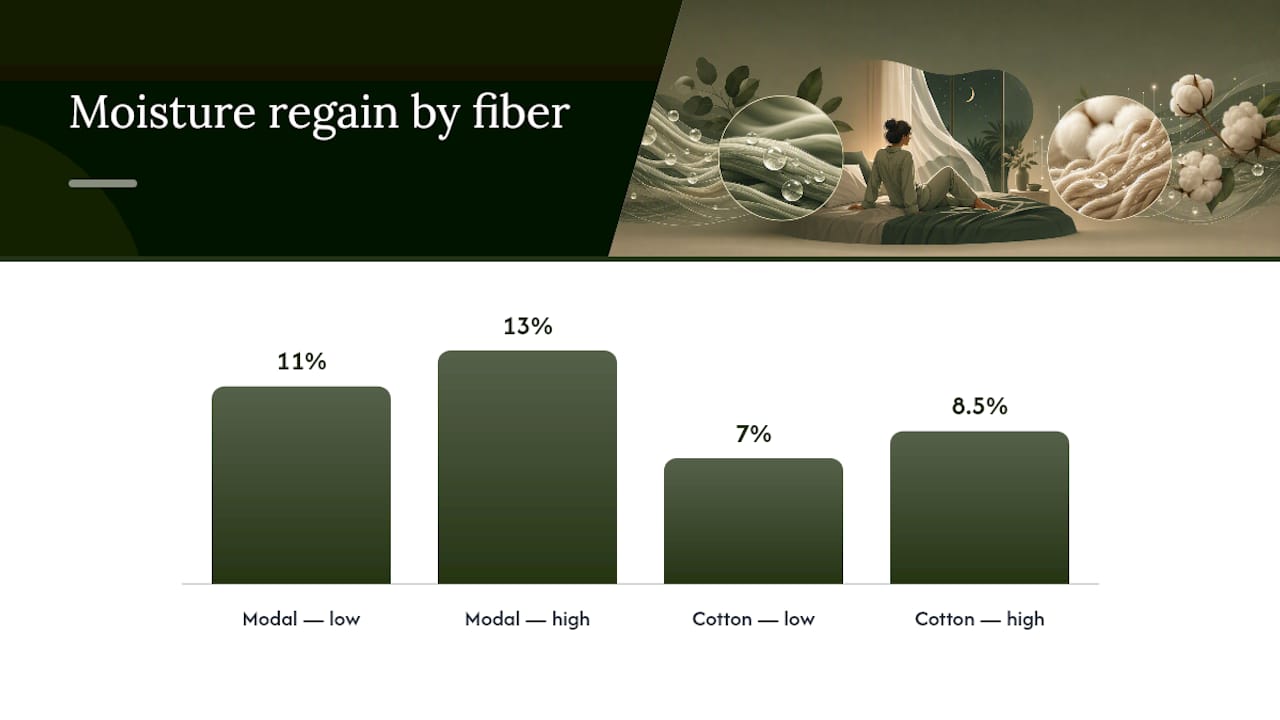
Modal fibers hold about 11 to 13% moisture regain, compared with roughly 7 to 8.5% for cotton, according to fiber-level testing data. In practice, that means modal pulls sweat away from skin and releases it into the air faster, while cotton absorbs moisture and holds it against the body longer. For a night sweater, that difference decides whether you wake up in a damp shirt or a dry one. Sleep researchers have also linked ambient humidity and moisture buildup near skin to disrupted sleep continuity, which is part of why moisture-managing fabrics get flagged in humid-climate sleep guidance.
Here’s how the two stack up across the categories that matter most for pajamas:
- Drying speed: modal dries noticeably faster, reducing the clammy, wet-fabric feeling during a sweaty night
- Durability and pilling: cotton generally tolerates abrasion better over years of wear and washing, though tightly woven modal blends can hold up well too
- Care tolerance: cotton survives hot washes and high heat; modal needs gentler settings to avoid degrading
Fabric weight and finish frequently override fiber-type assumptions, a point textile testing on breathable fabrics makes clear. A heavy modal fleece will always sleep hotter than a lightweight cotton voile, no matter what the fiber label promises.
Is Modal Better Than Cotton for Sensitive Skin?
Fiber type matters less for irritation than what gets added during manufacturing. Dyes, formaldehyde-based wrinkle-resistant finishes, and residual processing chemicals cause more reactions than the raw fiber itself, regardless of whether the base material is modal or cotton.
That said, modal’s smooth, low-friction surface tends to reduce chafing for people prone to rashes or eczema flare-ups. Cotton carries a long-standing hypoallergenic reputation and remains the default recommendation for infants and highly reactive skin.
Simple laundry adjustments cut irritation risk with either fabric: use a mild, fragrance-free detergent, run an extra rinse cycle, and skip fabric softeners, which coat fibers with a residue that can trap heat and irritants against skin.
How to Wash Modal and Cotton Pajamas Without Ruining Them
Modal generally needs cold to lukewarm water, around 86°F (30°C), and a low or no-heat dryer setting to prevent pilling and shrinkage, a limit confirmed in care guidance comparing modal and cotton laundering. Cotton tolerates warm to hot water, up to about 140°F (60°C), and higher dryer heat without much risk to fiber integrity.
- Turn pajamas inside out before washing to reduce surface friction.
- Use a gentle or delicate cycle with a low spin speed, especially for modal.
- Line dry when possible, or use the lowest heat dryer setting.
- Skip the dryer sheets on moisture-wicking fabrics; the coating can dull their performance.
Watch for thinning fabric, visible pilling clusters, or loss of stretch around the waistband. Those are the signs a pair has reached the end of its useful life, not just the end of a wash cycle.
Pro Tip: Wash modal and cotton separately when you can. Cotton’s rougher surface abrades modal’s finer fibers in the wash, accelerating pilling on your softest pieces.
Sustainability and Sourcing: What Certifications Actually Mean
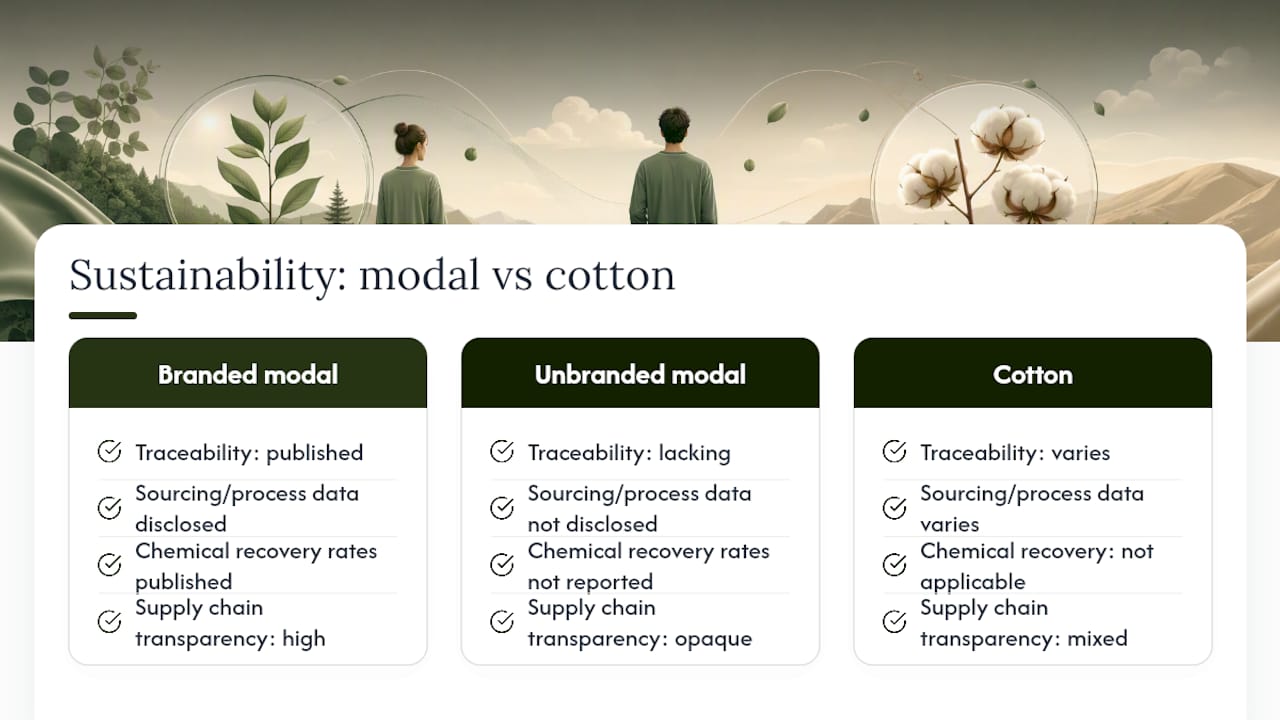
Traceability separates the meaningful sustainability claims from the vague ones. Branded modal, like Lenzing Modal, publishes sourcing and processing data that lets buyers verify wood origin and chemical recovery rates. Unbranded modal often comes from opaque supply chains where none of that is disclosed, a gap detailed in fiber sourcing comparisons.
Cotton carries its own footprint, mainly water use and pesticide application in conventional farming. Labels like GOTS (Global Organic Textile Standard) or Better Cotton indicate reduced chemical inputs and improved farming practices, but they do not guarantee zero environmental impact. Read past the marketing language: a “natural fiber” claim tells you nothing about water use, dye chemistry, or labor conditions further up the supply chain.
Which Pajama Fabric Should You Buy?
Match the fabric to how you actually sleep, not to whichever one sounds more premium on a hangtag.
- Hot sleepers or humid climates: lightweight modal or a modal blend releases heat and moisture fastest, which is why sleep guidance built around sleeper-specific fabric recommendations tends to favor it for warm-weather comfort.
- Cold sleepers who want weight and durability: cotton flannel or percale holds up to years of hot washes and adds warmth without sacrificing airflow.
- Active night sweaters: modal’s faster moisture release helps here, though anyone who washes sleepwear daily should lean toward cotton or a cotton-rich blend for laundering ease.
- Undecided or mixed needs: a modal-cotton blend, often around 60/40 or 50/50, balances modal’s softness with cotton’s structural durability.
If your pajama drawer already leans toward natural, breathable materials, this decision fits the same logic covered in choosing sleepwear by climate and sleep style. The fiber matters, but so does matching the garment to your actual nights, not an idealized one.
How Breevar Designs Modal Sleepwear for Real Sleep Needs
Breevar builds modal pieces around one problem: overheating at night. The fabric choice is not incidental. Moisture-wicking modal, paired with seamless anti-chafe construction, addresses the exact discomfort points covered above, and every purchase also supports nonprofit climate and social initiatives.
Three modal options cover most common needs:
- Men’s Modal Performance Long Boxer Brief: built for all-night coverage with steady moisture control, best for sleepers who run warm but want more leg coverage.
- Men’s Mesh Modal All-Day 2nd Skin Boxer Brief: a mesh-panel modal construction focused on maximum airflow, suited to the hottest sleepers or humid bedrooms.
- 3-Pack Men’s Modal Performance Long Boxer Brief: the same performance fit in a multi-pack, practical for anyone ready to replace their entire rotation at once.
Modal or Cotton for Pajamas? My Honest Take
I don’t think this is a fight either fabric wins outright. If you run hot, wake up damp, or live somewhere humid, modal solves a real problem cotton can’t: it moves moisture off your skin instead of holding it there. If you’d rather throw pajamas in a hot wash and never think about them again, cotton is still the more forgiving material. Try one modal piece before committing your whole drawer to it. The products linked below make that a low-risk first step.
— Jason
Try Breevar’s Modal Sleepwear Built for Hot Sleepers
Breevar makes the switch to modal simple: no guessing whether a random “modal blend” pajama set will actually manage heat, because every Breevar piece is built specifically around moisture-wicking performance and sustainable sourcing, with a share of every purchase going toward climate and social nonprofits.
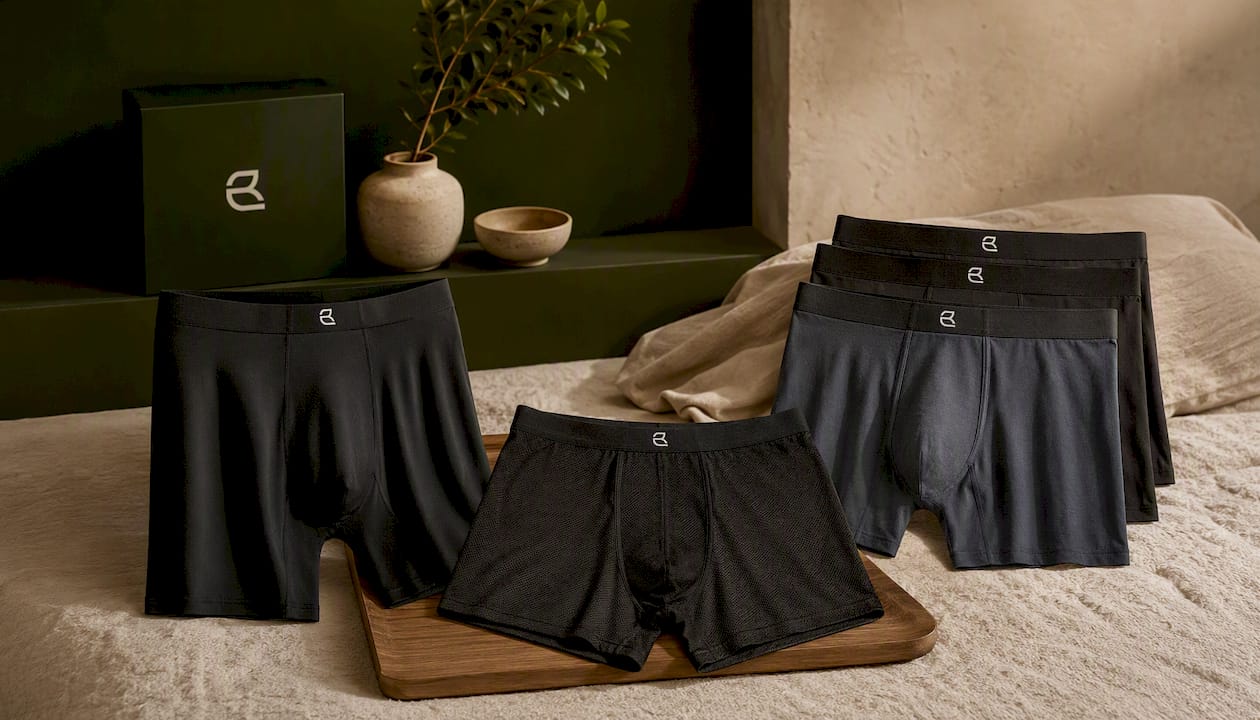
If overheating at night is your main complaint, the Men’s Modal Performance Long Boxer Brief delivers full coverage with steady moisture release through the night. For sleepers who need maximum airflow, the Men’s Mesh Modal All-Day 2nd Skin Boxer Brief uses mesh paneling to move air where cotton simply can’t. And if you’re ready to replace your whole rotation at once, the 3-Pack Men’s Modal Performance Long Boxer Brief covers a full week without repeat laundry runs. Pick the one that matches how you actually sleep, and check current pricing on the product page.
Sources
- How humidity affects sleep — Sleep Foundation
- Lenzing Modal vs Cotton: Branded vs Generic Modal, and the Fiber Comparison Data
- Is Modal Fabric Breathable? Complete Guide to Comfort, Heat, Sweat and Performance
FAQ
What Is the Healthiest Material for Pajamas?
Natural fibers like modal and cotton are generally considered the healthiest choices because they avoid the synthetic buildup that traps heat and moisture against skin. Beyond fiber type, low-chemical processing and dye-free or low-dye finishes matter just as much for reducing skin irritation.
Is Modal Better for You Than Cotton?
Modal typically manages moisture and heat better, since it has a higher moisture regain than cotton and releases sweat faster. Cotton remains the more durable, easier-care option for daily heavy use, so “better” depends on whether you prioritize nighttime comfort or long-term wash tolerance.
What Are the Downsides of Modal Fabric?
Modal requires gentler washing, usually cooler water and low dryer heat, or it can pill and lose its shape faster than cotton. Unbranded modal also varies more in quality than certified options like Lenzing Modal, since traceability isn’t guaranteed across every supplier.
What Fabric Is Best for Pajamas?
There’s no single best fabric across every use case. Modal, including options like Breevar’s modal boxer briefs, suits hot sleepers who want softness and fast moisture release, while cotton fits anyone who wants durable, low-maintenance sleepwear that tolerates hot washes.


Leave a comment