

Monogram vs. Embroidery: What's the Difference?
A monogram is a design: usually one to three initials, sometimes a short name or phrase. Embroidery is a technique: thread stitched into fabric. The two overlap constantly, because most monograms on clothing are embroidered, but they are not the same thing. Every embroidered monogram is embroidery. Not all embroidery is a monogram, since embroidery also covers logos, flowers, patterns and pictures.
That is the whole answer in two sentences. The rest of this guide helps you use it: how initials are arranged, where a monogram usually goes, how embroidery compares with other ways of personalizing fabric, and what changes when the garment is soft, lightweight sleepwear.
TL;DR
- A monogram is what you put on the fabric (initials or a short text). Embroidery is how it can be put there (stitching).
- A monogram can also be printed, embossed or engraved, so “monogram vs. embroidery” is really “design vs. method.”
- Monogram files are small, text-based and often one or two colors. Embroidery designs can be larger, multicolor and more complex.
- On lightweight natural fabrics like linen and hemp, small, simple lettering in a contrasting color usually reads best.
- You can add a monogram to your Breevar sleepwear with our monogram personalization add-on.
Table of Contents
- Monogram vs. embroidery at a glance
- What counts as a monogram
- What counts as embroidery
- Where a monogram usually goes on clothing
- Embroidery vs. other ways to personalize fabric
- Monogramming lightweight natural-fiber sleepwear
- Is monogramming outdated?
- Our perspective
- Add a monogram to Breevar sleepwear
- Caring for a monogrammed garment
- Quick decision guide
- FAQ
- Sources
Monogram vs. embroidery at a glance
People search this phrase because the two words get used as if they were rivals. They are different kinds of word. One names a design, the other names a process.
| Monogram | Embroidery | |
|---|---|---|
| What it is | A letter-based design, usually initials | A technique of stitching designs into fabric |
| Typical content | One to three letters, a name or a short phrase | Initials, logos, images, patterns, florals |
| Colors | Often one or two | Often several |
| Can be done other ways? | Yes: printed, embossed, engraved | It is the stitching itself |
| Stitch count | Usually low, so it stitches quickly | Usually higher, so it needs more stabilizing |
The distinction matches how embroiderers describe it. InitiBag explains that a monogram is a type of design built from letters, while embroidery is the process of stitching, and that a monogram can be embroidered, printed, embossed or engraved. Accent Embroidery adds a production view: monogramming and embroidery use the same machine technology, but monogram files are smaller and text-based, so they stitch quickly, while full embroidery designs are larger, use more colors and need more stabilizing.
So when someone asks whether to choose a monogram or embroidery, the useful questions are different ones. What do you want it to say? Where should it sit? And what method suits the fabric?
What counts as a monogram
A monogram is a personal mark made of letters. The classic version has three initials, and the arrangement carries information. The Sewing and Craft Alliance’s monogramming etiquette guide describes a classic monogram as three initials, and for a bridal gift it uses the first name, maiden name and new last name, with the married last initial in the center and enlarged.
How to order the letters
There are two common conventions, and mixing them up is the most frequent monogram mistake.
- Traditional, center letter larger. The last-name initial sits in the middle and is the biggest. Atomm’s monogram order guide gives the example of Jane Anne Smith reading J S A, with a large S in the center.
- Equal-sized letters. Block and modern fonts often set all three letters the same size, reading first, middle, last. Weddingstar’s format guide shows the same pair of rules: Mary Ann Smith becomes MSA with a taller center letter, and MAS with equal-sized letters.
- Two letters. According to the Atomm guide, a two-letter monogram uses first then last initial at the same size, in reading order.
If you are not sure which to choose, equal-sized letters in reading order are the safest and the easiest to read at a glance. Use the stacked, tall-center style when you want the traditional look.
Monograms beyond clothing
Monograms are not limited to garments. They turn up on towels, linens, stationery and baby gifts. A muslin and knit swaddle gift bundle, for instance, is the kind of item people often personalize with a child’s initials. The same letter-order rules apply wherever the monogram goes.
What counts as embroidery
Embroidery is broader. It means decorating fabric with stitched thread, and it can be done by hand or by machine. A monogram is one of its many uses, next to company logos, crests, patches, botanical designs and decorative borders.
The practical differences come from scale and complexity:
- Size and detail. A monogram is typically small and clean. A full embroidered design can fill a chest panel or a pillow cover.
- Thread colors. A monogram usually needs one or two. An embroidered picture can need many.
- Stitching and backing. More stitches mean more backing material behind the fabric, which you can sometimes feel on the inside of the garment.
If you want your initials only, you are asking for a monogram. If you want a pattern, a motif or a logo, you are asking for embroidery, and initials may or may not be part of it.
Where a monogram usually goes on clothing
Placement is where a monogram starts to look deliberate rather than random. Embroidery software maker OESD publishes placement guidance for left-chest designs: on men’s shirts, the center sits 7½ to 9 inches down from the left shoulder seam and 4 to 6 inches over from the center front. For women’s garments, the figures are 4 to 6 inches down and 3 to 5 inches over.

MaggieFrames describes the classic shirt position in similar terms, a left-chest spot that is visible without being overpowering, and names cuffs as another popular location.
For pajamas and sleepwear, the same logic applies with a few adjustments:
- Left chest is the familiar choice on a pajama top.
- Cuff or hem is quieter and suits people who want the monogram to feel private.
- Pocket corner works well when a top has a chest pocket.
- Waistband or pant leg is a less common but charming spot on bottoms.
Because sleepwear is worn lying down and against the skin, a small mark that does not sit on a seam or a pressure point is usually the more comfortable pick. For more ideas on styles and gift sets, see our guide to monogrammed pajamas ideas.
Embroidery vs. other ways to personalize fabric
Since a monogram can be made several ways, the real comparison is between methods. Here is how they differ in broad terms:
| Method | Feel | Colors and detail | Good for |
|---|---|---|---|
| Embroidery | Raised, textured thread | Fewer colors, simpler designs | Everyday wear, initials, logos |
| Screen printing | Ink on the surface | Strong color, large runs | Big batches of the same design |
| Heat transfer | Thin layer on the surface | Names, numbers, small runs | Quick one-off personalization |
| Laser etching | Cut into the material | Fine lines, no needle | Technical or waterproof fabrics |
The last column draws on East Coast Embroidery’s decoration guide, which treats embroidery as the default for durable everyday apparel, screen printing as the budget-friendly choice for large quantities, laser etching as suited to technical outerwear, and heat press as the pick for small runs and individual names or numbers.
The broad pattern is that stitched thread becomes part of the fabric, while printed ink sits on top of it. That is why embroidery has a reputation for lasting, and why printed designs are the ones people tend to see crack or peel eventually.
The trade-offs are about feel and fabric. Merchology’s overview of decoration methods notes that embroidery suits thicker materials and is less suitable for very thin items, and that the backing can show through white garments. That matters when you are choosing where to place a monogram, which brings us to sleepwear.
Monogramming lightweight natural-fiber sleepwear
Hemp and linen are the reason many people reach for natural sleepwear: they breathe, they handle moisture, and they get softer with wear. They also behave differently from a stiff cotton polo, so a few principles help.
Keep it small and simple
On light fabric, heavy dense stitching can pucker or feel stiff. Embroidery supplier MaggieFrames suggests using just 1 to 2 strands of floss on lightweight fabrics such as muslin or sheers so the stitches do not overwhelm the material, and 2 to 4 strands on medium fabrics such as cotton and linen. A one-color, two- or three-letter monogram is the natural fit.

Stabilize delicate fabric properly
Thread maker Sulky’s guide to delicate fabrics recommends hooping a stabilizer first and securing the fabric to it rather than clamping delicate cloth directly. It also suggests a very fine needle and thread, and a very light starching beforehand to add a little body without stiffness. These are machine-embroidery details, but they explain why a good monogram on thin fabric lies flat rather than pulling.
Pick a contrasting thread
A monogram exists to be read. Choose a thread color with enough contrast against the fabric: a deep navy or charcoal on natural oatmeal linen, or a soft white on a darker shade. Subtle tone-on-tone looks elegant, but it reads only up close.
Think about the fabric before you buy
Hemp tends to start crisp and soften over its first wears, and linen relaxes with washing. If you want to know what to expect, our guides to softening hemp fabric and washing hemp clothing walk through the process. Because natural fibers can shrink on first washes, it helps to follow the care instructions on the garment from day one.
Is monogramming outdated?
People ask this, and it is a fair question. Monogramming has a traditional reputation: towels, wedding gifts, cuffs on a dress shirt. Whether it feels old-fashioned depends mostly on how it is done.
The heavy, ornate, three-letter script on a hand towel is one look. A small, clean, modern initial set in plain block letters on a pajama cuff is another, and it reads as personal rather than formal. Many people also choose a single initial or a short word instead of the classic trio. The format has simply become more flexible, which is why it keeps appearing on gifts: it makes something ordinary feel chosen for one person.
Our perspective
We make sleepwear for people who want to sleep cooler and feel good about what they wear, so we think about personalization as part of comfort, not decoration.
Our view is simple. Start with the fabric. Hemp and linen breathe and wick moisture, and a monogram should respect that. That means small, clean lettering placed away from seams and pressure points, so the garment still feels like soft sleepwear first.
Then decide what you want the letters to do. If it is a gift, initials make a set feel made for one person. If it is for you, a quiet mark on the cuff or hem is a small pleasure every time you get dressed for bed.
That is why we offer a monogram personalization option alongside our sleepwear, and why every purchase supports nonprofit initiatives focused on climate action and social responsibility. Personal, comfortable and good for something bigger.
Jason
Add a monogram to Breevar sleepwear
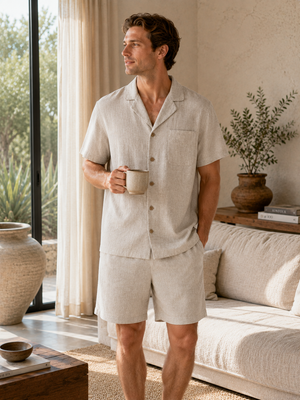
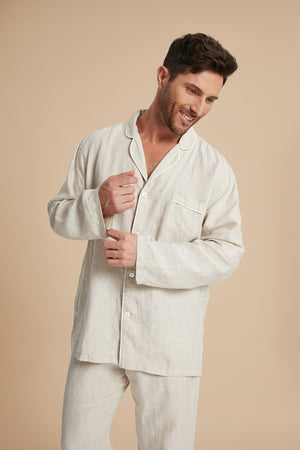
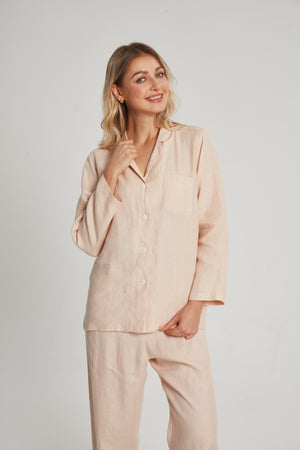
If you want initials on a pair of pajamas, we offer a monogram personalization add-on so you can make a set your own. Start with the fabric that suits how you sleep: hemp sleepwear, linen sleepwear, or browse men’s and women’s styles.

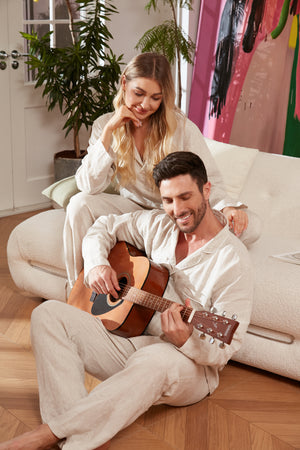
Buying for two? Our linen sleepwear gift set for two is a ready-made starting point for a personalized gift.
Caring for a monogrammed garment
Stitched lettering is made to be worn and washed, but gentle habits keep sleepwear looking its best. Wash cool, avoid high heat, and follow the care label on the garment. For linen, our guide on washing linen pajamas explains why cold or warm water and skipping the dryer heat keep the fabric cool and soft. Turning a monogrammed piece inside out in the wash is a simple way to protect the lettering from rubbing against other items.
Quick decision guide
- You want initials only: ask for a monogram.
- You want a pattern, logo or picture: you want embroidery in the broader sense.
- You want durability and a textured look: choose stitched thread.
- You want photographic detail or many colors: a printed method may suit better.
- You want comfort on thin sleepwear: keep the lettering small, one color, and away from seams.
FAQ
Is a monogram the same as embroidery?
No. A monogram is a design made of letters, usually initials. Embroidery is a stitching technique. Most monograms on clothing are embroidered, but a monogram can also be printed, embossed or engraved.
Where should a monogram go on pajamas?
The left chest is the classic spot, and the cuff, hem or pocket corner are quieter choices. Guidance from embroidery specialists puts a men’s left-chest design roughly 7½ to 9 inches down from the shoulder seam. Pick a spot away from seams so it stays comfortable against the skin.
In what order do the letters go?
For a traditional three-letter monogram with a larger center letter, the order is first, last, middle, so Jane Anne Smith becomes J S A with a large S. For equal-sized letters, use first, middle, last. Two-letter monograms usually run first then last.
Does embroidery work on lightweight fabrics like linen?
Yes, when it is done with care. Small, simple lettering with fewer strands of thread and proper stabilizing keeps thin fabric from puckering. A single contrasting color also keeps it readable.
Sources
- Monogram vs Embroidery: What Is the Difference? (InitiBag)
- Embroidery vs Monogramming (Accent Embroidery)
- Monogramming Etiquette (Sewing and Craft Alliance)
- Monogram Initials Order (Atomm)
- Individual Monogram Format Guide (Weddingstar)
- Monogram Placement (OESD Knowledge Base)
- Mastering Embroidered Monograms (MaggieFrames)
- How to Choose a Decoration Method (East Coast Embroidery)
- Decoration Methods (Merchology)
- Machine Embroidery Series: Delicate Fabrics (Sulky)
- Deluxe Knit Blanket and Swaddle Bundle (Honey and Sage)


Leave a comment