




Brands That Donate to Climate Causes: What They Fund
Plenty of brands say they give back to the planet. Far fewer say how much, to whom, and what happened next. The companies below publish those details: a share of revenue, a donation per sale, a grant to a named nonprofit, or a tree count tied to a specific place. Use them as a map, then use the checks further down to size up any brand you are considering, including ours.
TL;DR
- Climate giving comes in four main forms: a percentage of revenue, a fixed donation per sale or action, a campaign with an end date, and long-term grants or foundations.
- The strongest programs name their nonprofit partner, the place the work happens, and a reporting period. Tree counts alone say little.
- Tree-planting campaigns are usually tied to a trigger, such as a product sold, a checkout donation or a paperless sign-up. Learn the trigger before you buy.
- Most of the programs below run in the United States and Canada, so check where the work takes place and when it was last reported.
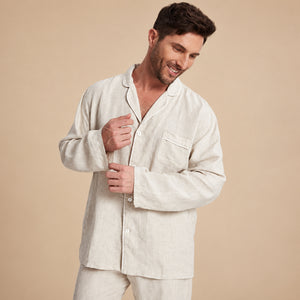
- At Breevar, every purchase supports nonprofit initiatives focused on climate action and social responsibility, and our hemp and linen sleepwear is made to keep you cool.
Table of Contents
- The four ways brands give to climate causes
- Brands that donate to climate action, and what each program funds
- Clothing and everyday brands that plant trees
- How to tell lasting programs from limited promotions
- Do these programs apply to your purchase in the U.S.?
- Climate-minded sleepwear from Breevar
- FAQ
- Sources
The four ways brands give to climate causes
Before comparing companies, it helps to know what kind of promise you are looking at. The wording on a product page often hides the difference.
A percentage of revenue. The company commits a fixed share of sales, whether or not any single product sells well. This is the most predictable model, and some companies have it certified by an outside body. One mattress maker, for example, says it has directed more than $12 million in certified environmental giving to more than 60 nonprofit partners since 2017, with a commitment of 1% of mattress revenue that is certified each year through 1% for the Planet.
A donation per sale or action. A set amount goes to a nonprofit each time a customer buys a specific item or does a specific thing. A national battery retailer’s 2026 promotion donated $1 to the Arbor Day Foundation for each qualifying 24-pack of a particular battery brand sold during a spring window. An insurer funds one tree through American Forests for each personal-insurance billing account switched to paperless billing.
A campaign with an end date. Earth Month and Arbor Day are the classic hooks. A supermarket chain’s Arbor Day Foundation case study describes customers donating at checkout during a designated Earth Month week, with the money dedicated to local reforestation in seven Southeastern states.
Grants and foundations. Here the company funds projects directly, often in larger sums. A shoe and sportswear giant’s Community Climate Resilience Program began with a $2 million grant to Trust for Public Land for projects in climate-vulnerable U.S. communities.
None of these is automatically better. A fixed percentage gives you reliability. A per-sale donation links your purchase to a result. A grant can move a large amount at once. What matters is that the details are public.

Brands that donate to climate action, and what each program funds
The table collects programs from the companies’ own published pages. Figures are the ones each company reports, for the period it names.
| Company | What triggers the giving | What it funds | Reported figure |
|---|---|---|---|
| Mattress maker | 1% of mattress revenue | Environmental nonprofits, certified through 1% for the Planet | More than $12 million to more than 60 partners since 2017 |
| Battery retailer | $1 per qualifying 24-pack, April to May 2026 | Arbor Day Foundation reforestation | 2025 campaign: 37,283 trees in Oregon, 125 acres |
| Manufactured-home builder | Ongoing partnership since 2021 | Arbor Day Foundation projects in the U.S. and Canada | Nearly 2 million trees across 51 projects |
| Supermarket chain | Customer checkout donations in Earth Month | Local reforestation in seven states | More than 2.1 million trees in the first two years |
| Insurer | One tree per paperless billing conversion | American Forests tree work | More than 7 million trees, up to 10 million by 2030 |
| Sportswear company | Corporate grant | Urban green space in New York City, Chicago and Los Angeles | More than 117,000 square feet revitalized after one year |
A few details from these programs show what good reporting looks like.
The battery retailer does not just give a tree count. It says where the trees went (the Bootleg Fire Restoration and Resilience Project in Oregon), how much land that covers, and what it projects over 40 years: 1,836 metric tons of CO2 sequestered and 17 tons of air pollutants removed. Note the word “projects”. Projections are estimates, and the company labels them that way.
The home builder’s disclosure goes further on outcomes, attributing 975,000 metric tons of CO2 sequestration, 106 million gallons of avoided runoff and 3,800 tons of air pollutants removed to the partnership. These are modeled benefits over the life of the trees, not what the forest has absorbed to date.
The sportswear grant is a different animal. It does not plant forests. It funds urban green space that deals with flooding, heat and stormwater: the company says the teams would plant more than 1,400 native plants and trees and build capacity to manage nearly 2.5 million gallons of stormwater runoff a year.

Giving beyond trees
Not every program plants anything. A global fashion group committed $3 million to the Regenerative Fund for Nature for regenerative agriculture linked to fashion supply chains in South Africa, a fund that Conservation International says then covered 14 projects in 10 countries and 1.1 million hectares. A technology company and its founders announced a $100 million tree fund, $100 million in ventures and $100 million in grants over 10 years for ecosystem restoration and climate justice. A heavy-equipment foundation put $1 million into One Tree Planted for work in 95 communities, with planned results of about 290,000 trees and 620 acres restored.
And there is giving that comes from scale. A payments company’s Give One report says the initiative had received $11 million in corporate donations and supported 3.4 million trees planted through February 2023.
Clothing and everyday brands that plant trees
The search for “clothing brands that plant trees” turns up a pattern: planting is almost always tied to something the customer does. Three triggers show up again and again.
- A purchase. Each order, or each unit of a specific product, funds a set number of trees or a set dollar amount.
- A campaign. A window such as Earth Month or Arbor Day, with a total that is reported afterward.
- A cause partnership. The brand and its customers contribute over years to one nonprofit’s restoration work. American Forests says one outdoor clothing retailer and its customers have helped plant more than 8.4 million trees in the United States and Canada through restoration of threatened forest ecosystems.
The same page notes that a snack-bar brand has supported more than 1 million trees, including a replanting initiative for wildfire-affected national forests in North America, and that a whiskey brand partnered to plant 1 million trees by 2025, with an emphasis on white-oak restoration and urban tree equity.
Two takeaways. First, the best statements name the trigger in plain words: what you buy, what gets funded. Second, a tree is not a climate result by itself. Where it is planted, what species, and whether it survives matter as much as the count.
How to tell lasting programs from limited promotions
A company can be sincere and still make a claim you cannot evaluate. Run any brand through these five checks.
- Is the recipient named? A nonprofit, a project and a place beat “supporting the planet”.
- Is the amount defined? Look for a percentage, a dollar figure per sale, or a stated total with a period.
- Is there a reporting date? Results from 2019 are history, not a current program. A disclosure with a recent year tells you the program is alive.
- Is it ongoing or a promotion? The battery campaign above ran for two months. That is fine, as long as you know it before you buy.
- Is anyone outside the company involved? Independent certification, such as the annual review behind 1% for the Planet, or third-party verification of projects, adds weight.
That last point deserves more attention for tree-planting claims. One entertainment company’s natural-climate-solutions white paper reports more than 9 million trees planted and more than 5.3 million metric tons of CO2-equivalent reductions or removals during 2012 to 2019. More useful than the totals is the framework it describes: peer-reviewed methods, third-party verification, additionality (would the trees have been planted anyway?), quantification and permanence. Those are good questions to put to any brand. A raw tree count answers none of them.
If you want a practical routine for this, a checklist for verifying carbon neutral claims shows how to look past a headline number to traceability and proof. The same habits apply to apparel, food or anything else with a green label.
Do these programs apply to your purchase in the U.S.?
Mostly yes, but check. Several programs are built around U.S. and Canadian land. The insurer’s trees go to projects in places such as Arizona, Georgia, Minnesota, Texas and Washington. The home builder reports projects across the U.S. and Canada. Others, such as the technology and equipment foundations, are global, and the fashion fund works in South Africa. That is not a flaw, since climate benefits are not local, but you should know where your money lands.
Timing is the other variable. Disclosures are written for a particular period: a 2025 result, a 2026 promotion, a 2022 to 2023 report. Treat the date on the page as part of the claim, and go to the company’s own page for the current terms before relying on a number you saw in an article, this one included.
Our view on giving and buying
We think the most honest way to support climate action through shopping is to buy something you will actually use for years, from a company that gives with every sale. A garment worn for a decade beats a donation attached to something you discard in a season.
That is how we built Breevar. Our sleepwear, underwear and socks are made from natural, breathable materials such as hemp, linen and modal, with moisture-wicking fabrics designed to help regulate body temperature, which matters if you tend to overheat at night. Comfort is what keeps a piece in your drawer, and a piece that stays in your drawer is the most sustainable kind. Every purchase also supports nonprofit initiatives focused on climate action and social responsibility.
Our advice is to ask every brand the same simple questions: who receives the money, how is it triggered, and when was it last reported. We would like you to ask them of us too, and we are happy to be judged on the answers.
Jason
Climate-minded sleepwear from Breevar
If you would like your next basics to do some good, start with what you wear every night. Our hemp sleepwear and linen sleepwear are made from natural fibers chosen for breathability, and our collections for men and women are designed around staying comfortable through the night. Each purchase supports nonprofit climate and social initiatives.

Looking for something smaller? Our Collectible Art Crew Socks for clean energy and climate action come in single pairs and multi-packs, and you can add a text monogram to make a gift personal. Browse everything at Breevar.
Want more on how we think about materials? Read why we choose organic and recycled materials, or see whether natural fiber sleepwear subscriptions are sustainable.
FAQ
Which brands donate to climate causes?
Many do, in different ways. Some commit a share of revenue, some give per sale, and others fund grants or run seasonal campaigns. The table above lists programs with a named trigger, nonprofit partner and reported figure, from a mattress maker to a supermarket chain.
Do clothing brands that plant trees really make a difference?
It depends on the program. Trees planted through established restoration efforts, in a named place with reporting, can deliver real benefits such as shade, habitat and cleaner air. A bare tree count with no location or follow-up tells you little, so look for the details.
What is 1% for the Planet?
It is a certification that companies use to show they give 1% of revenue to environmental nonprofits. One mattress maker says its commitment is independently certified each year through 1% for the Planet. Check the specific company’s own giving page for what it covers.
How can I check whether a donation claim is current?
Find the date on the company’s disclosure and the period it covers. Programs that publish annual or recent results are active. If a page only shows older totals, or the program was a short campaign, look for the current version on the company’s site.
Sources
- Avocado Giving, certified environmental giving
- Batteries Plus, Arbor Day Foundation promotion
- Travelers, Helping to Reforest North America
- Arbor Day Foundation, Publix tree planting case study
- Nike, Community Climate Resilience Program one year in
- Business Wire, Champion Homes and the Arbor Day Foundation
- Conservation International, Regenerative Fund for Nature commitment
- Salesforce, $300 million for ecosystem restoration
- Caterpillar Foundation, One Tree Planted partnership
- Klarna, Give One progress report 2022 to 2023
- American Forests, corporate partners
- Disney, Natural Climate Solutions white paper
- Qahwat Al’ard, checklist for verifying carbon neutral claims


Leave a comment