


Stay Drier: Fabric, Not Style, Beats Boxers or Briefs for Men
Fit and fabric often matter more than style labels. Well-fitted boxer briefs or ventilated mesh trunks made of moisture-wicking synthetic fabrics generally keep you drier during the day than classic briefs or loose cotton boxers, although loose boxers remain popular for sleep or low-activity periods. The trade-off is that tighter fits provide more support but can increase heat and chafing risk if the fabric does not wick moisture efficiently.
TL;DR:
- Wicking fabrics and carefully placed ventilation zones significantly improve sweat management and reduce chafing in moisture-wicking underwear styles.
- Boxer briefs with mesh panels perform best for all-day sweat control, especially during active or long workdays, while loose boxers excel for sleep and low-activity periods.
- Fit is more important than style: support that is snug but not tight helps regulate temperature and prevents chafing, regardless of whether you choose boxers or briefs.
- Synthetic moisture-wicking fibers outperform cotton in heavy sweating situations by moving moisture away from the skin and maintaining breathability.
- Replacing worn or shrinking underwear at signs of loss of elasticity, fabric thinning, or persistent odors ensures continuous sweat resistance and comfort.
Table of Contents
- Boxers vs. Briefs Sweating: How Each Style Handles Heat
- What Fabric and Construction Actually Do to Sweat
- How Fit and Your Clothes Change How Much You Sweat
- How to Buy, Wear, and Wash Underwear That Fights Sweat
- Why We Build Around Breathable Natural Fibers and Targeted Mesh
- Breevar Picks for Men Who Sweat Through the Day
- Sources
- FAQ
Boxers vs. Briefs Sweating: How Each Style Handles Heat
The honest answer to boxers vs. briefs sweating is that neither wins outright. What matters is what each style does to airflow, contact area, and heat retention once you factor in your day.
Loose boxers move the most air. Because the fabric doesn’t hug the skin, sweat has somewhere to evaporate instead of pooling. That’s why they’re the default recommendation for sleep and for guys sitting around the house. The catch: once boxers get damp, loose cotton fabric bunches and drags against the inner thigh, which is a common source of chafing on hot days or long walks.
Briefs cover less surface area, so exposed skin gets airflow. But the snug waistband and leg openings can trap heat right where they clamp down, and that tightness is exactly the variable researchers have measured raising scrotal temperature compared with looser garments. Briefs work fine for short errands in the heat. They’re a weaker pick for a full workday or a long run.
Boxer briefs, when built with engineered mesh panels, tend to split the difference best. You get the coverage and support of a brief with the length of a boxer, which limits thigh-on-thigh friction. Reviewers testing men’s underwear for sweat control repeatedly find mesh-paneled boxer briefs stay drier and ride up less than standard-cut alternatives, which is why they’ve become the default recommendation for anyone who sweats through a normal workday.
Match the style to what you’re actually doing:
- Desk job, air-conditioned office: Boxer briefs in a lightweight wicking fabric, or classic briefs if you prefer minimal coverage and rarely stand up.
- Workout or outdoor labor: Mesh boxer briefs with ventilation zones. Loose boxers underperform here because bunched, sweaty fabric increases chafe.
- Travel days, long car or flight time: Boxer briefs with flat seams. You’re sitting for hours, which itself raises heat more than walking does.
- Sleep: Loose boxers or going without. Airflow matters more than support when you’re not moving.
None of this means brief wearers are doing something dangerous. A frequently cited clinical comparison found no significant difference in scrotal temperature between boxer and brief wearers, which suggests the style label itself isn’t the deciding factor in comfort or health outcomes. Construction and fit matter more than what the tag calls the garment.
What Fabric and Construction Actually Do to Sweat
Wicking fabrics pull moisture off the skin through capillary action in the fiber structure, spreading it across a larger surface so it evaporates faster. Absorbent fabrics, cotton being the classic example, soak sweat up and hold it there until it eventually evaporates on its own, which is slower and leaves the fabric wet against your skin in the meantime. Under heavy sweating, that difference shows up fast: cotton gets heavy, clingy, and cold once you stop moving, while synthetic wicking blends keep moving moisture away from you.
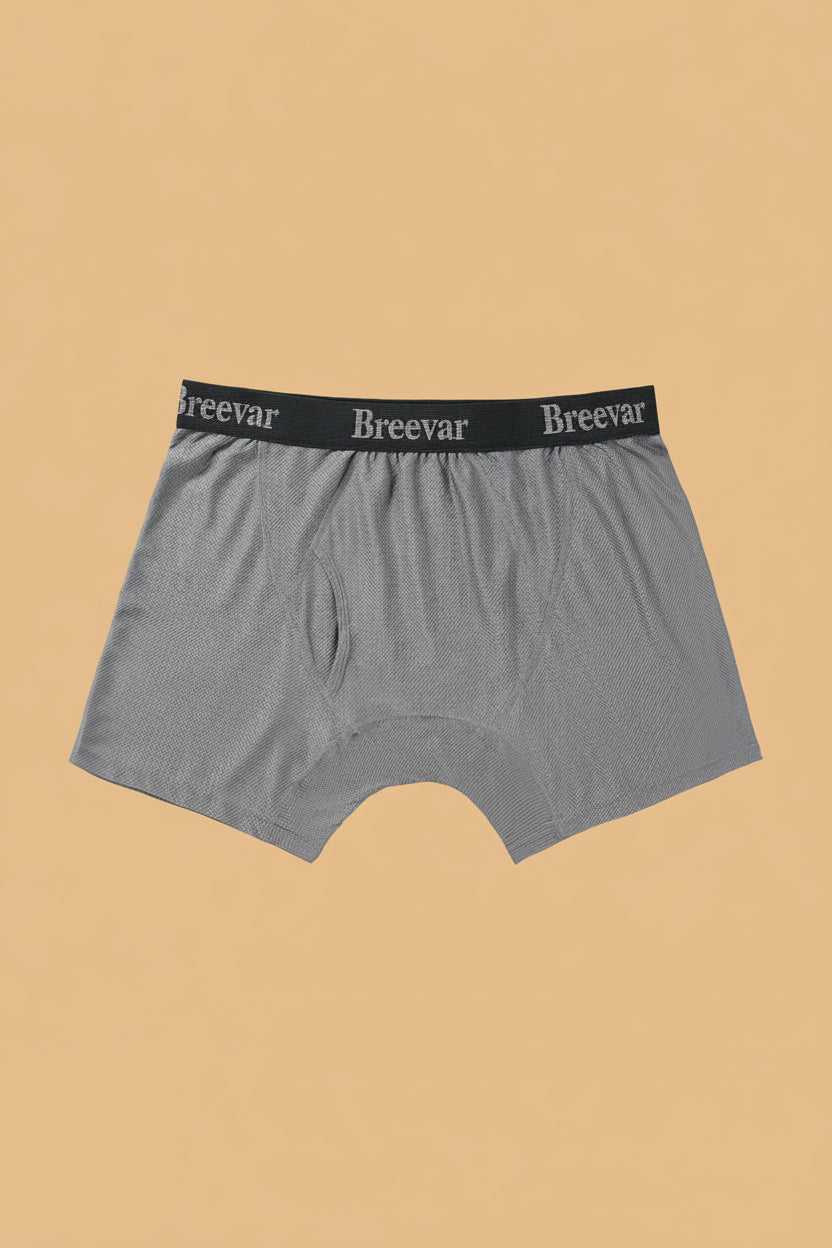
Textile engineers get this result by controlling fiber cross-section and knit density. Fine, low-denier synthetic filaments woven into an engineered mesh create channels that transport moisture along the fiber surface instead of soaking into it, so the fabric keeps its air permeability even after it’s picked up sweat. That’s the mechanical reason synthetic mesh outperforms hydrophilic natural fibers once sweat volume climbs.
Construction details matter almost as much as the fiber:
- Ventilation zones placed at the lower back, inner thigh, and pouch area target the spots that trap the most heat.
- Flat-lock seams reduce the ridge of fabric that rubs against skin, cutting down chafe risk, especially once fabric is damp.
- Multi-layer builds pair an inner layer that pulls moisture off skin with an outer layer engineered to keep circulating air, handling higher sweat volume than a single fabric can manage alone.
Natural fibers still have a place. Merino wool and modal both manage moisture vapor well and resist odor-causing bacteria better than plain cotton, which makes them solid picks for moderate, day-to-day sweating rather than heavy workout sweat. Breevar builds several pieces, including its bamboo boxer brief, around that exact use case: natural fiber comfort for guys who want breathability without the athletic-gear feel.
Sweat Science Snapshot: A controlled physiology study found scrotal temperature averaged roughly 35.76°C in tight-fitting underwear versus about 35.16°C with none at all, with loose-fitting styles landing in between. That’s a real, measurable gap, though it’s a temperature difference, not a proven fertility risk on its own.
How Fit and Your Clothes Change How Much You Sweat
The underwear itself is only part of the equation. The same physiology research that measured tight versus loose fit also found that walking cools scrotal temperature compared with sitting, which means your desk chair might be doing more to raise heat than your underwear drawer.
Here’s how to think through fit and outer-layer choices:
- Size for snug, not tight. Support without constriction is the target. If elastic leaves an indent that doesn’t fade in a few minutes, size up.
- Match fit to activity. Snugger boxer briefs make sense for workouts where support prevents chafing from movement. Relaxed fits make more sense for sedentary stretches.
- Check what’s layered on top. Tight dress pants or non-breathable synthetic outerwear trap heat regardless of what’s underneath, which is why a great pair of underwear can still leave you sweaty in the wrong pants.
- Watch for zero airflow gaps. Sitting for long stretches in tight trousers with no breathable underwear is close to a worst-case setup for heat buildup, per the same scrotal temperature research.
Pro Tip: If you’re stuck at a desk all day, stand and walk for even a couple of minutes each hour. The same research that measured underwear fit found walking lowers scrotal temperature versus sitting, so movement helps regardless of what you’re wearing.
Red flags that your current pair isn’t working: persistent dampness by midmorning, chafing in the same spot every day, or odor that survives a normal wash cycle. Any of those three means it’s time to swap fabric or fit, not just buy the same style in a different color.
How to Buy, Wear, and Wash Underwear That Fights Sweat
Getting this right is less about finding one perfect pair and more about building a small rotation that matches your week.
- Check the fabric label first. Look for engineered mesh, moisture-wicking synthetic blends, or breathable natural fibers like modal or bamboo. Skip anything that’s pure cotton if heavy sweating is a daily issue.
- Look for ventilation zones and flat-lock seams. Mesh panels at the back and inner thigh, plus flat seams instead of raised ones, are the two construction details that separate a decent pair from a genuinely sweat-resistant one.
- Match inseam length to your friction points. A longer inseam, like a seamless anti-chafe long boxer brief, covers more thigh surface and cuts down rubbing on long days of walking or standing.
- Rotate pairs by activity, not by convenience. Keep a supportive mesh pair for workouts, a breathable natural-fiber pair for sleep, and don’t wear the same pair two days running even if it looks clean.
- Skip fabric softener. It coats fibers and blocks the wicking channels synthetic blends rely on. Wash in cold or warm water on a normal cycle and air dry or use low heat.
- Replace at the first sign of lost elasticity, thinning fabric, or odor that survives a wash. Wicking finishes degrade over time, and a pair that’s lost its stretch will chafe more, not less.
A three-pack of mesh performance boxer briefs solves the rotation problem in one purchase, giving you enough identical, breathable pairs that you’re never reaching for the least-sweaty option in a drawer full of worn-out cotton.
Why We Build Around Breathable Natural Fibers and Targeted Mesh
Breevar designs every piece around one question: does this fabric move moisture, or just hold it? That’s why hemp, linen, and modal show up across the lineup instead of standard cotton, paired with mesh panels and flat-lock, anti-chafe seams in the pieces built for activity. Different pieces solve different jobs. A natural-fiber pair suits sleep and low-key days. A mesh boxer brief suits a full workday or a workout. A seamless, longer-inseam style suits guys logging long hours on their feet who need chafe protection more than anything else.
None of this requires guessing which fabric science is real and which is marketing. It just requires matching the piece to the day, the same way this article has laid out.
— Jason
Breevar Picks for Men Who Sweat Through the Day
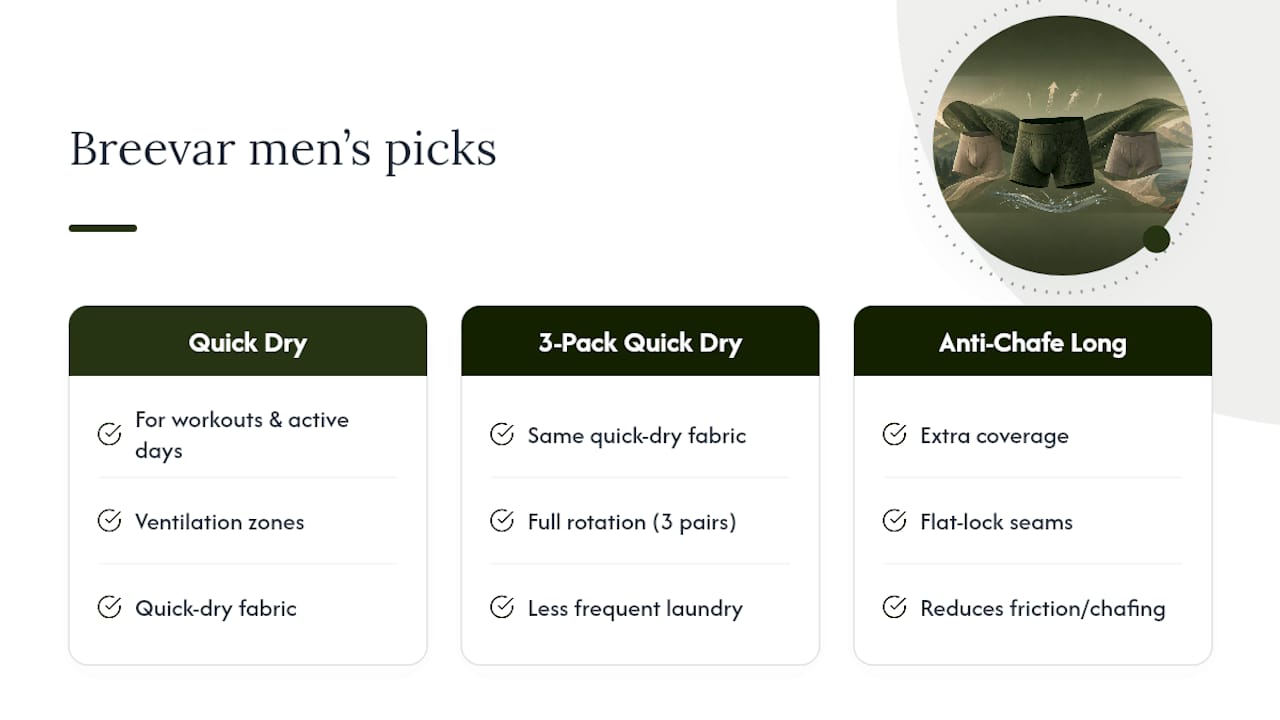
If the checklist above sounds right but you don’t want to shop five different brands to build it, some brands offer a lineup covering the most common needs for men’s underwear related to sweat management. The Men’s Mesh Performance Quick Dry Boxer Brief is built for workouts and active days, with ventilation zones and quick-dry fabric doing the heavy lifting.
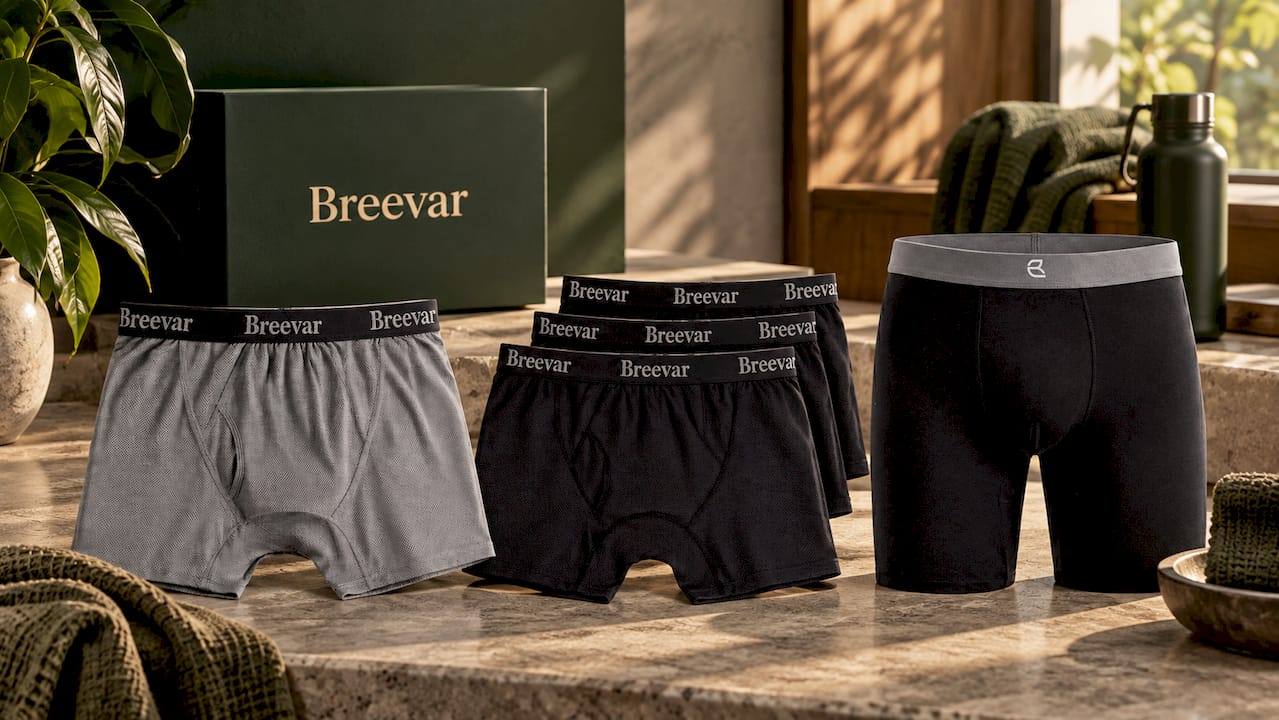
For guys who hate doing laundry every other day, the 3-Pack Men’s Mesh Performance Quick Dry Boxer Briefs gives you a full rotation in the same fabric, so you’re never tempted to reach for an old cotton pair out of convenience. And if chafing on long days is the actual problem, not just general sweat, the Men’s Seamless Anti-Chafe Long Boxer Brief adds coverage and flat-lock seams built specifically for that friction point.
Some brands donate a portion of proceeds to climate action and social responsibility initiatives, so purchases may support causes beyond just comfort. If you’re shopping for someone else, gift-ready options exist too if you want to pair a set with something extra. Start with whichever product matches your busiest weekly activity, and build your rotation from there.
This article is general information, not a substitute for advice from a qualified doctor. Consult a qualified healthcare professional about your own circumstances before acting on anything here.
Sources
- Are boxer shorts really better? A critical analysis of the role of underwear type in male subfertility
- Influence of type of undertrousers and physical activity on scrotal temperature
- Underwear choice and male fecundity: a prospective preconception cohort
- Best moisture-wicking underwear (Men’s Health roundup)
FAQ
Is It Healthier to Wear Boxers or Boxer Briefs?
Neither is inherently healthier. A clinical comparison found no significant scrotal temperature difference between boxer and brief wearers, and a larger prospective cohort found no link between underwear style and fertility outcomes. Fit and fabric matter more than the style category.
Do Boxers or Briefs Affect Testosterone Levels?
There’s no solid evidence that underwear style changes testosterone. The research on underwear and reproductive health focuses on scrotal temperature and semen parameters, and even there, a prospective cohort study found no measurable impact on fertility or pregnancy outcomes.
Why Do Guys Prefer Boxers Over Briefs?
Comfort and airflow are the two biggest reasons. Loose boxers avoid the tight waistband and leg elastic that some men find restrictive, and they allow more air circulation, which feels cooler during low-activity stretches of the day.
What’s the Best Underwear for Men Who Sweat a Lot?
Boxer briefs built with engineered mesh panels and moisture-wicking synthetic or natural blends consistently perform best for heavy sweating, according to comparative testing of moisture-wicking underwear. Look for ventilation zones, flat-lock seams, and a fit that’s snug without constricting.
What Do the British Call a Bra?
In British English, a bra is still commonly called a “bra,” though older or regional terms occasionally use “brassiere,” the formal word the term originally shortened from.


Leave a comment