

Hemp vs Cotton Pajamas: Which Sleeps Cooler and Lasts Longer?
If you run hot at night, hemp is the better pajama fabric. It manages moisture better than cotton, dries faster and holds up for years. Cotton wins on one thing only: it feels soft the first night you wear it. Hemp starts a little crisper and softens with washing, and once it does, you have a cooler, longer-lasting pair. At Breevar we make hemp sleepwear for exactly this reason.
This guide compares the two fibers on what matters at 3 a.m.: feel, heat and sweat, durability, care, skin comfort and environmental footprint. It also helps gift buyers pick a fabric the recipient will keep wearing.
TL;DR
- Heat and sweat: hemp fabrics showed higher moisture management and moisture vapor transmission than cotton in a 2019 fabric study, and hemp dries quickly.
- Feel: cotton is smooth from day one. Hemp feels drier and crisper when new, then softens with washing.
- Durability: hemp fibers are strong, so pajamas keep their shape through repeated washing.
- Environment: hemp is grown with low to no pesticide, while cotton is a thirsty crop.
- Best pick: hot sleepers, night sweaters and eco-minded shoppers get the most from hemp.
Table of Contents
- The two fibers in plain terms
- Feel and softness: cotton starts softer, hemp catches up
- Breathability and night sweats: where hemp pulls ahead
- Side-by-side comparison
- Durability and care
- Skin comfort and sensitive sleepers
- Environmental impact
- How to choose: a quick decision guide
- Our view
- Find your pair
- FAQ
- Sources
The two fibers in plain terms
Cotton is a seed fiber: it is the fluff that grows around the seeds in the cotton boll. Hemp is a bast fiber, which means it is taken from the inner part of the plant’s stalk. That difference shapes everything you feel in bed. Cotton fibers are short and soft. Hemp fibers are long and sturdy, closer in character to linen, which is also a bast fiber.
Both are natural, breathable and far more comfortable against skin than most synthetics. The question is how they behave when you are warm, damp and asleep for eight hours.
Feel and softness: cotton starts softer, hemp catches up
Cotton has a smooth, familiar hand the moment you take it out of the package. That is its biggest selling point, and it is why most people have worn cotton pajamas their whole lives.
New hemp feels different. It is drier and crisper, with a slightly textured, linen-like surface and a fuller drape. This is the honest trade-off at the start, and it is temporary. Every wash relaxes the fibers, and a hemp pajama set wears in to a soft, lived-in feel. A University of Manchester comparison of sensory comfort in eco-friendly fabrics found hemp coarser to the touch than Tencel, and also reported that hemp offers superior insulation. That fits what wearers describe: a fabric with body that settles in over time.
How quickly it softens depends on the weave and on how you care for it. Our guide to softening hemp fabric in 5 to 10 wears explains the routine. Softer blends are another route: hemp is often combined with gentler fibers to give a smoother hand from the first night.

What this means for you
If you want maximum softness on night one and never want to think about it, cotton delivers. If you are willing to wear in a fabric the way you would a good pair of jeans or a linen shirt, hemp rewards you with a feel that keeps improving.
Breathability and night sweats: where hemp pulls ahead
Breathability is the reason most people search this comparison. Both fibers let air through. What separates them is what happens once you start to sweat.
A 2019 paper on the comfort behavior of unconventional natural-fiber fabrics found that hemp fabrics showed relatively higher overall moisture management and moisture vapor transmission than cotton reference samples. In practice, moisture vapor transmission is how readily water vapor from your skin passes through the cloth into the room. The faster it leaves, the less clammy you feel.
The numbers on how much water each fiber can hold point the same way. At standard conditions hemp can take up roughly 11 to 13% of its weight in moisture, against about 7 to 8.5% for cotton, as laid out in our comparison of moisture in modal and cotton pajamas for hot sleepers. Hemp absorbs moisture from skin, spreads it through the fabric and lets it evaporate. It also has high air circulation and dries quickly.

Cotton absorbs well, too, and that is why it feels good after a shower. The difference shows up when it gets wet: a damp cotton shirt stays damp and can cling. A damp hemp shirt dries and releases sooner. For anyone who wakes up with sheets stuck to their back, that is the gap that matters.
If cotton is already your baseline, the breathability comparison of cotton and polyester shows why natural fibers beat synthetics on airflow. Hemp builds on that natural advantage with faster drying.
A simple test for your own nights
Pay attention to when you wake up, not just how you fall asleep. If you drift off comfortable and wake damp around 2 or 3 a.m., moisture handling is your problem, not insulation. That is the case for a fabric that moves sweat out and dries. Our guide for hot sleepers choosing linen and hemp goes deeper on temperature regulation.
Side-by-side comparison
| What you care about | Hemp | Cotton |
|---|---|---|
| First-wear feel | Crisp, dry, textured, fuller drape | Smooth and soft right away |
| After repeated washing | Softens steadily | Stays soft, can lose structure |
| Moisture handling | Higher moisture management; dries quickly | Absorbs well; slower to dry |
| Airflow | High air circulation | Breathable |
| Strength | Long, strong fibers | Shorter fibers |
| Pesticide use in the field | Low to none | Often high on conventional crops |
| Best for | Hot sleepers, night sweats, long-term wear | Soft-from-day-one comfort |
Durability and care
Hemp fibers are long and strong, which is why hemp has been used for rope and sailcloth for centuries. In pajamas that means seams and fabric that hold up to hundreds of nights and repeated washing. A pair that lasts is also the budget-friendly pick, because you spend less over the years than with a set you replace after a season or two.
Caring for either fiber is easy. Wash at 30 to 40 °C (86 to 104 °F) and tumble-dry on low or hang to dry. Hemp is happy in a normal machine cycle and gets softer each time. Skip fabric softener, which can coat fibers and reduce how well they wick moisture. For blends with linen, see our advice on how to wash linen pajamas cold or warm.
Skin comfort and sensitive sleepers
Both fibers are generally gentle on skin. What irritates is rarely the fiber itself: it is the finishing, the dyes and any chemical treatments. That is why “natural” on a label is not the whole story. Look for undyed or low-impact-dyed fabric, a clear fiber content and seams that sit flat. Our hemp and modal pieces use seamless anti-chafe construction, which helps where seams would otherwise rub.
If you have eczema or a skin condition, talk to your dermatologist before changing your sleepwear routine. Switching fabric is a reasonable comfort step, not a treatment.
Environmental impact
Cotton is one of the most water-intensive crops. A WWF background paper on cotton and fresh water resources puts the freshwater use between 7,000 and 29,000 liters per kilogram of cotton lint, with the low end reflecting very efficient drip irrigation. Conventional cotton is also known for heavy pesticide use.
Hemp has a lighter footprint in the field. A USDA Foreign Agricultural Service report on industrial hemp in the European Union describes cultivation benefits including carbon storage, erosion prevention, increased biodiversity and low to no pesticide requirement. For a closer look at the figures, read our hemp vs cotton sustainability breakdown.
Organic cotton narrows the gap on pesticides, but water and longevity still matter. A garment that lasts twice as many years halves the resources you use per night of sleep.
How to choose: a quick decision guide
- You wake up damp or overheat. Choose hemp, or a hemp and linen mix. Moisture handling is what you need.
- You want softness immediately and do not mind a shorter lifespan. Cotton fits, though a hemp blend gives you a bridge.
- You are shopping for sustainability. Hemp’s low pesticide needs and durability make it the stronger choice.
- You are buying a gift. Choose a set with a personal touch, like a monogram, and a fabric the recipient will love more with each wash.
- You prefer fewer chemicals against your skin. Pick simple, natural fabrics with clear fiber content, and wash once before wearing.
For more depth on any of these, our full hemp vs cotton breathability and comfort guide and the piece on why choose hemp pajamas cover the same ground from other angles.
Our view
We started Breevar because we kept meeting people who loved how cotton felt and hated how they slept in it. Hot nights, damp collars, tossing off the covers at 2 a.m. Hemp and linen solved it for us.
Here is how we think about the trade-off. Cotton gives you a soft first impression. Hemp gives you a better night and a better year. The crispness of new hemp is the fabric telling you it is built to last, and a few washes turn it into something you will reach for every evening.
That is why we focus on natural, moisture-wicking fabrics like hemp, linen and modal, and on seamless, anti-chafe construction. Every purchase also supports nonprofit initiatives focused on climate action and social responsibility, so the pajamas you sleep in do some good once you have switched off the light.
If you run hot, start with hemp. You will feel the difference within a week.
Jason
Find your pair
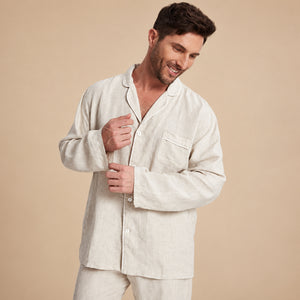
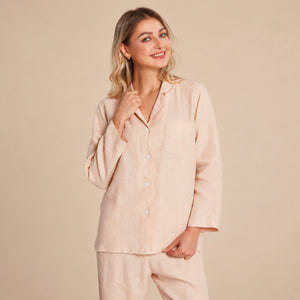
If you sleep hot, begin with our hemp sleepwear collection, made from natural, moisture-wicking fabric. Browse men’s sleepwear or women’s sleepwear, or pick the Men’s Short-Sleeve Hemp Sleepwear Set for warm sleepers who want shorts-and-tee comfort.

Buying for someone else? The Hemp Lovers’ Sleepwear Set for 2 is a ready-made gift, and you can add a text monogram to make it personal.
FAQ
Is hemp fabric similar to cotton?
They are similar in that both are natural, breathable plant fibers. They differ in structure: cotton comes from the seed boll and hemp from the stalk, which makes hemp stronger and drier to the touch. New hemp feels crisper than cotton and softens with every wash.
Are hemp pajamas good for night sweats?
They are a strong choice. Hemp fabrics showed higher moisture management than cotton in a 2019 study, and the fiber dries quickly, so sweat does not linger against your skin. If night sweats are frequent or new, mention them to your doctor, since fabric can ease the symptom but not explain its cause.
Do hemp pajamas get softer?
Yes. Hemp relaxes with each wash and wear. Washing at 30 to 40 °C and drying on low speeds the process, and most people notice the change within the first several wears.
What is the least toxic fabric to wear?
No fiber is automatically free of chemicals, because dyes and finishes matter as much as the fiber. Natural fibers like hemp and linen, with clear fiber content and minimal treatment, are a sensible starting point. Washing new garments once before wearing is a good habit with any fabric.
Sources
- Comfort Behavior of Unconventional Natural Fiber Based Fabrics
- Comparative Assessment of Sensory Comfort Properties Across Eco-Friendly Fabrics, University of Manchester
- WWF background paper: The Impact of Cotton on Fresh Water Resources and Ecosystems
- USDA FAS: Market Trends and Regulations for Industrial Hemp in the European Union
- Breathable Cotton vs Polyester for First Responders: Cool or Dry?


Leave a comment