


Avoid 7–12% Shrinkage: How to Wash Hemp Clothing to Preserve Fit
Wash hemp clothing cold or lukewarm on a gentle cycle, or hand wash it if the piece is delicate, using a mild liquid detergent instead of powder. Skip chlorine bleach and fabric softener entirely, since both wear down hemp fibers over time. Air dry when you can, or tumble on low heat and pull garments out while they’re still slightly damp to hold their shape and limit shrinkage.
TL;DR:
- Washing hemp garments in cold or lukewarm water on a gentle cycle prevents significant shrinkage and fiber damage, especially if dried properly.
- Pre-washing and sorting by color and weight, along with inside-out turning and fastening fasteners, minimizes color bleeding and fabric snagging.
- Air drying in shade preserves hemp fibers better than tumble drying, with shape retention achieved by shaping garments while damp.
- Untreated hemp typically shrinks 3 to 7 percent in cold wash with air drying, but blends with polyester shrink less, whereas viscose or Tencel blends shrink more.
- Excessive washing, hot water, bleach, fabric softener, high-speed spinning, and sun-drying contribute to fiber breakdown and reduced garment lifespan.
Table of Contents
- How to Prepare Hemp Garments Before Washing
- How to Wash Hemp: Machine and Hand-Wash Steps
- How to Dry Hemp Clothing Without Losing Its Shape
- Does Hemp Fabric Shrink? Numbers by Blend Type
- Common Hemp Washing Mistakes and How to Fix Them
- Why Care Routine Affects How Hemp Sleepwear Performs
- Storing Washed Hemp Clothing to Keep It in Shape
- How Often Should You Wash Hemp Garments?
- How to Care for Dyed or Printed Hemp Fabric
- What This Guide Gets Right That Most Care Advice Misses
- Hemp Sleepwear Built to Handle This Care Routine
- Sources
- FAQ
How to Prepare Hemp Garments Before Washing
The five minutes you spend prepping a hemp garment saves you from the two mistakes that ruin most pieces: color transfer and permanent stains set by heat. Start with the care label. Hemp care symbols follow the same system as cotton, so a triangle with an X means no bleach, and a circle inside a square with a dot means low-heat tumble drying. Manufacturer labels sometimes override general hemp advice for specific blends, so follow the garment’s own tag over generic guidance whenever the two conflict.
From there, work through a short routine before anything touches water:
- Sort by color and weight, and wash new or freshly dyed pieces alone the first time. This is because pre-wash prep like testing colorfastness catches bleeding before it ruins a whole load.
- Turn garments inside out and fasten zippers, buttons, and hooks so they don’t snag the fabric during the cycle.
- Drop delicate pieces, like anything with lace trim or embroidery, into a mesh laundry bag.
- Spot-treat stains by dabbing from the back of the fabric with mild soap, a baking-soda paste, or diluted vinegar. Never scrub, since rubbing pushes the stain deeper into hemp’s coarser fiber structure.
How to Wash Hemp: Machine and Hand-Wash Steps
Hemp handles a washing machine fine as long as you control three variables: heat, speed, and company. The fiber is strong, but heat and friction are what break it down over repeated washes, not the machine itself.
For machine washing:
- Set the machine to a gentle or delicate cycle at 30 to 40°C (85 to 105°F). Colder is safer for dyed pieces and hemp blended with viscose or Tencel.
- Place items in a mesh bag, and never wash hemp alongside zippers, Velcro, or terry cloth towels, which cause abrasion and pilling.
- Keep the load small. Hemp needs room to move so detergent rinses out cleanly.
- Use a free-and-clear liquid detergent. Powder detergents can leave undissolved granules at low temperatures that act like sandpaper across multiple washes.
- Skip chlorine bleach completely. If you need to brighten whites, use oxygen bleach sparingly, and only on white or undyed pieces.
- Set spin speed low, ideally in the 400 to 800 RPM range, to avoid crease imprinting and unnecessary fiber stress.
Hand washing works better for anything with delicate trim, hand-painted detail, or a blend with wool. Fill a basin with lukewarm water, add a small amount of mild soap, and soak the garment for 10 to 15 minutes. Agitate gently with your hands, then rinse repeatedly until the water runs clear. Press the water out between your palms or against the basin. Never wring hemp, since twisting distorts the weave and can leave permanent creases.
Pro Tip: Keep a dedicated mesh bag just for hemp and other natural-fiber pieces. It stops the bag itself from picking up lint and residue that transfers onto your next load.
How to Dry Hemp Clothing Without Losing Its Shape
Drying method matters more than almost anything else in hemp care, more even than wash temperature. Air-drying in shade keeps fibers relaxed and limits shrinkage far better than any dryer setting.
- Reshape the garment while it’s still damp, smoothing seams and hems flat before you hang or lay it out, since hemp sets into whatever shape it dries in.
- If you need a dryer, tumble on low and pull the item out while it’s still slightly damp. Letting it run to full dryness is where most shrinkage happens.
- Lay heavy wovens and knits flat to dry. Hanging them wet stretches the fabric under its own weight.
- Hang lighter shirts and sleepwear pieces on a standard hanger; they dry fine without distortion.
- Iron at medium heat while the fabric is still damp, working inside out on dyed or printed pieces, and use a pressing cloth if the design sits close to the surface.
- Keep hemp out of direct sunlight while drying. UV exposure fades dye and breaks down fiber strength faster than almost any other factor.
Does Hemp Fabric Shrink? Numbers by Blend Type
Untreated 100% hemp typically shrinks 3 to 7% on a cold wash with air drying, and that number jumps to roughly 7 to 12% when you combine hot water with tumble drying. That’s a meaningful difference in fit, especially on fitted pieces like sleepwear or underwear.
Shrinkage by the numbers: Pre-shrunk, compactor-finished hemp holds shrinkage to about 0.5 to 2%, according to manufacturer shrinkage testing. Look for “pre-shrunk” or “compacted” on the care label if you want the tightest, most predictable fit.
Blends shift the math further. Hemp mixed with polyester shrinks less than pure hemp, since the synthetic fiber resists dimensional change. Hemp blended with Tencel or viscose runs more sensitive, since those fibers swell and contract with water more aggressively than hemp does on its own.
Almost all of that shrinkage happens in the first one or two washes, not gradually over a garment’s life. That makes your two biggest levers water temperature and drying method, in that order. If sizing matters for a fitted piece, test-wash a similar scrap swatch first, or size up slightly when you buy anything labeled as untreated hemp.
Common Hemp Washing Mistakes and How to Fix Them
Most damaged hemp garments trace back to five habits: hot water, chlorine bleach, fabric softener, high-speed spinning, and drying in direct sun. Each one either breaks down fiber strength or leaves a residue that dulls the fabric’s natural texture.
- Hot washing accelerates shrinkage and fiber breakdown, especially on untreated hemp.
- Fabric softener coats hemp fibers with a waxy residue that blocks the breathability the fabric is known for.
- High-speed spinning stresses fibers and sets in creases that are hard to iron out later.
- Drying in full sun fades dye and weakens fiber over repeated exposure.
If a garment comes out of the wash feeling stiff, an extra rinse cycle or a splash of white vinegar in the final rinse usually softens it back up by clearing leftover detergent residue. Stiffness caused by hard water minerals responds well to this trick; stiffness from repeated hot washing is harder to reverse and may be permanent. For lingering odor, hemp’s natural scent typically clears within two to three normal wash cycles, so there’s rarely a reason to reach for bleach. If you spot color bleeding onto a lighter garment, rinse the affected piece immediately in cold water and wash it separately going forward until you’ve confirmed the dye has fully set.
Why Care Routine Affects How Hemp Sleepwear Performs
Hemp’s breathability and moisture-wicking feel aren’t fixed the day you buy the garment. They depend on keeping the fiber’s natural structure intact, which is exactly what a cool wash, mild detergent, and air-dry routine protects. Fabric softener residue is the biggest silent killer here, since it coats fibers and blocks the airflow that makes hemp sleepwear comfortable for hot sleepers in the first place.
Breevar builds its sleepwear and undergarments around this exact fiber behavior:
- Every hemp piece is designed to get softer with proper washing, not stiffer, as fibers relax with repeated gentle care.
- A portion of every purchase is donated to nonprofit climate and social responsibility initiatives.
- Personalized sets and monogram options let customers choose hemp sleepwear that holds up to simple care routines outlined above.
- Customer feedback often highlights the fabric’s comfort and durability when washed according to the label.
Storing Washed Hemp Clothing to Keep It in Shape
Fold hemp garments rather than hanging them long-term, especially knits and heavier wovens, since hanging stretches the fabric at the shoulders over weeks of storage. Lighter woven shirts and sleepwear sets hold up fine on a hanger, but anything with weight to it does better folded flat in a drawer or on a shelf.
Store hemp completely dry. Any residual dampness trapped in a drawer or closet invites mildew, and hemp’s natural fibers absorb moisture readily, which means a damp fold can develop a musty smell within days. Give garments a full 24 hours of air exposure after their last wear before folding them away, even if they feel dry to the touch.
Keep stored hemp out of direct sunlight and away from heat sources like radiators or sunny windowsills. UV exposure that fades hemp during drying does the same damage in slow motion during storage, particularly with dyed or printed pieces. A closet or drawer works better than an open shelf near a window.
Cedar blocks or lavender sachets work well for natural pest deterrence without the chemical residue that mothballs leave behind, and hemp’s natural resistance to mildew and pests means you need less intervention than you would with wool. Avoid plastic storage bags or bins for extended periods, since they trap moisture against the fabric. A breathable cotton garment bag or an open shelf does the job better than anything airtight.
How Often Should You Wash Hemp Garments?
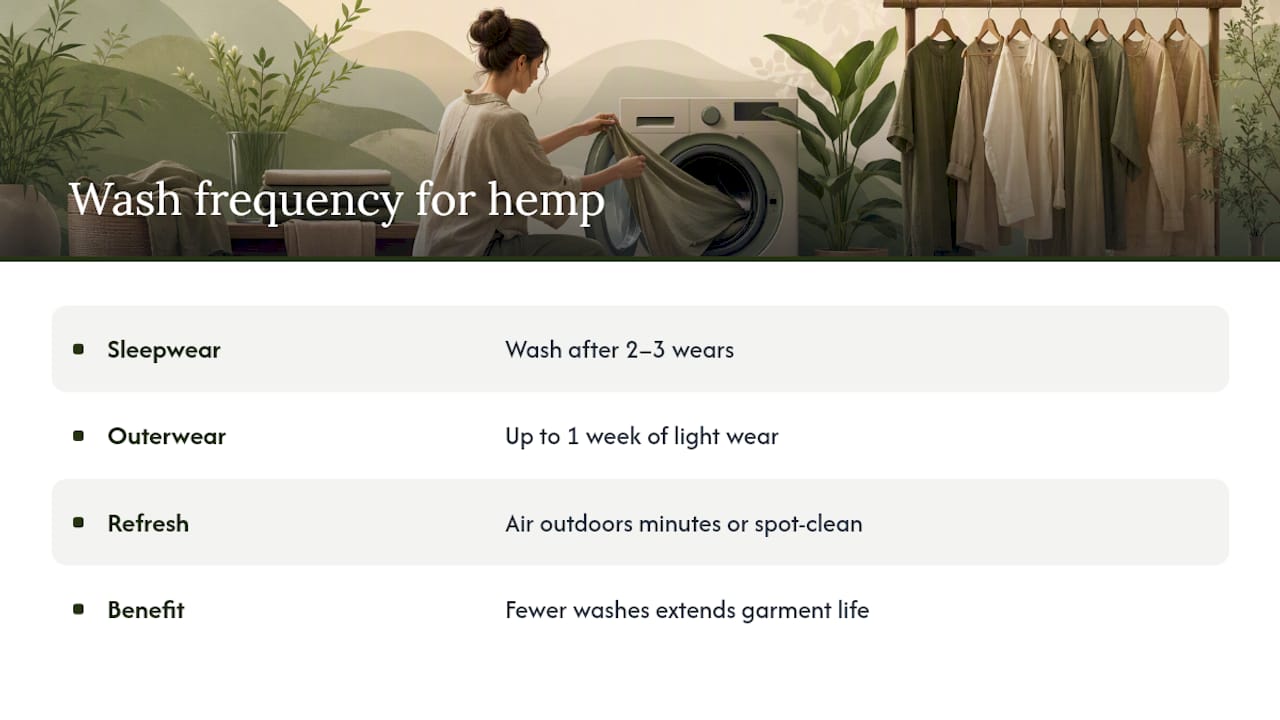
Hemp needs washing far less often than cotton or synthetic fabrics, and washing it too frequently is one of the most common ways owners wear it out early. The fiber’s natural resistance to bacteria and odor means a hemp shirt or pair of sleepwear pieces can go multiple wears between washes without smelling or looking tired, especially compared to antimicrobial fabric properties that keep odor-causing bacteria from taking hold in the first place.
For sleepwear and undergarments, a wash after two to three wears is typical, unless you’ve sweat heavily or the piece has visible stains. Outerwear like hemp shirts or pants can often go longer, sometimes a full week of light wear, before a wash is genuinely necessary. Spot-cleaning a small stain or airing a garment out overnight often solves the problem without a full trip through the machine.
Every wash cycle is a small amount of mechanical stress on the fibers, even when you follow every step in this guide perfectly. Cutting unnecessary washes in half over a garment’s lifetime translates directly into more wears before the fabric starts showing its age. That’s not just a laundry-day time-saver. It’s the single easiest way to extend a hemp garment’s working life without changing anything about how you wash it.
If you do need to refresh a garment between washes, a few minutes of airing on a hanger outdoors, out of direct sun, often eliminates minor odor without any water at all.
How to Care for Dyed or Printed Hemp Fabric
Dyed and printed hemp pieces need one extra layer of caution beyond the standard wash routine: protecting the color and design from the friction and heat that faded pieces almost always trace back to.
Always turn dyed or printed hemp inside out before washing, whether by machine or by hand. This single step does more to preserve color vibrancy than any detergent choice, since it keeps the printed or dyed surface from rubbing directly against other fabric in the load. Wash dyed pieces separately for at least the first two or three washes, even if you’ve already confirmed colorfastness, since some dye release continues in small amounts beyond the first cycle.
Cold water matters more here than with undyed hemp. Heat opens the fiber structure and accelerates dye loss, so even a jump from cold to lukewarm can visibly dull a saturated color over a dozen washes. Skip bleach of any kind on dyed or printed pieces, including oxygen bleach, since it lifts color along with stains.
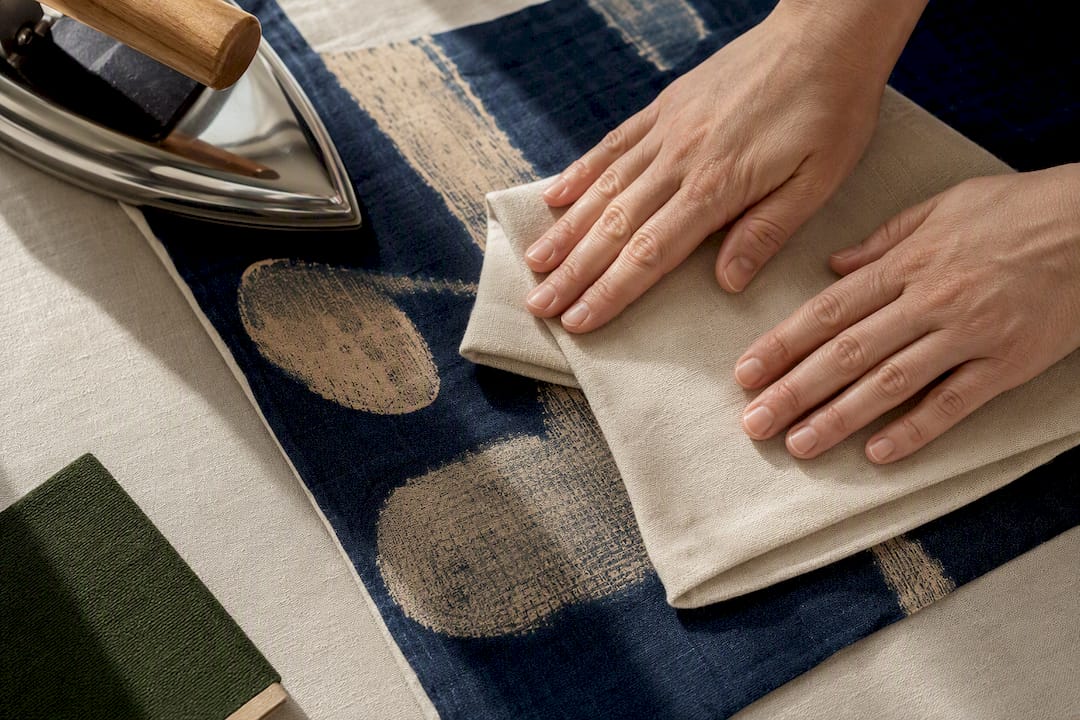
When ironing, always work inside out, and use a pressing cloth over any printed design to keep direct heat off the ink or pigment. Printed hemp in particular can crack or lift under an iron plate that’s too hot, so test on a low setting first and increase only if needed. Store dyed pieces away from sunlight even more strictly than undyed hemp, since fading is often the first visible sign of wear on a colored garment.
What This Guide Gets Right That Most Care Advice Misses
Most hemp care advice treats every garment the same, as if a plain undyed shirt and a printed sleepwear set with a viscose blend need identical treatment. They don’t, and treating them the same is exactly why so many people end up with a shrunk or faded piece they stop wearing within a year.
The temperature and drying method matter more than the detergent brand you pick, and that ranking gets reversed constantly in generic advice. A gentle cycle with the wrong drying method still shrinks a garment; a slightly imperfect detergent choice with air-drying and cold water rarely does lasting damage. If you take one thing from this guide, prioritize the dryer, not the detergent aisle.
The other overlooked point is frequency. Owners who wash hemp as often as they wash cotton wear out garments faster and never notice why, since the damage compounds quietly over dozens of unnecessary cycles. Hemp rewards patience between washes almost as much as it rewards careful washing itself.
— Jason
Hemp Sleepwear Built to Handle This Care Routine
Every step in this guide gets easier when the garment is made from consistent, quality hemp in the first place, and that’s exactly the gap Breevar fills. The Men’s Short-Sleeve Hemp Sleepwear Set is cut from breathable hemp designed to hold up through the cool-wash, air-dry routine outlined above without losing its softness over time.

If you’re shopping for two, the Hemp Lovers’ Sleepwear Set for 2 pairs matching pieces that follow the same simple care rules, so neither partner has to remember a different wash routine. For something low-maintenance to round out a gift or your own drawer, the personalized hemp crew socks add a monogrammed touch and wash just as easily as the rest of the collection. Browse the full hemp sleepwear line to find a set that fits your routine, and every purchase supports Breevar’s ongoing climate action and social responsibility initiatives.
Sources
- How to Wash Hemp Clothing: Step-by-Step Care Guide
- How to Wash Hemp Fabric: A Step-by-Step Guide - Fabric Material Guide
- Hemp fabrics: care, washing, drying and durability
FAQ
Does Hemp Fabric Shrink When Washed?
Yes, untreated hemp typically shrinks 3 to 7% on a cold wash with air drying, and up to 7 to 12% with hot water and tumble drying.
What Are the Downsides of Hemp Fabric?
Hemp wrinkles more easily than synthetic blends and can feel stiff if washed with harsh detergent or dried on high heat. It also shrinks more than pre-shrunk cotton on its first few washes if you skip cold water and air drying.
Can You Put Hemp in the Washing Machine?
Yes, hemp handles machine washing well on a gentle cycle at 30 to 40°C (85 to 105°F) with a mild liquid detergent. Use a mesh bag for delicate pieces and keep spin speed low to protect the fiber.
Does Hemp Clothing Last?
Hemp is one of the more durable natural fibers available, and it tends to soften rather than wear thin with proper washing over time. Garments that avoid hot water, bleach, and fabric softener routinely outlast cotton pieces of similar weight and construction.


Leave a comment