


TENCEL™ vs Generic Modal: Verify When Modal Is Truly Eco Friendly
Modal can be genuinely eco-friendly, but only under specific conditions: sustainably sourced beechwood pulp and closed-loop processing, the kind Lenzing uses to make TENCEL™ Modal. Generic modal made from unclear sourcing and poor chemical recovery is a different story. The gap between the two is verified by independent testing from TÜV Austria on biodegradability and Higg Materials data comparing water and carbon impact, not by the word “natural” on a hangtag.
TL;DR:
- Branded modal like TENCEL™ undergoes closed-loop processing with high chemical recovery, significantly reducing its water, energy, and chemical footprint.
- Generic modal from unclear sources may release more pollutants due to poor recovery systems, negating its environmental benefits.
- Proper sourcing, chemical management, and renewable energy use are critical factors that determine modal’s true eco-friendliness.
- Modal blends with elastane or polyester lose biodegradability, making end-of-life disposal less environmentally friendly.
- Brighter environmental impacts are achieved when selecting fully cellulosic garments verified by certifications and transparent supply chain information.
Table of Contents
- Is Modal Eco-Friendly? What the Fabric Actually Is
- Modal Fabric Environmental Impact: Sourcing, Chemicals, Water, and Energy
- Modal vs Organic Cotton, Viscose, Lyocell, and Polyester
- How to Verify Sustainable Modal Before You Buy
- Getting the Most Out of Modal: Care and End-of-Life
- Breevar’s Take on Modal
- Modal Underwear Built for Comfort and a Lighter Footprint
- Sources
- FAQ
Is Modal Eco-Friendly? What the Fabric Actually Is
Modal belongs to the rayon family, a fiber made from regenerated cellulose rather than synthetic polymers. It usually starts as beech pulp, though some producers use eucalyptus or bamboo. What separates modal from standard viscose is a modification during the spinning stage that gives it “high wet modulus,” a technical way of saying it keeps its strength even when soaking wet, which is why it holds up so well in underwear and sleepwear.
The manufacturing process runs through a few consistent steps. Wood pulp gets dissolved and treated chemically in a process called xanthation, which uses carbon disulfide to convert the cellulose into a spinnable solution. That solution gets pushed through spinnerets to form fibers, then washed, dried, and spun into yarn. This is where “is modal sustainable” gets complicated: the chemistry is identical across most producers, but what happens to those chemicals afterward is not.
- Generic modal: often sourced through disconnected supply chains, with limited public data on chemical recovery or energy use.
- Branded modal (TENCEL™ Modal): produced in integrated Lenzing facilities with audited recovery rates and published environmental data.
- Blended modal: mixed with elastane or polyester for stretch, which improves fit but changes how the garment behaves at end of life.
That last point matters more than most shoppers realize. A modal garment blended with elastane behaves well on the body but won’t compost the way 100% modal will. The fiber content label is doing more work than people give it credit for.
Modal Fabric Environmental Impact: Sourcing, Chemicals, Water, and Energy
Modal’s environmental footprint breaks into distinct categories, and each one can swing wildly depending on the producer.
Sourcing starts the whole equation. Beechwood grown under FSC or PEFC certification comes from forestry operations with traceable, managed harvesting, which is a meaningfully different footprint than pulp sourced without oversight. Geography plays a role too: a mill running on regional wood with a short supply chain burns less fuel getting raw material to the factory door than one importing pulp across oceans.
Chemical use is the part most marketing copy skips. Carbon disulfide is a genuine industrial hazard when mismanaged, capable of causing worker health problems and local pollution if it escapes untreated. Modern closed-loop modal production recovers roughly 90 to 95% of that chemical for reuse, according to sustainability research on modal fabrics. That’s a solid number, but it’s not universal. Facilities without robust recovery systems can vent far more into the air and water, which is exactly the scenario that gives regenerated cellulose fibers a bad reputation.
Water and energy tend to favor modal over cotton, since tree cellulose requires far less irrigation than cotton fields. But the energy source powering the mill changes the math substantially. A facility running on coal power tells a very different carbon story than one running on hydro or biomass, even if the chemistry inside the factory is identical.
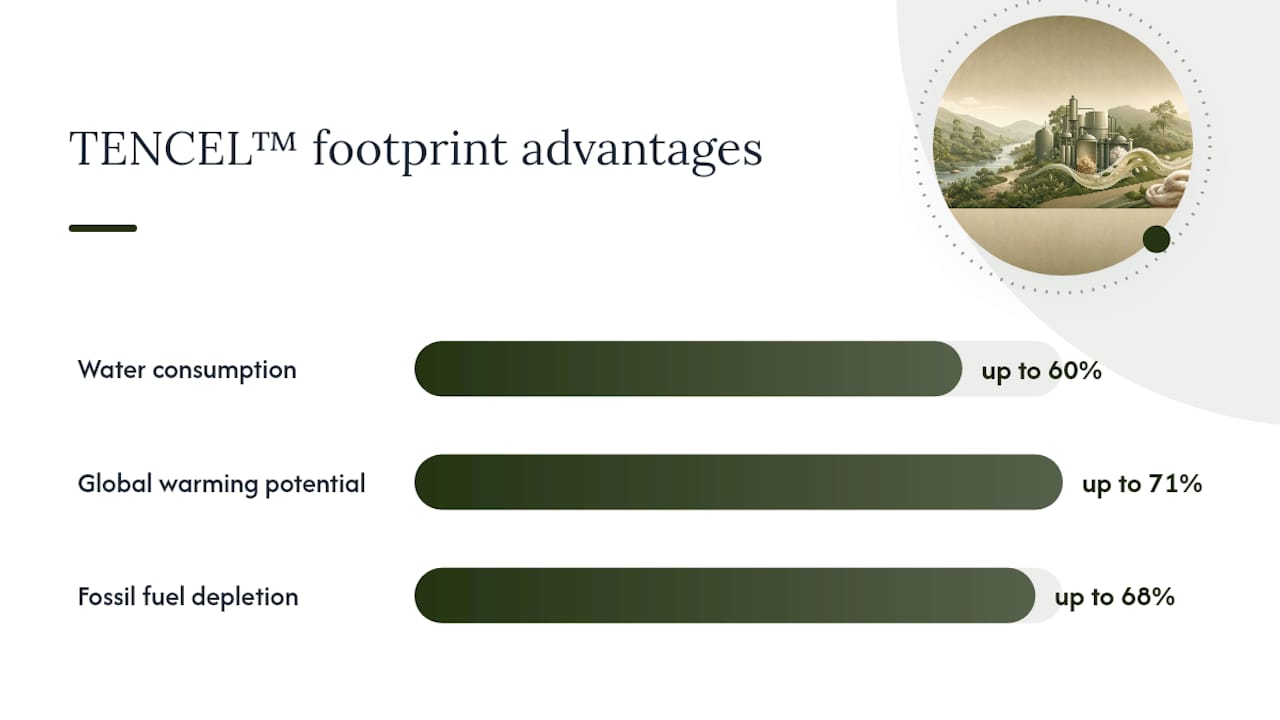
By the numbers: TENCEL™ Modal fibers show up to 60% lower water consumption, up to 71% lower global warming potential, and up to 68% lower fossil fuel depletion compared to generic modal, based on Higg Materials comparisons cited by Lenzing.
That spread between branded and generic modal is the single most important number in this entire conversation. It tells you the fiber category isn’t the deciding factor. The factory is.
- Sustainably certified pulp reduces deforestation and habitat risk.
- High solvent recovery limits worker exposure and local water contamination.
- Renewable energy at the mill lowers the carbon footprint independent of fiber type.
- Integrated, on-site pulp-to-fiber production (what Lenzing runs in Austria) cuts transport emissions between processing stages, according to Lenzing’s newsroom.
As textile researcher Preethi Gopinath of Parsons puts it, sustainability isn’t just about whether a fiber breaks down at the end. It’s the sum of water use, chemical management, and how the raw material was grown in the first place, a framing worth keeping in mind every time you see modal marketed as automatically green.
Modal vs Organic Cotton, Viscose, Lyocell, and Polyester
Shoppers rarely compare modal against just one alternative. Here’s how it actually stacks up against the fibers you’re most likely choosing between.
- Modal vs organic cotton: Modal wins on water use since tree pulp needs far less irrigation than cotton fields, and it typically skips the pesticide load that conventional cotton carries. Modal’s durability, particularly its resistance to pilling, can mean fewer replacement cycles over a garment’s life.
- Modal vs viscose: Modal is essentially a refined viscose with a stronger wet-strength profile, and better-run modal facilities tend to show tighter chemical management than budget viscose lines. The two fibers start from the same chemistry, so producer quality matters just as much here as fiber type.
- Modal vs lyocell: This is the one comparison where modal doesn’t come out ahead. Lyocell uses a different solvent system, NMMO, with recovery rates approaching 99.8%, according to Impactful Ninja’s fiber research, well above modal’s typical 90 to 95% carbon disulfide recovery. If minimizing chemical footprint is your single priority, lyocell edges out modal.
- Modal vs polyester: This isn’t close. Modal is cellulose based, so it biodegrades and doesn’t shed plastic microfibers, while polyester is a petroleum-derived plastic that persists in landfills and sheds microplastics with every wash, according to HowStuffWorks’ fabric research.
Where does modal actually make sense? Underwear and sleepwear are the strongest use cases. It’s soft against skin, wicks moisture well, and its wet-strength advantage means it survives repeated washing better than plain viscose. If you’re chasing the lowest possible chemical footprint on paper, lyocell is the more defensible pick. If you’re comparing against cotton or synthetics, well-sourced modal usually comes out ahead.
How to Verify Sustainable Modal Before You Buy
Fiber content labels don’t tell you how a garment was actually made. Here’s what to check instead.
- Look for named branding. “TENCEL™ Modal” or a direct Lenzing reference on the label signals independently audited production, not just a generic rayon blend.
- Check for biodegradability testing. Certifications like TÜV Austria’s compostability testing indicate the fiber has been verified to break down under real conditions, not just assumed to.
- Confirm pulp sourcing. FSC or PEFC certification on the wood feedstock means the forestry behind the fiber was managed responsibly.
- Ask about closed-loop processing. A brand that can tell you its supplier recovers process chemicals and runs on integrated production is giving you a real answer, not a marketing line.
- Read the composition, not just the tag. A “modal” garment blended with elastane or polyester won’t compost the way a 100% modal piece will.
Pro Tip: If a brand’s product page can’t tell you where the fiber was milled or whether it’s TENCEL™ certified, email customer service and ask directly. A brand with nothing to hide will usually answer within a day.
Full-cellulosic garments, meaning no synthetic blend at all, give you the cleanest end-of-life outcome. That’s the detail most shoppers skip and the one that matters most once the garment is worn out.

Getting the Most Out of Modal: Care and End-of-Life
Modal’s environmental case gets stronger the longer a garment stays in rotation. Washing in cool water with a gentle detergent and skipping high-heat drying protects the fiber structure and cuts the energy footprint of ownership. Modal resists pilling better than cotton and retains strength even soaking wet, which is why fewer garments end up in the trash after a handful of washes.
At end of life, the picture depends entirely on what the garment is made of.
- 100% modal: Biodegrades under proper conditions, with some Lenzing fibers showing faster marine and compost breakdown than synthetic fibers in testing referenced by The Strategist.
- Modal blends: Elastane or polyester content can block composting entirely, even if the label still says “modal.”
- Conventional dyes and finishes: Heavy chemical treatments on the finished fabric can slow biodegradation compared to spin-dyed or minimally treated pieces.
On microplastics specifically: modal contains no petroleum polymers, so a 100% modal garment isn’t shedding plastic fiber fragments into your laundry water the way polyester does. That advantage disappears the moment synthetic fibers get blended in.
Breevar’s Take on Modal
Breevar builds sleepwear and underwear around natural materials because comfort and environmental responsibility shouldn’t be a trade-off. Modal earns a place in our lineup for a specific reason: its moisture-wicking softness solves a real problem for people who overheat at night, and when it’s sourced and processed responsibly, it biodegrades the way our approach to sustainable materials demands.
We’re not going to pretend every modal on the market clears that bar. Sourcing and closed-loop processing are the variables that decide whether a garment made from this fiber actually delivers on the promise printed on its tag. That’s why traceability matters as much as the fiber name itself, and why we’d rather point you to a product page with real composition details than a vague sustainability claim.
— Jason
Modal Underwear Built for Comfort and a Lighter Footprint
Breevar’s Men’s Modal Performance Long Boxer Brief is built around the same natural-fiber philosophy behind our hemp and linen sleepwear: breathable, moisture-wicking material that keeps you cool through the night without relying on synthetic performance fabric.
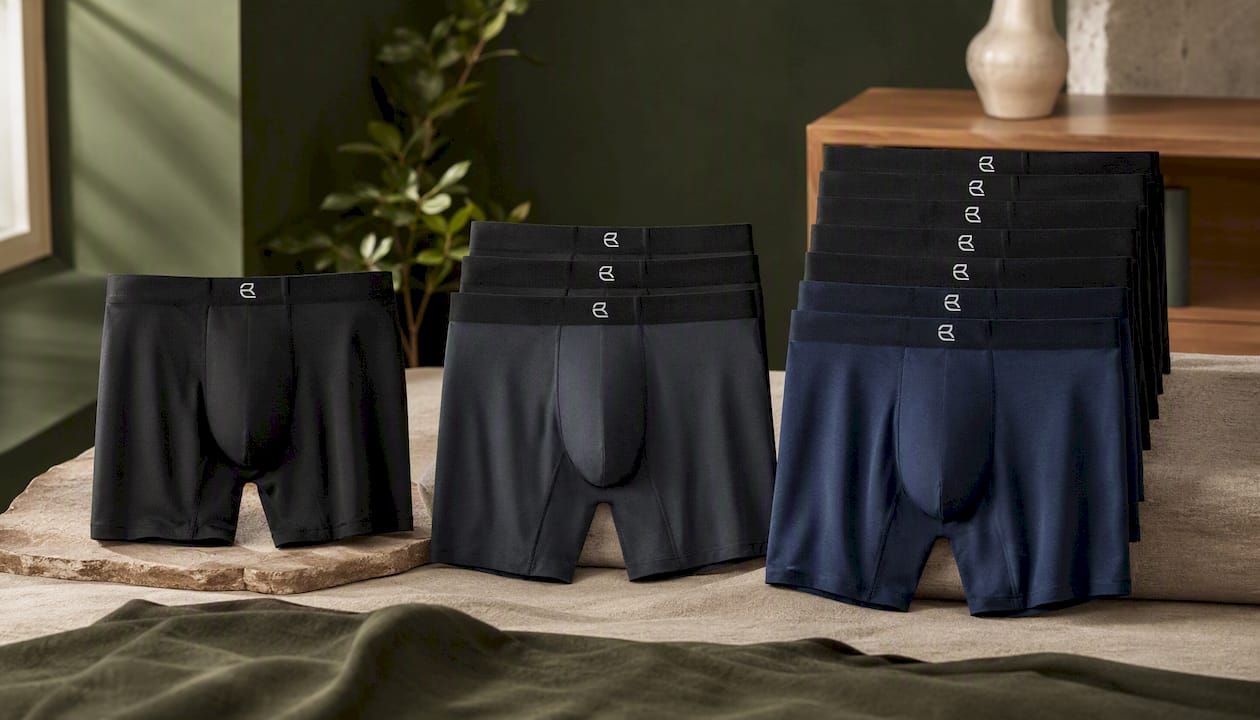
The single pair gets you started, but most people wear boxer briefs often enough that a bulk option makes more sense. The 3-Pack Men’s Modal Performance Long Boxer Brief covers a full week without laundry gaps, and the 6-Pack Men’s Modal Performance Long Boxer Brief is the practical pick for anyone replacing an entire drawer at once or building a gift set for someone who overheats at night. Every pair uses the same seamless, anti-chafe construction. Head to the product pages above to check sizing and pick the pack that fits how often you actually do laundry.
Sources
For readers who want to dig deeper: Lenzing’s TENCEL™ fiber data and product information cover the Higg Materials comparisons and integrated production details cited throughout this piece. Parsons School of Design’s Preethi Gopinath offers the expert framing on lifecycle sustainability referenced above.
FAQ
What Are the Disadvantages of Modal Fabric?
Generic modal can carry a heavier chemical and carbon footprint than branded alternatives like TENCEL™ Modal, especially when producers don’t disclose recovery rates or energy sourcing. Blended modal also loses the biodegradability advantage that pure modal offers.
Does Modal Release Microplastics?
No. Modal is cellulose based with no petroleum polymers, so 100% modal garments don’t shed plastic microfibers the way polyester does, according to HowStuffWorks. Blending modal with synthetic fibers reintroduces that risk.
Is Modal as Healthy to Wear as Cotton?
Modal is breathable, moisture-wicking, and gentle against skin, often outperforming cotton for comfort in underwear and sleepwear applications. Neither fiber poses a general health risk to wear, though people with specific chemical sensitivities should check for finishing treatments on either fabric.
Is Modal as Bad as Polyester?
No. Polyester is a petroleum-based plastic that doesn’t biodegrade and sheds microplastics, while modal is a regenerated cellulose fiber that breaks down under proper conditions when it’s not blended with synthetics. The two aren’t comparable on environmental terms.


Leave a comment