


6 Checks to Choose Underwear Fabric: Sustainable, Comfortable Picks
For everyday wear, pick organic or long-staple cotton. For all-day softness, go with micro modal. For travel or odor control, lyocell (TENCEL™) wins. For heavy sweat, technical microfiber wicks best, while mulberry silk suits sensitive skin and sleep, and hemp or linen deliver the most durability per wash. The catch: fabrics that absorb moisture well often dry slowly, and stretch fibers that fit best tend to breathe least. A natural-fiber line is worth a look if you want performance without synthetic bulk.
TL;DR:
- Natural fibers like organic cotton, hemp, and linen offer durability and breathability, especially when blended for specific performance needs.
- Modal and lyocell fabrics provide superior softness, moisture management, and odor control, making them ideal for all-day or travel wear.
- Synthetics such as microfiber are best suited for high-sweat activities but have lower breathability and require careful maintenance to prevent odor buildup.
- Check fabric labels for fiber content, construction details, and certifications like GOTS or OEKO-TEX to ensure quality and sustainability claims.
- Proper washing—avoiding fabric softeners, using appropriate detergents, and replacing underwear when elastic or fabric quality declines—extends garment life.
Table of Contents
- How to Read an Underwear Fabric Label
- Cotton, Hemp, Linen, and Silk: How Natural Fibers Really Perform
- Why Modal and Lyocell Often Beat Cotton for Everyday Comfort
- Synthetics and Blends: Where Nylon, Polyester, and Elastane Actually Help
- Which Fabric Wins on Comfort, Breathability, and Durability?
- What to Check Before You Buy: A Shopping Checklist
- How Should You Wash Underwear to Keep It Breathable?
- Why Breevar Builds Around Natural Fiber Science
- The Real Trade-Off in Underwear Fabric
- Match Your Fabric Pick to a Breevar Style
- Sources
- FAQ
How to Read an Underwear Fabric Label
The fiber is only half the story. How it’s spun, knitted, and finished changes everything about how it performs against skin.
Start with the fiber category. Natural fibers (cotton, hemp, linen, silk) grow as is and get spun into yarn with minimal chemical intervention. Regenerated cellulosics (modal, lyocell, viscose, bamboo viscose) start as wood pulp or plant cellulose, then get dissolved and re-spun into fiber through industrial processing. Synthetics (polyester, nylon, elastane) are petroleum-based polymers built entirely in a lab.
Construction matters just as much as fiber choice. Fabric weave and knit type measurably affect air permeability and abrasion resistance, even when two garments use the identical fiber. A tight jersey knit traps heat differently than an open mesh, and a rib knit stretches differently than an interlock.
Watch for these label red flags:
- “Bamboo” with no mention of viscose, lyocell, or processing method
- “Antimicrobial” with no named technology or certification behind it
- Fiber blends that don’t list percentages
- Vague “moisture-wicking” claims with no fiber content specified
Cotton, Hemp, Linen, and Silk: How Natural Fibers Really Perform
Cotton remains the default for good reason: it’s breathable, absorbs sweat well, and rarely irritates skin. Standard cotton works fine for most people, but 140s or long-staple cotton uses longer fibers that produce a smoother yarn with less lint and better durability against friction. Organic cotton grown and processed under GOTS certification skips the synthetic pesticides and finishing chemicals that can linger in conventional cotton, which matters for anyone with sensitive skin, as explained in our guide to udržitelné materiály v dětské obuvi.
Hemp and linen trade a little softness for serious durability. Hemp fiber shows excellent air permeability and moisture management, and hemp fabrics tend to outlast cotton by a wide margin because the fiber itself is stronger. The stiffness that hemp is known for softens considerably once blended, and hemp-linen blends in particular showed improved air permeability and moisture handling over commodity cotton, with weave choice further tuning the feel. That’s the appeal for anyone who runs warm at night: a fabric that stays cooler to the touch and holds up over hundreds of washes.
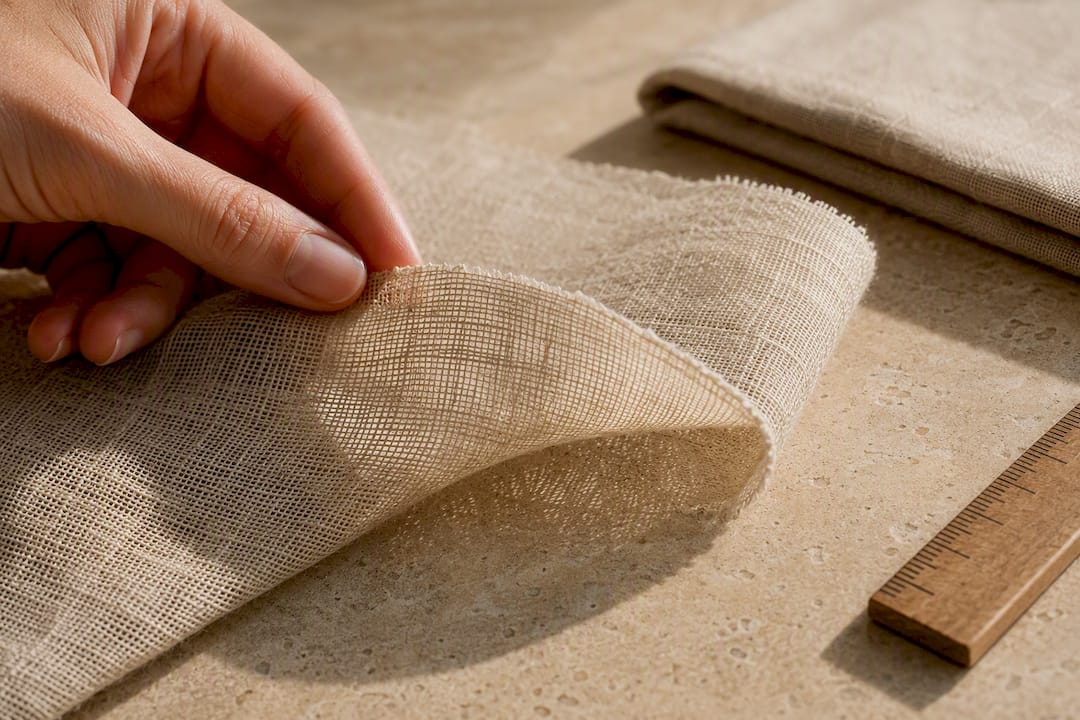
Silk sits at the opposite end. Mulberry silk has an unusually smooth fiber surface that creates almost no friction against skin, which is why it shows up in sleepwear for people with eczema or general skin sensitivity. It also regulates temperature well, feeling cool in summer and retaining warmth in winter. The trade-off is cost and care: silk generally needs hand washing or a garment bag on a gentle cycle, and it doesn’t handle heavy sweat the way cotton or synthetics do.
Pro Tip: If you’re torn between hemp and cotton for daily wear, check out this direct comparison of hemp and cotton breathability and durability before you buy in bulk.
Quick fiber-to-use mapping:
- Cotton (standard or 140s): everyday wear, budget-friendly basics
- Organic cotton: sensitive skin, babies, anyone avoiding chemical finishes
- Hemp/linen blends: hot sleepers, long-term durability, minimal-wash wardrobes
- Mulberry silk: nighttime wear, eczema-prone skin, special occasions
Why Modal and Lyocell Often Beat Cotton for Everyday Comfort
Modal and lyocell come from the same broad family as viscose, wood pulp cellulose dissolved and re-spun into fiber, but they’re processed differently and it shows in the final product. Modal is an upgraded viscose with higher wet strength, meaning it holds its shape wash after wash instead of stretching out or going limp the way cheap viscose does. Micromodal, a finer version of the same fiber, gets you that “second skin” softness brands like to advertise, and it’s not just marketing: the finer denier really does feel closer to silk than cotton.
Lyocell, sold under the brand name TENCEL™, takes it further. It’s made through a closed loop solvent process that recovers more than 99% of the chemicals used, producing a stronger, cooler fiber than standard viscose. What matters more to your underwear drawer is moisture behavior. Lyocell draws moisture into the fiber core rather than letting it sit on the surface, which starves the bacteria responsible for odor. That’s the mechanical reason lyocell travels so well: three days into a trip with no laundry access, a lyocell blend still smells cleaner than cotton.
Bamboo deserves a specific warning here. Regenerated bamboo viscose is chemically nearly identical to any other viscose, and the process typically involves carbon disulfide and heavy chemical treatment that undercuts the “eco-friendly bamboo” pitch you’ll see on product pages. Only bamboo processed through a lyocell-style closed-loop system earns the sustainability claim. If a bamboo underwear listing doesn’t specify its processing method, assume it’s standard viscose and shop accordingly.
What to demand on a bamboo label:
- The word “lyocell” or a named closed-loop process, not just “bamboo”
- A certification mark (OEKO-TEX at minimum)
- Country of manufacture, since processing standards vary widely by region
Synthetics and Blends: Where Nylon, Polyester, and Elastane Actually Help
Synthetics get a bad reputation in underwear circles, and some of that is earned, but written off entirely they’re not. Technical microfiber, usually a polyester or nylon blend engineered with a fine denier, moves sweat to the fabric surface where it evaporates fast, which is exactly what you want during a workout or a hot commute. The mechanism is straightforward: capillary action pulls moisture along the fiber to a larger surface area, and the low absorbency of the polymer itself means the fabric doesn’t get saturated, so it dries in a fraction of the time cotton needs.
The downside shows up when synthetic underwear gets worn too long without a wash. Because the fabric doesn’t hold moisture, it also doesn’t hold up well against skin for extended damp contact, and synthetics have measurably lower breathability than open-weave natural fabrics. Left damp after a workout, they can trap heat and odor rather than release it.
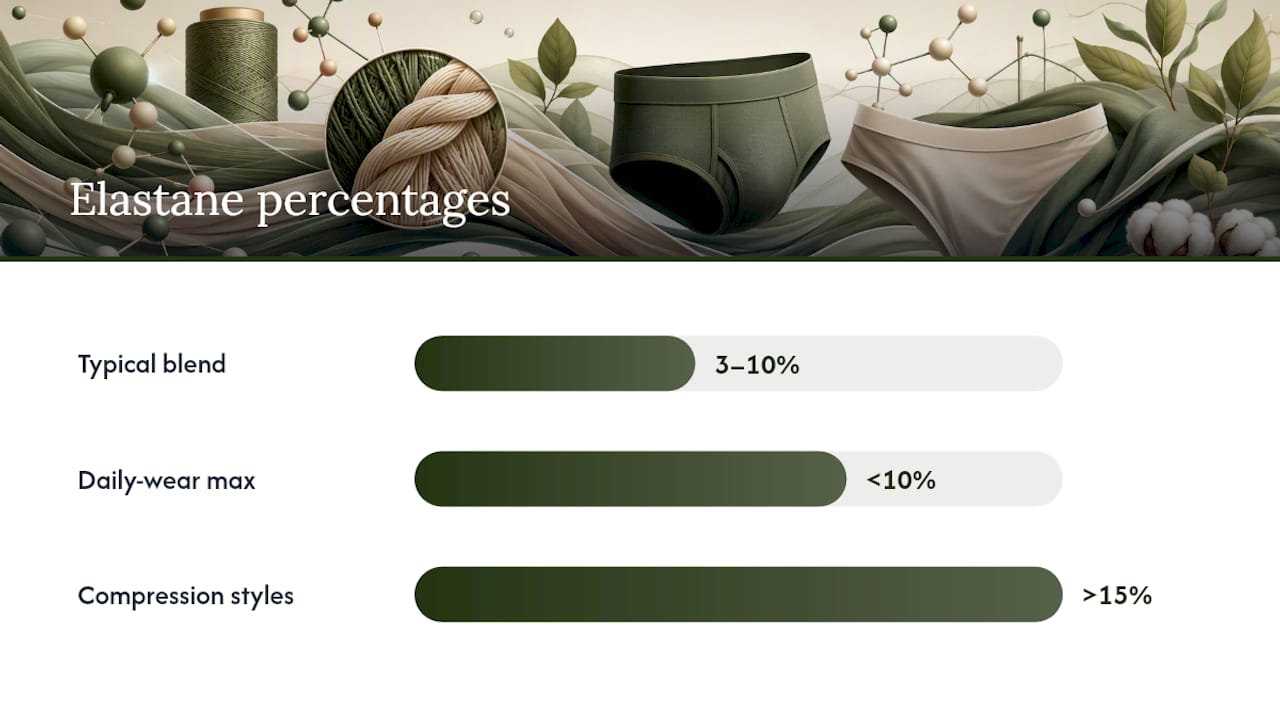
Elastane (spandex) is the stretch fiber blended into nearly every fitted underwear style, usually somewhere between 3% and 10% of total fiber content. Higher elastane percentages improve fit and reduce sag, but they also reduce breathability because the fiber itself doesn’t allow airflow the way cotton or lyocell do. A blend north of 15% elastane starts to feel more like compression gear than everyday underwear.
Shopping tips for synthetic-natural hybrids:
- Look for a cotton or modal lining in the crotch panel, even in a mostly synthetic garment
- Check for mesh or ventilated side panels on athletic styles
- Keep elastane percentage under 10% for daily wear, higher only for compression or athletic use
Which Fabric Wins on Comfort, Breathability, and Durability?
No single fabric wins every category, which is exactly why the right pick depends on what you’re doing that day.
Comfort and hand-feel: micromodal and silk lead, cotton is a close third. Breathability: hemp, linen, and open-weave cotton outperform anything with high elastane content or a dense synthetic knit, since air permeability depends heavily on both fiber and weave construction. Moisture handling splits into two separate jobs, absorption and drying speed. Cotton absorbs the most but releases it slowly, while lyocell absorbs less at the surface but pulls moisture into the fiber core and dries faster, giving that “dry to the touch” feel even with sweat present. Durability: hemp and long-staple cotton hold up best over hundreds of washes; standard viscose and cheap synthetics degrade fastest.
You’ll see terms like air permeability (how easily air passes through the fabric) and yarn count (fiber thickness, where a higher number generally means a finer, softer yarn) on more technical product pages. Neither is marketing fluff; both correlate directly with how the underwear will actually feel by hour eight of wear.
Quick picks: training and heavy sweat, technical microfiber; travel with limited laundry access, lyocell; overnight and sensitive skin, silk or micromodal; daily rotation, organic cotton or a modal blend.
What to Check Before You Buy: A Shopping Checklist
Product pages bury the details that actually matter. Run through this list before adding anything to your cart:
- Fiber percentage — the exact breakdown, not just the headline fiber
- Elastane content — under 10% for daily wear, higher only for athletic fit
- Crotch lining — cotton or modal lining even in synthetic-shell underwear
- Fabric weight — lighter weights breathe better, heavier weights last longer
- Construction notes — mesh, ribbed, or jersey knit affects airflow directly
- Certifications — GOTS for organic cotton, OEKO-TEX for chemical safety, FSC for wood-pulp cellulosics like modal and lyocell
Search a product page for the words “closed-loop,” “GOTS,” or “OEKO-TEX” before you buy. If none of those terms appear anywhere, including in the brand’s sustainability page, treat any eco-claim on the label with skepticism.
Pro Tip: Search the product page for “carbon disulfide” or “closed-loop” specifically when shopping bamboo items. If the brand won’t say how the fiber was processed, it’s standard viscose no matter what the marketing copy claims.
How Should You Wash Underwear to Keep It Breathable?
Fabric softener is the single biggest mistake people make with underwear care. It coats fibers with a waxy residue that reduces breathability across every fabric type, natural or synthetic. Skip it entirely and use a hypoallergenic detergent instead.
Change underwear daily, and wash at higher temperatures when you need to reduce fungal spores, since heat is what actually eliminates them rather than detergent alone. Beyond that, care splits by fiber:
- Silk: hand wash or use a garment bag on the gentlest machine cycle
- Modal and lyocell: cool machine wash, no dryer, hang to preserve shape
- Cotton and hemp: machine wash warm, tumble dry low
- Microfiber and synthetics: cool wash, low or no heat in the dryer to protect elastic fibers
Retire any pair once elastic loses its snap-back, pilling turns heavy, or moisture control noticeably declines, usually somewhere between six months and a year with regular wear and washing.
Why Breevar Builds Around Natural Fiber Science
One underwear line starts from the same fiber logic in this guide: natural and regenerated cellulosics outperform synthetics for daily comfort, and sustainability shouldn’t mean sacrificing feel. Some brands also fund climate and social-responsibility initiatives, which is a rare pairing in intimate apparel.
Three current styles map directly onto the use cases above:
- Bamboo Men’s Boxer Brief — a silk-alternative softness pick for daily comfort
- 3-Pack Men’s Mesh Modal All-Day 2nd Skin Boxer Brief — travel and all-day cooling
- 6-Pack Men’s Mesh Modal All-Day 2nd Skin Boxer Brief — the same performance profile at better per-unit value for frequent rotation
The Real Trade-Off in Underwear Fabric
No fiber wins everywhere. Pick the fabric that matches your actual day, not the one with the best marketing copy, and follow the care rules above, since a great fabric ruined by fabric softener performs no better than a mediocre one.
— Jason
Match Your Fabric Pick to a Breevar Style
If micromodal or silk-like softness is what you’re after for daily wear, the bamboo boxer brief delivers that hand-feel using the natural-fiber logic covered above rather than a synthetic shortcut.
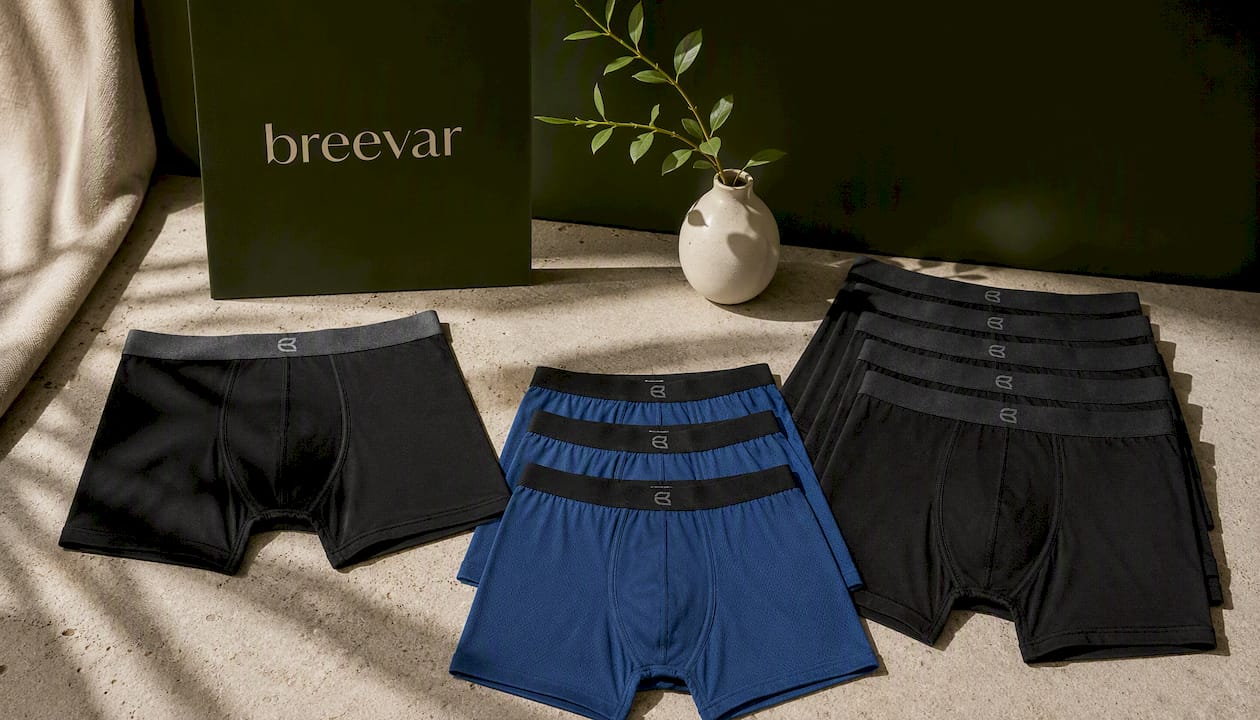
For travel, workouts, or long days where odor control and quick drying matter most, the modal mesh construction in the 3-pack all-day boxer brief uses the same moisture-into-fiber-core mechanism that makes lyocell and modal outperform cotton for multi-day wear. If you go through underwear fast or want to cut down on laundry frequency, the 6-pack version gives you the same fabric performance at a better per-pair cost. Every Some purchases also fund climate and social-impact initiatives, so buying does more than fill a drawer. Check sizing and fabric details on either product page, and pick the pack size that matches how often you’re willing to do laundry.
Sources
- Influence of weave and weft on comfort properties of hemp–linen fabrics — MDPI Materials (2024)
- Healthy underwear material guide — LingerieInfo
- What Is Modal? Guide to Natural Fibers — MaterialFilter
FAQ
What Fabric Is Best for Underwear?
Organic or long-staple cotton works best for daily wear, modal and lyocell edge it out for softness and odor control, and technical microfiber wins for heavy sweat or athletic use.
What Do the British Call a Bra?
In British English, “bra” is standard, though older or more formal terms like “brassiere” occasionally appear; there’s no separate slang term specific to the UK.
Is 95% Cotton Enough for Underwear?
Yes.
What Underwear Do Gynecologists Recommend?
Gynecologists and medical experts consistently point to breathable natural fibers like cotton because their absorbency and airflow help maintain a healthy skin environment, while synthetics like nylon trap more heat and moisture.
How Often Should I Replace Underwear?
Most underwear needs replacing every six to twelve months with regular wear, sooner if the elastic loses its stretch or the fabric develops heavy pilling that reduces moisture control.


Leave a comment