

Is Linen Itchy? What the First 1–3 Washes Actually Do
Short answer: linen can feel scratchy at first, but it usually softens with proper care and wear. The initial roughness comes down to fiber grade, weave, finishing, and how you launder it. With a few targeted steps, most linen softens noticeably within weeks.
TL;DR:
- Linen content labels do not predict comfort; look for finer yarns, longer flax fibers, washed finishes, or knit and relaxed weave constructions.
- New linen often starts softening within 1 to 3 washes, loosens during 2 to 4 weeks of wear, and settles after 6 to 10 washes.
- Soak new linen in mild detergent for 30 minutes to overnight, then wash gently in warm water and tumble with dryer balls on low heat.
- Use a vinegar rinse instead of fabric softener, which can reduce moisture wicking; avoid chlorine bleach and excessive heat because they weaken fibers.
- If linen stays stiff after eight to ten washes, poor manufacturing may be at fault; try knit fabric or a cotton or hemp blend.
Table of Contents
- Why linen sometimes feels scratchy
- Is 100% linen inherently itchy?
- Does linen actually get softer with washing and wear?
- How to soften itchy linen at home
- What textile research says about linen softness
- Choosing linen that won’t fight you
- Where to start with linen sleepwear that feels good from night one
- FAQ
- Sources
Why linen sometimes feels scratchy
Linen’s reputation for scratchiness traces back to the flax fiber itself and how it gets processed into fabric. Short-staple flax fibers have more loose ends poking out at the surface, while long-staple fibers lie flatter and feel smoother against skin from the first wear.
Raw flax also carries natural non-cellulosic material, including lignin, pectin, and waxy coatings. When scouring and bleaching don’t fully remove these residues, the fiber keeps a stiff, woody feel instead of a soft one. Weave matters too: a tight plain weave holds its shape and can feel crisper at first, while a looser weave or a non-occlusive knit construction moves with the body and creates less friction against the skin.
Budget linen often skips processing steps to cut costs, which raises the odds of that first-touch itchiness.
- Short-staple flax leaves more fiber ends exposed at the surface.
- Leftover lignin, pectin, or wax from incomplete scouring keeps fabric stiff.
- Tight, dense weaves increase surface contact and friction.
- Manufacturing shortcuts on cheaper linen skip softening finishes entirely.
Is 100% linen inherently itchy?
A “100% linen” label only tells you the fiber content, not the hand. The same fiber can feel crisp and scratchy in one garment and silky soft in another, depending on grade, yarn fineness, and finishing.
Construction plays a direct role in comfort. A peer-reviewed study on non-occlusive knitted linen found that knit linen garments lowered skin temperature noticeably for volunteers with atopic dermatitis, alongside higher air permeability than tighter woven structures. That cooling and breathability can reduce the irritation some wearers associate with linen.
For sensitive skin, look for:
- Knit or brushed linen rather than a stiff, tightly woven plain weave.
- Linen blended with cotton or hemp for a softer initial hand.
- Labels mentioning “enzyme washed,” “stonewashed,” or “garment washed” finishing.
Does linen actually get softer with washing and wear?
Yes, and the process is mostly mechanical. Each wash and wear cycle loosens remaining surface fibers and flexes the yarn structure, while agitation helps strip away leftover pectin and wax that the original finishing missed.
Here’s a realistic timeline:
- First 1 to 3 washes: Noticeable softening begins as loose fibers and residues wash away.
- First 2 to 4 weeks of regular wear: Repeated flexing breaks down stiffness in the weave.
- After 6 to 10 washes: Most linen reaches close to its final, settled hand.
Variables like water temperature, detergent, and dryer use can speed or slow this along the way. It’s worth distinguishing genuine softening from the illusion of it: some fabric softeners coat fibers with a slick residue that feels soft briefly but washes away and can reduce the fabric’s natural moisture-wicking ability over time.
How to soften itchy linen at home
A few deliberate laundering choices can shortcut the softening process considerably.
- Pre-wash soak: Soak new linen in cool to lukewarm water with a mild detergent for 30 minutes to overnight, following the product’s instructions, to loosen surface residue before the first wash.
- Gentle machine wash: Use a gentle cycle, warm (not hot) water, and avoid overloading or underloading the drum so fabric can move freely and flex against itself.
- Mechanical softening: Add wool dryer balls or clean tennis balls to the dryer on low heat, or run a second short tumble cycle after line-drying to fluff the fibers.
- Vinegar rinse over fabric softener: A splash of white vinegar in the rinse cycle helps strip detergent and mineral residue without coating the fibers; commercial softeners can leave a film that dulls linen’s breathability.
- Skip harsh bleach and high heat: NIST’s technical fabric guidance warns that chlorine bleach and excessive heat weaken linen fibers and that the fabric is prone to creasing and flex-abrasion, so sharp folds and aggressive drying can do more harm than good.
Pro Tip: Roll linen garments loosely for storage instead of folding them into sharp creases; this reduces the flex-abrasion that causes rough, frayed-feeling edges over time.
Some roughness won’t budge no matter how carefully you wash it. If a garment still feels stiff and scratchy after eight to ten washes, the issue is likely manufacturing grade rather than anything in your laundry routine, and a different construction or blend is worth considering.
What textile research says about linen softness
The science backs up what careful washing can achieve, and also explains its limits. The Emerald study on non-occlusive knitted linen found that this construction improved wear tolerance for people with atopic dermatitis, pointing to knit structures as a meaningful lever for comfort.

Processing matters just as much as construction: research on flax fiber scouring and bleaching shows that these treatments can remove a large share of the non-cellulosic material in raw flax, including lignin and pectin, directly improving fiber fineness and hand. Aggressive treatment can also affect fiber strength, which is one reason manufacturers balance softness against durability rather than maximizing one at the expense of the other.
Government-level guidance from NIST rounds this out with practical laundering limits that keep linen’s softening process from turning into fiber damage.
Choosing linen that won’t fight you
Most of the itch complaints I hear about trace back to one of two things: a fabric that skipped proper finishing, or a weave too tight for how someone sleeps. Neither is a reason to write off linen. When we choose linen for sleepwear, we’re looking at yarn fineness, how thoroughly it’s been scoured, and whether the knit or weave lets fabric move with the body instead of against it. Moisture-wicking matters here too, since fabric that stays dry against skin causes less friction overnight. Feedback from people actually sleeping in the garments shapes which adjustments we make next.
— Jason
Where to start with linen sleepwear that feels good from night one
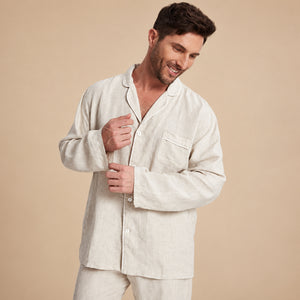
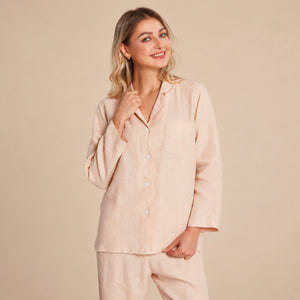
We design linen sleepwear with principles such as finer yarns, finishing that strips residual lignin and wax, and knit or relaxed weave constructions that reduce friction against skin overnight to help softness develop sooner.

A good starting point is a single piece rather than a full wardrobe swap, so you can feel the difference before committing further.
- Browse the Linen Lovers’ Sleepwear Set for 2 for a shared gift option.
- Try Men’s Short-Sleeve Linen Sleepwear for warm-weather comfort.
- Explore Women’s Linen Sleepwear for a breathable, relaxed fit.
Pair any piece with the washing steps above, and follow our full linen sleepwear collection if you want to compare cuts and fits before choosing.
FAQ
Is 100% linen itchy?
Linen is not inherently a problem.
What is the downside of linen?
Linen wrinkles easily and can feel stiff before it’s broken in, and NIST guidance notes it’s prone to creasing and flex-abrasion if folded sharply or laundered too aggressively. These traits are manageable with gentle washing and rolled storage rather than folding.
Why does linen make me itch?
Itchiness usually comes from short, coarse fiber ends, leftover lignin or pectin from incomplete scouring, or a tight weave that increases skin contact. Washing and wearing the fabric gradually removes loose fibers and residue, which is why linen typically softens over several wash cycles.
Is linen just 100% cotton?
No, linen and cotton come from different plants. Linen is made from the flax plant’s stalk fibers, while cotton comes from the fluffy boll around cotton seeds, and the two have different textures, strength, and moisture-wicking properties.
Sources
- Non-occlusive knitted linen for atopic dermatitis wearer | International Journal of Clothing Science and Technology
- Consumer Information Series 1: fibers and fabrics


Leave a comment