

Winter Sleepwear Layering: How to Stay Warm Without Overheating
The best way to layer sleepwear in winter is to put a breathable, moisture-managing natural fabric against your skin, add one removable layer on top, and let your bedding do the rest of the warming. Heavy single-piece pajamas trap heat and sweat, then leave you cold when the sweat cools. Thin layers that you can add or shed let your body adjust as it warms and cools through the night. For the base layer, we make hemp and linen sleepwear, underwear and socks built for exactly this job.
This guide walks through the three-layer system, the fabrics that work, how to match layers to your bedroom temperature, and how to handle the two groups who struggle most in winter: people who run cold and people who sweat.
TL;DR
- Think in three layers: a breathable base against the skin, a light insulating layer, and bedding you can adjust.
- Fabric matters more than thickness. Fibres that let moisture vapour escape keep you dry, which keeps you warm.
- Aim for a bedroom around 60 to 67°F, then fine-tune with layers rather than the thermostat.
- Warm feet help you fall asleep. Soft, breathable socks are a layer too.
- If you sweat at night, start with a lighter base and add warmth through removable pieces, not one thick set.
Table of Contents
- Why layering beats one thick pair of pajamas
- The three-layer sleep system
- Match your layers to your room temperature
- Don’t forget your feet
- For people who sweat at night: warm without the damp
- How to choose the fabric and construction
- A sample winter night, layer by layer
- Perspective
- Build your winter sleep set with us
- FAQ
- Sources
Why layering beats one thick pair of pajamas
Your body temperature does not stay still overnight. Dr. Trisha Pasricha, writing in the Philadelphia Inquirer, explains that layers help because they let you adjust your microenvironment as your thermal needs shift, whether by kicking off a comforter or pulling off socks. A single heavy garment cannot do that. Once you are too warm, you are stuck with it.
The same logic applies to clothing outdoors. WebMD’s guidance for people who are always cold describes a moisture-wicking base, an insulating middle layer and an outer shell, and says a few lighter layers warm better than one heavy layer, with three being a sweet spot. Sleep is gentler than a hike, but the principle carries over: trapped air between thin layers insulates, and each layer can come off on its own.
There is a second reason. Sleepwear affects sleep through thermal comfort, and part of that is how well heat and sweat leave the skin. A 2024 review of sleepwear and bedding fibre types in the Journal of Sleep Research notes that thermal exchange includes both dry heat loss and evaporative heat loss, and that high water-vapour permeability helps sweat evaporate and keeps skin dry. In winter, damp skin is cold skin. A fabric that moves moisture away is doing warming work even if it feels light.

The three-layer sleep system
Layer 1: the base against your skin
This is the layer that decides whether the night goes well. It should be soft, not tight, and made of a fibre that handles moisture instead of holding it against you. Tight knits and weaves are less breathable, so a relaxed cut matters as much as the fibre.
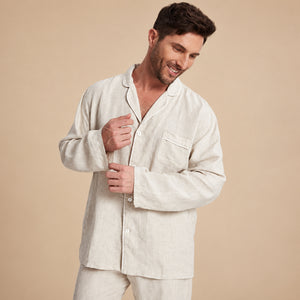
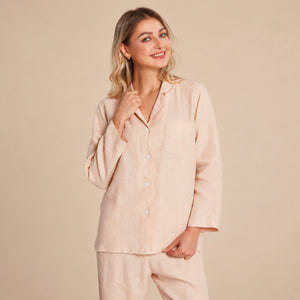
Hemp and linen are the two natural fibres we build our sleepwear around. Both are breathable, and our fabrics are designed to be moisture-wicking so sweat does not sit on your skin. If you want the fabric science in more depth, our guide to fabric and sleep temperature covers what actually keeps you cool, and the one on winter breathable pajamas covers fabrics that keep you warm, not sweaty.
Two details are worth checking on any base layer:
- Seams. Seamless, anti-chafe construction matters when you spend eight hours moving against sheets. We build that into our underwear and sleepwear.
- Fit. Loose enough to trap a thin layer of air, close enough that it does not twist around you.
Layer 2: one light, removable insulating piece
The middle layer is what you add on the coldest nights and take off when you warm up. Think a long-sleeve top over a short-sleeve one, a light robe or cardigan you can shrug off, or a second pair of lightweight bottoms. Keep it loose. The point is air, not compression.

The common mistake is making this layer a thick synthetic fleece. Heavy synthetic pajamas trap sweat, and a sweaty sleeper wakes up chilled at 3 a.m. A thin natural layer over a thin natural base gives you two insulating pockets of air with moisture still able to escape.
A practical test: if you wake up and need to remove this layer, you can do it half asleep, in one motion. If it is tangled or tight, it is the wrong layer.
Layer 3: bedding you can adjust
Your bedding is the outer shell. Several light blankets work better than one heavy comforter because you can fold one back without losing the rest. The point of layered bedding is the same as layered sleepwear: you adjust in small steps, not all at once.
If you share a bed with someone who has different warmth needs, separate covers on each side solve what no thermostat setting can. One of you can sleep under a duvet while the other stays under a light blanket, with the same room temperature.
Match your layers to your room temperature
For most adults, a bedroom between 60 and 67°F is the range experts recommend. The Inquirer piece cites the National Sleep Foundation’s expert-recommended range of 60 to 67°F at night, with normal personal variation, including women tending to prefer slightly warmer conditions than men. That is a range, not a rule. Treat it as a starting point and let the layers handle the rest.
Here is a simple way to translate that into what you wear. These are our own suggested starting points, not clinical guidance, so adjust them to how you feel.
| Bedroom temperature | Base layer | Middle layer | Bedding |
|---|---|---|---|
| 65 to 67°F | Lightweight top and bottoms | Optional, keep it nearby | One light blanket plus a duvet |
| 62 to 64°F | Lightweight top and bottoms | Light long-sleeve piece | Two light blankets plus a duvet |
| 60 to 61°F | Long-sleeve top and long bottoms | Light robe or second top | Three light blankets, adjustable |
An important point: the range is about the room, but what you feel is the air next to your skin. Adjusting the room and the bed separately gives you more control. If you only feel cold when the covers slip off, a comfortable sleepwear layer that stays in place helps more than raising the heat for the whole house. If you run hot under the duvet, take away an insulating layer, not the whole set.
Our guide on starting at 65°F to regulate sleep temperature with breathable fabrics goes further into how that works night to night.
Don’t forget your feet
Cold feet are the most common reason people layer up and still cannot sleep. According to CNN’s reporting, Cleveland Clinic sleep specialist Dr. Shalini Drerup explains that warming the feet widens blood vessels in the extremities, which helps the core body cool by one to two degrees as it prepares for sleep. The same article cites a 2018 study in which men sleeping in socks fell asleep nearly eight minutes faster and slept 32 minutes longer.
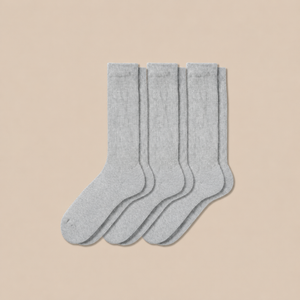
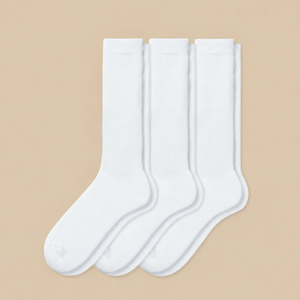
That is why socks belong in the layering plan. Choose a loose, breathable pair so your feet get warm without sweating. Tight elastic can restrict circulation, which defeats the purpose. Our socks are made from breathable natural materials and are meant to sit comfortably through the night.
If your feet still run cold, put the socks on at bedtime and keep a second pair at the side of the bed. Taking them off mid-night is easier than lying awake wondering whether you need them.
For people who sweat at night: warm without the damp
If you wake up damp, winter can feel like a trap. You need warmth to fall asleep and breathability to stay comfortable. The fix is to move warmth out of your sleepwear and into things you can remove.
- Start with the lightest breathable base. Linen and hemp are the fibres we recommend most for hot sleepers; our guides on fabrics for night sweats and linen and hemp versus temperature-regulating pajamas lay out why.
- Add warmth through bedding, not clothing. A blanket is easier to push off than a sweatshirt is to peel away at 2 a.m.
- Avoid trapping layers. Heavy synthetic fleece against the skin holds sweat.
- Keep the room at the lower end of the 60 to 67°F range if you overheat, and use extra covers to bridge the gap.
- Change out of damp sleepwear. Keep a spare set next to the bed so a night sweat does not turn into a cold, wet hour.
Sleepwear fibre does matter here. The 2024 review in Sleep Medicine Reviews-linked literature on PubMed Central compares fibre types and sleep, and it shows that the fibre next to your skin can change how quickly you fall asleep and how deeply you sleep, depending on the temperature. That is a reason to treat fabric as a real part of your sleep setup and not an afterthought. For more on this, see how modal compares with cotton pajamas for hot sleepers.
If night sweats are new, frequent or soaking, or come with fever or weight loss, see your doctor. Layering helps comfort, but it does not tell you why you are sweating.
How to choose the fabric and construction
When you shop for winter sleepwear, check four things before you look at color.
- Fibre. Natural, breathable fibres such as hemp, linen and modal let moisture escape. Our guide to eco-friendly sleepwear fabrics explains how to pick one that sleeps cool.
- Knit or weave. Looser, softer constructions breathe better. A thick, tight weave holds heat in and can feel stuffy.
- Seams and waistbands. Flat or seamless construction avoids pressure points. Soft waistbands do not dig in when you roll over.
- Care. Natural fabrics generally soften with washing. Check the care label, and wash according to it so the fabric keeps its feel and shape.
The question we hear most is whether you need “thermal” pajamas in winter. It depends on how you sleep. Our comparison of thermal versus breathable pajamas helps you decide, but for most people who share a room with a heater and a duvet, breathable layers you can adjust are the more comfortable answer.
A sample winter night, layer by layer
Here is how this looks in practice for three common sleepers.
The cold sleeper. Lightweight long-sleeve top and long bottoms in a breathable fabric as the base, a light robe or second top as the middle layer, socks, and three light blankets. Start with everything on, and shed as you warm up.
The hot sleeper. A lightweight short-sleeve or long-sleeve top and shorts or light bottoms in linen or hemp. No middle layer on the bed, but one folded within reach. One blanket plus a duvet that you can kick off, and the room near 60 to 62°F.
The couple with different needs. Matching base layers for comfort, then separate covers for each person. One of you wears the middle layer and the other keeps it at the foot of the bed. The thermostat stays where it is.
Perspective
We make sleepwear for people who run hot, and winter is when we hear the most questions. The usual advice is to bundle up. We think that is backward. The layer that matters most is the one against your skin, because that is the layer that decides whether sweat leaves or stays.
That is why we use hemp and linen, and why our fabrics are designed to be moisture-wicking. A breathable base lets you add warmth on top without paying for it in damp, clammy sleep. Seamless, anti-chafe construction does the rest, because you notice every seam when you are trying to fall asleep.
We also believe the things you wear to bed should be something you feel good about. Every purchase supports nonprofit initiatives focused on climate action and social responsibility, so the fabric that keeps you comfortable also does some good outside your bedroom.
If you take one thing from this guide, make it this: build warmth in thin pieces you can take off, and start with a base layer that breathes.
Jason
Build your winter sleep set with us
If you are ready to build the base of your layering system, start with our women’s sleepwear or men’s sleepwear. Our hemp and linen pieces, along with underwear and socks, are made from breathable natural materials, with moisture-wicking fabrics and seamless, anti-chafe construction.

Buying for someone else? Our linen sleepwear set for two and hemp sleepwear set for two are curated gift sets, and we offer text monogram personalization to make a set feel like theirs. For people who like to keep their drawer stocked, we also offer subscription purchase options. If you sleep hot even in winter, our hot climate sleepwear guide shows how the same fabrics work in warmer rooms.
FAQ
What should I wear to bed in winter?
Wear a breathable base layer, such as a lightweight top and bottoms in a natural fibre, and add a removable layer on top if the room is cold. Pair it with soft socks and adjustable bedding. This lets you add or remove warmth without waking fully.
How many layers should I sleep in?
Three is a good starting point: a base layer against the skin, a light middle layer, and your bedding. WebMD’s guidance for people who feel cold says a few lighter layers warm better than one heavy layer. If you tend to overheat, make the middle layer something you can leave at the foot of the bed.
What temperature should my bedroom be in winter?
Most experts recommend roughly 60 to 67°F for sleep, according to the range the National Sleep Foundation recommends as cited in the Philadelphia Inquirer. Hot sleepers usually do better toward the lower end, and cold sleepers toward the upper end. Adjust with layers before you adjust the thermostat.
Is it okay to sleep in socks?
Yes, for most people. Warming your feet helps your core temperature fall as you prepare for sleep, and CNN’s reporting cites a study in which men sleeping in socks fell asleep faster and slept longer. Choose loose, breathable socks so your feet stay warm without sweating. If you have circulation problems or diabetes, ask your doctor which socks are right for you.
What is the healthiest thing to wear to bed?
Loose, breathable sleepwear in natural fibres is a sensible choice, because it lets heat and moisture move away from the skin. The best choice is the one that keeps you comfortable all night without making you sweat or shiver.
Sources
- Philadelphia Inquirer: Trouble sleeping? Your feet could be the key
- WebMD: Ways to Warm Up if You’re Always Cold
- Journal of Sleep Research: How do sleepwear and bedding fibre types affect sleep
- PubMed Central: How do sleepwear and bedding fibre types affect sleep
- CNN: Socks could really improve your sleep, experts say


Leave a comment