

Ethical Sleepwear vs. Fast Fashion: What Really Differs
Ethical sleepwear is made to be worn for years from fibers that handle heat and moisture well, by a supply chain a brand can explain. Fast-fashion pajamas are built around speed and a low price tag, which tends to mean thinner fabric, short life and pressure on the people who sew them. The gap shows up in three places: who pays the hidden cost, how the fabric feels at 3 a.m., and what a pair costs per night worn. Breevar makes sleepwear, underwear and socks from hemp, linen and modal, so we look at this from the fabric up.
TL;DR
- Fast fashion runs on small, frequent, cheap production runs, which the OECD links to excessive overtime, subcontracting and garments discarded after a few uses.
- Ethical sleepwear is a business-model choice: fewer, longer-lived garments, natural fibers and claims you can verify.
- For hot sleepers, fiber matters: a 2024 review found linen bedding reduced wakefulness and time to fall asleep versus cotton in warm conditions.
- Judge price by cost per wear, not the tag.
- Verify labels: name the standard, the certifier and the exact product it covers.
Table of Contents
- What fast fashion actually is
- The human cost behind a cheap pair of pajamas
- Quality and durability: why cheap pajamas cost more
- Fabric and night sweats: the comfort case
- How ethical and fast-fashion sleepwear compare
- How to check an ethical claim
- Buying less, caring better
- Our perspective
- Where to start
- FAQ
- Sources
What fast fashion actually is
Fast fashion is a production model, not a price bracket. The OECD describes the ultra-fast version as small batches, typically 30 to 10,000 units, with collections of up to 10,000 units launched daily. To hit those speeds and prices, suppliers can be pushed into excessive overtime, informal or subcontracted labor and unsafe conditions. Low-price strategies can also encourage lower-quality garments that get thrown away after only a few wears (OECD, October 2025).
The scale is large. A 2020 review in Nature Reviews Earth & Environment reports that the fashion industry produces over 92 million tonnes of waste a year and uses 79 trillion liters of water, with brands making almost twice the clothing they made before 2000. Its authors call for fewer purchases and longer garment lifetimes. Scientific American’s 2025 guide adds that as production doubled, the number of times each item is worn fell by about 40%.

The human cost behind a cheap pair of pajamas
The International Labour Organization reported in March 2025 that forced labor is more likely in the lower tiers of the textile and garment supply chain, where workers in low-wage countries can be trapped in debt bondage. Those lower tiers, such as fiber processing and subcontracted sewing, are exactly what a low-cost brand rarely discloses.
A 2018 study frames this as environmental injustice: shoppers in high-income countries get cheap clothing while workers and communities near textile factories carry a disproportionate share of health hazards. The same paper notes that garment assembly employs about 40 million people worldwide and that roughly 500,000 tons of used US clothing are exported each year, mostly to low- and middle-income countries.
Sleepwear is not exempt. It is a basic, high-volume category, made in the same factories and sold at the same pressure points as any other cheap garment.
Quality and durability: why cheap pajamas cost more
A 2022 assessment of US textiles notes that fast-fashion products tend to be lower in quality and often not durable enough for resale, repair or repurposing. Nightwear gets washed constantly and worn against skin for eight hours, so thin knits pill, stretch and lose shape quickly.
Here is a simple cost-per-wear example. Say a $15 set lasts 30 nights before it is too pilled or misshapen to wear: that is $0.50 a night. A $90 set worn 300 nights is $0.30 a night. The numbers are illustrative, so plug in your own price and how long your pajamas really last. What changes the result is lifespan, and that is where natural fibers like linen and hemp earn their place. Linen and hemp are bast fibers that tend to soften with washing rather than break down. For underwear and other basics, what makes eco-friendly underwear last follows the same logic.

Fabric and night sweats: the comfort case
If you overheat in bed, the fiber is the main lever. A review of sleepwear and bedding fibers found that linen bedding reduced wakefulness and sleep-onset time versus cotton under warm conditions (29°C). Its authors also note that the evidence across fibers is limited and mixed, so match the material to how you sleep: warm sleepers and cool sleepers need different things.
A separate 2019 fabric study found a lyocell and linen blend had the highest heat and vapor passage among ten tested bedding fabrics, and that linen blends increased air permeability compared with 100% cotton.
That is the reasoning behind our focus on hemp, linen and modal, with moisture-wicking fabrics and seamless, anti-chafe construction. If you want the detail, see how to pick sleepwear fabrics that sleep cool, fabrics for night sweats and how fabric affects sleep temperature.
How ethical and fast-fashion sleepwear compare
| Factor | Fast-fashion sleepwear | Ethical, natural-fiber sleepwear |
|---|---|---|
| Business model | High volume, frequent drops, rock-bottom price | Fewer styles, made to be worn for years |
| Supply chain | Often opaque, subcontracting common | Named fibers, standards and origin you can check |
| Fabric | Frequently thin synthetic or basic cotton blends | Hemp, linen, modal and similar breathable fibers |
| Heat and moisture | Synthetics can feel clammy | Fibers chosen to breathe and wick moisture |
| Lifespan | Often a few uses before quality falls | Built to hold up through repeated washing |
| Cost per night | Low price, short life | Higher price, long life |
How to check an ethical claim
Greenwashing is common, so a few habits help. They also apply to any brand you consider, including us.
- Read the whole claim. Per Cotton Good’s 2026 guide, “organic cotton,” “made with organic materials” and “GOTS Organic” are not the same thing. GOTS grades separate at least 95% organic fiber from “made with” at 70%.
- Look for a named standard, a certifier and a license number. For OEKO-TEX, you can enter the label number in the official Label Check and confirm it covers your product.
- Distrust vague words. Scientific American notes that terms like “natural” and “green” have no specific meaning.
- Know what a label tests. According to natuclothes.com’s guide, OEKO-TEX Standard 100 tests the finished article against limit values but says nothing about mill emissions or worker exposure, while GOTS covers the fiber chain plus social criteria. The same page notes the FTC’s Green Guides treat unsupported “non-toxic” claims as deceptive.
- Check the fiber label. US labels must show fiber content, country of origin and the responsible manufacturer.
For chemical residues, the US Government Accountability Office tested 180 clothing items and found formaldehyde generally below the strictest of 13 countries’ limits, though allergic contact dermatitis remains a concern, and washing before wearing often reduces but does not always remove it. Wash new sleepwear before the first night. A broader primer on judging environmental and health claims on products can sharpen the same instincts.
If you buy for children, US sleepwear is covered by flammability rules: the CPSC’s standards at 16 CFR 1615 (sizes 0 to 6X) and 1616 (sizes 7 to 14), per Birch’s summary. Check the label for the child’s size.
Buying less, caring better
The most ethical pajamas are the ones you keep. Scientific American’s guide recommends washing less often, at lower temperatures or air-drying, avoiding dry cleaning, repairing damage and using a microfiber filter to reduce shedding in laundry. The same guide notes that sustainability choices involve trade-offs, so aim for the best available version of a fiber rather than a perfect one.
If wrinkles put you off linen, read what works in wrinkle-resistant natural pajamas.
Our perspective
We started from a simple observation: the pajamas people reach for are the ones that keep them comfortable all night, and the ones that get thrown out are the ones that did not. Comfort and ethics are the same goal when the garment is made to last.
That is why we work with hemp, linen and modal, fabrics chosen for breathability and moisture-wicking, with seamless, anti-chafe construction. A set you actually want to wear every night does more for the planet than a drawer of cheap ones.
Every purchase also supports nonprofit initiatives focused on climate action and social responsibility, so the money you spend on better sleep goes further than the garment itself. And because we offer personalized monograms and curated gift sets, a gift can be something the person keeps for years.
Jason
Where to start
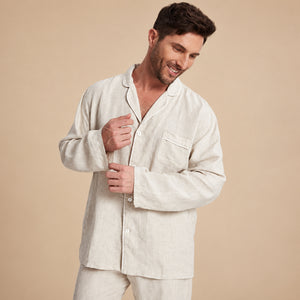
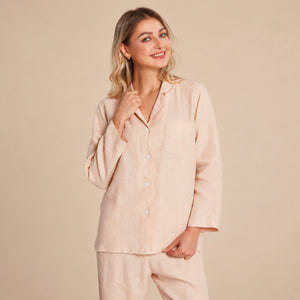
If you sleep hot, begin with hemp sleepwear or linen sleepwear. Shopping by fit? Browse men’s sleepwear or women’s sleepwear. We also make underwear and socks from natural fibers, and you can add a text monogram to make a set personal. Subscription options are available for replenishment.

For a gift, our curated sets pair well with a monogram, so the present feels chosen rather than bought in a rush.
FAQ
Is ethical sleepwear really worth the higher price?
Usually, if you measure by cost per night. A garment that lasts several times longer can cost less per wear than a cheap set replaced every few months. You also get fabric chosen for how it handles heat and moisture.
Is Uniqlo fast fashion?
Fast fashion is defined by rapid, high-volume production cycles and low prices, so a brand’s label depends on how it makes and turns over its collections. Rather than relying on a brand’s reputation, apply the checks above: named standards, disclosed supply chain and fiber content.
Which fabric is best for night sweats?
Linen has the strongest support in the research above for warm sleepers, and hemp is a close relative in the same breathable family. Modal also wicks moisture well. Our guides on fabrics for night sweats go deeper.
How do I know a sustainability claim is real?
Look for a specific standard, the certifier and a license number that matches the exact product. Words like “green” or “natural” with no explanation tell you nothing.
Sources
- OECD: The ultra-fast fashion business model and responsible business conduct
- Niinimäki et al.: The environmental price of fast fashion
- Scientific American: A Beginner’s Guide to Ethical and Sustainable Fashion
- ILO: Decent work in textiles and clothing supply chains
- The global environmental injustice of fast fashion
- Textiles in a circular economy: An assessment
- How do sleepwear and bedding fibre types affect sleep
- Linen and linen blends in bedding fabrics
- Cotton Certifications: What Labels Really Prove
- Non-Toxic Clothing: What the Term Means
- GAO-10-875: Formaldehyde in Textiles
- Children’s sleepwear standards and OEKO-TEX classes


Leave a comment