

Cooling Sheets vs. Pajamas: Which Helps Hot Sleepers More?
If you have to pick one, start with what touches your skin all night. Pajamas sit directly against your body and manage the heat and moisture right there. Sheets shape the bed climate around you. Neither works alone for most hot sleepers, and the cheapest first move is often neither: it is a cooler room and a lighter layer. Below, we break down what each one does, what the evidence supports, and how to spend your money in the right order.
TL;DR
- Pajamas manage the fabric against your skin. Sheets manage the air and moisture in the bed. They solve different halves of the same problem.
- Fiber and weave matter more than the word “cooling” on the label. Thread count is mostly a distraction.
- Studies show bedding strategies lower core body temperature, but evidence that they improve total sleep time is mixed. Set your expectations accordingly.
- The best results come from stacking: a bedroom around 60 to 68°F, loose natural-fiber sleepwear, and breathable sheets.
- If soaking sweats continue after you change your setup, talk to a doctor.
Table of Contents
- What each one actually does
- The word “cooling” deserves some skepticism
- Fiber and weave: where the real difference is
- Head to head
- What the research says (and does not)
- Stack the fixes in the right order
- How to choose sleepwear that actually helps
- Our perspective
- Try the pajama route first
- Which one should you buy? Quick scenarios
- Mistakes that waste money
- FAQ
- Sources
What each one actually does
It helps to separate two jobs: moving heat away and moving moisture away.
Cooling sheets are bed sheets made from materials and weaves that are breathable and moisture-wicking, so air can move around your skin and your body’s own cooling can work, as Sleep Foundation describes them. They affect the whole sleeping surface: the contact area under you, and the layer over you if you use a flat sheet.
Cooling pajamas work at a smaller scale. They are the first layer next to your skin, so they decide whether sweat gets pulled away or sits against you. A damp, clingy shirt feels colder at first and clammy later. A loose, breathable one lets moisture evaporate.
That is why the question is less “which is better” and more “which gap do you have?” If your sheets are fine but you wake up with a damp shirt stuck to your back, the problem is probably what you wear. If you wake up hot and the whole bed feels like a heat pack, look at the sheets and the room.

The word “cooling” deserves some skepticism
Much of what is sold as cooling is a first-touch effect. Consumer Reports’ testing covered more than 250 mattresses and toppers plus scores of sheets and pillows, and its technicians found that gels and fancy fabrics do not necessarily give a cooler night. A fabric can feel chilly for the first minute and then trap heat like anything else.
What holds up over a whole night is airflow and moisture handling. Two practical rules follow:
- Ignore thread count as a cooling signal. Sleep Foundation’s sheet guidance points to breathability, moisture-wicking and weave structure, such as percale versus sateen, as better indicators than a high thread count.
- Be wary of heavy synthetics and treated fabrics. If a label promises cooling through a coating or finish, ask what the fiber underneath does once the finish washes out.
Fiber and weave: where the real difference is
A fabric’s feel when you first touch it and its behavior at 3 a.m. are two different things. Some findings worth knowing:
- Hemp has a hollow fiber structure with tiny air chambers. A study of hemp knitted fabrics describes this as an insulating, thermoregulating structure that beats standard cotton, and notes hemp can absorb up to 30% of its weight in moisture while wicking it away.
- Weave matters as much as fiber. In a study of hemp-linen fabrics, the plain weave stood out for thermal conductivity, which drives that cool-to-the-touch sensation.
- Linen has a loyal following among hot sleepers because of its loose, airy structure. We compare it in more depth in our hemp vs linen guide.
The same fiber logic applies to sheets and sleepwear. A linen or percale sheet and a hemp or linen pajama are both using open structure and good moisture handling. The difference is placement.
Head to head
| Cooling sheets | Cooling pajamas | |
|---|---|---|
| What they manage | Bed climate: heat and moisture around and under you | Microclimate directly on your skin |
| Best for | People who wake hot even in light clothing | People who wake damp, clingy or chafed |
| Biggest risk | Paying for a “cooling” label on an ordinary fabric | Heavy synthetics that trap heat and moisture |
| Laundry | Larger loads, bigger commitment per set | Easy to rotate several pairs |
| Travel and flexibility | Stays on one bed | Goes with you to hotels and guest rooms |
| Cost to trial | Higher per piece | Lower per piece |
The last two rows are why pajamas are a lower-risk experiment. You can test a fabric on one pair before buying sheets for a whole bed.
What the research says (and does not)
Here is the honest picture. A systematic review and meta-analysis of randomized trials found that bedding-based cooling strategies consistently lowered core body temperature, but had no statistically significant effect on sleep stages or total sleep time. A systematic review of sleepwear and bedding fibers similarly frames materials as influencing sleep through skin and body temperature and thermal comfort.
In plain terms: these products do cool you. Whether that turns into measurably longer sleep varies from person to person. If you feel better, that is a real result, but we would not promise anyone a specific outcome.
Stack the fixes in the right order
Sleep Foundation recommends a combined approach to night sweating: a bedroom ideally in the 60 to 68°F range, breathable loose-fitting sleepwear and cooling bedding, rather than relying on a single product. A rough order that respects your budget:
- Room first. Lower the thermostat or add airflow. Our guide on staying cool at night without AC covers tactics you can use tonight, and starting at 65°F is a sensible baseline.
- Layers next. Drop the heavy comforter before you buy anything. Research on sweating notes that heavy clothing or too much bedding, especially in winter or with central heating, can trigger thermoregulatory sweating that gets mistaken for pathological night sweats.
- Sleepwear third. Swap to a loose, natural-fiber set. This is the lowest-cost fabric change with the most direct skin contact.
- Sheets last. Once the first three are handled, upgrade to breathable sheets if you still run hot.
If you have already tried this and still wake up with soaked clothes, the reasoning flips. Mayo Clinic describes night sweats as repeated episodes of very heavy sweating during sleep, heavy enough to soak nightclothes or bedding, and notes they are often caused by an underlying condition. See a doctor if it keeps happening, especially with fever or unexplained weight loss. No fabric treats that.
How to choose sleepwear that actually helps
Fabric choice is where most disappointment happens, so here are criteria that hold up:
- Natural, breathable fibers. Hemp, linen and cotton are the usual picks for managing body temperature. Our comparison of hemp and cotton walks through the tradeoffs.
- Loose fit. Fabric that clings traps moisture and warmth, whatever the fiber.
- Smooth seams. Seams that rub add irritation when you are already damp. Seamless, anti-chafe construction helps.
- Blend with intent. Hemp-linen blends can improve moisture management and drying speed compared with pure linen, per the hemp fabric research. We explain ratios in our hemp-linen blend guide.
- Watch the synthetics. Polyester-heavy “performance” pajamas can wick, yet some trap heat. Read the fiber content, not the claim.
For a broader view on materials, a French-language guide to breathable summer fabrics covers similar fiber logic if you read French.
Our perspective
We make sleepwear, so we have a stake here, and we will say where it ends. We do not think pajamas replace good sheets or a cooler room. What we have seen is that people who run hot usually blame their sheets first, spend the most on them, and are then surprised that they still wake up damp. The fabric against the skin is the piece nobody questions.
That is why we build around hemp and linen. These fibers breathe, they move moisture, and they get softer with washing instead of wearing out. We pair that with seamless, anti-chafe construction because chafing makes a warm night worse. And since you can try one set for less than you would spend on new bedding, we think it is the sensible first purchase.
Our advice is simple: fix the room, lighten the layers, change what you wear, then decide whether you need new sheets. If you do, the same fiber rules apply. You can read more in our fabrics for night sweats guide.
— Jason
Try the pajama route first
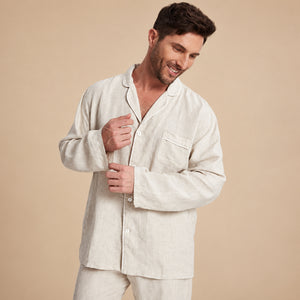
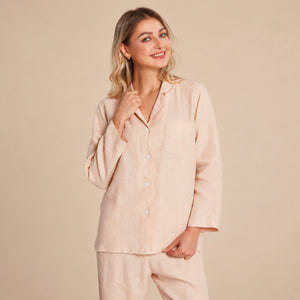
If you want to test the lower-cost half of this equation, our hemp sleepwear and linen sleepwear collections are made from the fibers discussed above. You can shop by fit for women or men, or start with a single piece like the men’s short-sleeve linen set or women’s linen sleepwear. Every purchase supports nonprofit initiatives focused on climate action and social responsibility. For gifts, the Cool & Fresh Essentials gift box pairs underwear and socks, and a text monogram can personalize your order.

Which one should you buy? Quick scenarios
You wake up with a damp shirt stuck to you. Start with pajamas. Choose a loose hemp or linen set and rotate two or three pairs.
You wake up hot, kicking off the covers, in light clothing. Look at the room and your top layer first. If those are sorted, breathable sheets are the next step.
You share a bed with someone who runs cold. Sleepwear is your individual control. You can dress lighter without changing the bed for two people.
You are in winter with central heating. Heavy clothes and thick bedding can cause the sweating. Our piece on breathable pajamas for winter covers how to stay warm without overheating.

You are on a tight budget. Skip the label and buy by fiber. A single good pair of pajamas and a lighter blanket cost less than a sheet set, and you can see whether the fabric works for you before spending more.
Mistakes that waste money
- Buying on thread count. It does not predict cooling.
- Trusting a “cooling” claim without checking the fiber and weave.
- Treating it as one purchase. Sleep experts suggest a combined approach.
- Wearing tight, clingy fabric under breathable sheets. The pajama becomes the bottleneck.
- Ignoring symptoms. Persistent drenching sweats deserve a medical conversation, not a new set of sheets.
FAQ
Do cooling pajamas really work?
The ones made from breathable, moisture-wicking fibers do help you feel more comfortable, mainly by letting sweat evaporate instead of sitting on your skin. Those that only promise a cold first touch often fade. Look at fiber, fit and weave, not the claim on the tag.
Do cooling sheets actually work?
Breathable sheets can reduce heat build-up in the bed, and bedding strategies have been shown to lower core body temperature in trials. Consumer Reports testing suggests that fancy treatments do not always beat standard breathable materials. Weave and fiber matter most.
What is the best thing to wear to bed for night sweats?
Loose, breathable sleepwear in natural fibers such as hemp, linen or cotton is a good start, along with a bedroom in the 60 to 68°F range. If you soak through clothes repeatedly, or have fever or weight loss, see a doctor.
What type of sheet sleeps the coolest?
Linen and percale-weave cotton are the usual answers, because their open structure allows airflow. Sateen weaves and high thread counts tend to feel warmer. Pick by weave and fiber, not by the number on the package.
Sources
- Best Products for Hot Sleepers, Consumer Reports
- Best Cooling Sheets, Sleep Foundation
- Night Sweats: Causes and Tips, Sleep Foundation
- Thermal Comfort Properties of Biodegradable Hemp and Polylactide Fiber Knitted Fabrics, PMC
- Effect of Weave and Weft Type on Hemp-Linen Fabrics, PMC
- Body cooling facilitated by bedding: systematic review and meta-analysis, PubMed
- Sleepwear and bedding fibre types and sleep quality: systematic review, PMC
- Sleep-time sweating and environmental factors, PMC
- Night sweats causes, Mayo Clinic


Leave a comment