

Breathable Camping Sleepwear: What to Wear in a Tent
The best camping sleepwear is a dry, breathable set you wear only at night, matched to the overnight low and kept clean in your pack until bedtime. Sleeping in the clothes you hiked in is the most common mistake: they hold sweat, and damp fabric pulls heat from your body. Fabric that lets moisture escape keeps you comfortable whether the night is warm and sticky or cool and still. For campers who run hot, our hemp and linen sleepwear is built around exactly that idea.
TL;DR
- Change into a dedicated, dry sleep set before bed. Never sleep in what you hiked or cooked in.
- Pick your layers by the expected overnight low, not by how warm the afternoon felt.
- On cold nights, avoid cotton. On warm nights, choose light, loose, breathable fabrics that move moisture away from skin.
- If you overheat or have night sweats, a lighter bag or quilt, airflow and breathable natural fibers do more than extra gear.
- Our hemp and linen sleepwear, underwear and socks are made from breathable natural materials for exactly this kind of night.
Table of Contents
- Why camping sleepwear matters more than it does at home
- Match your sleepwear to the overnight low
- Choosing breathable fabrics for camp sleepwear
- If you overheat or have night sweats in a tent
- Build a simple camp sleep kit
- Why natural fibers fit the eco-minded camper
- Camping sleepwear from Breevar
- Our view: the best camp sleepwear is the set you stop noticing
- Frequently asked questions
- Sources
Why camping sleepwear matters more than it does at home
At home, a bedroom thermostat does the work. In a tent, your clothes and your sleeping bag are the whole system. Sleeping bag temperature ratings and the way they are tested assume the sleeper is wearing long underwear and an insulated hat, according to SectionHiker’s guide to sleeping clothes. So if you climb in wearing street clothes, or nothing suited to the night, you may not get the insulation the bag promises.
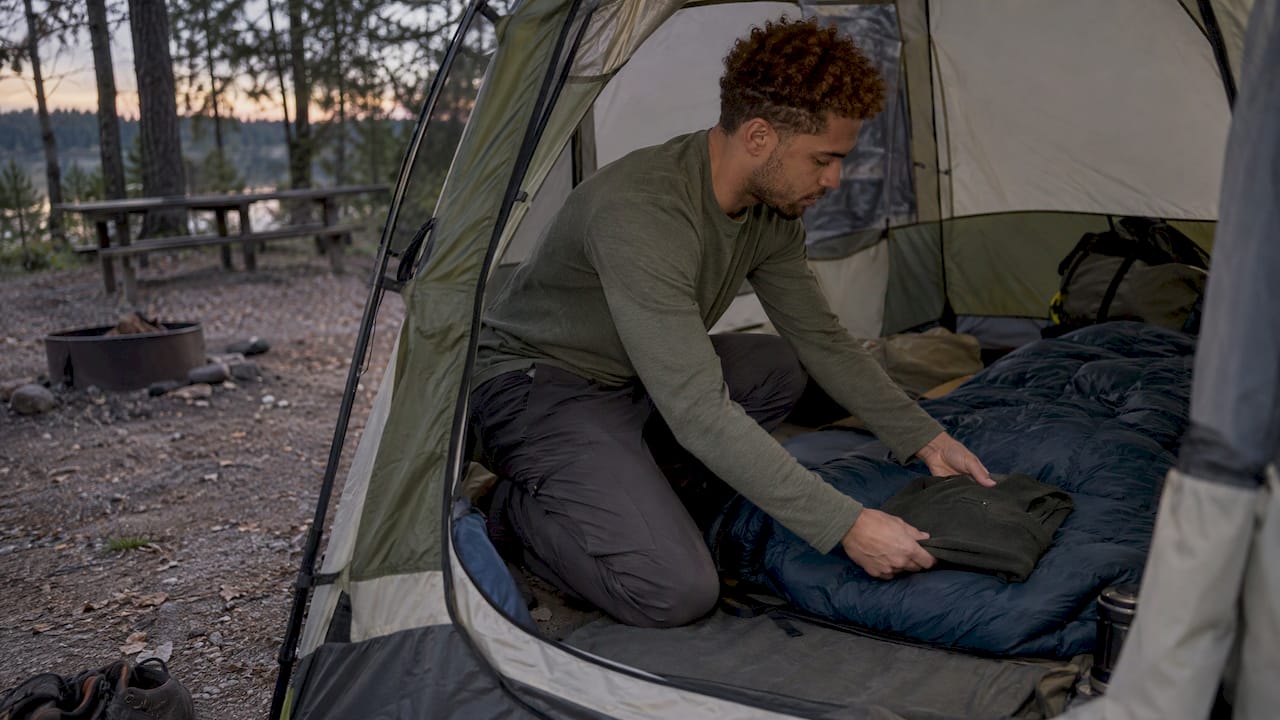
Moisture is the other half. AAA’s travel publication advises changing out of anything wet from rain or sweat right away, especially the base layer, and never sleeping in anything damp, because moisture makes it hard to stay warm. The same logic works in reverse on a hot night: clothing that traps sweat against the skin leaves you clammy and restless.
That is why one set of clothes is reserved for sleeping. It does not need to be fancy. It needs to be dry, comfortable against the skin, and suited to the temperature.
Match your sleepwear to the overnight low
Start with the forecast low for the campsite, not the high. Elevation, open meadows, lakeshores and desert basins can all drop much faster after sunset than you expect.
Here is a practical way to think about it, using the principles in the sources below.
| Expected overnight low | Sleepwear approach | What to keep within reach |
|---|---|---|
| Warm (above about 60°F) | A light, loose short-sleeve top and shorts or light pants in a breathable fabric | A light layer to add only if the site cools toward dawn |
| Mild (about 45 to 60°F) | A lightweight long-sleeve top, comfortable underwear and light long bottoms, plus dry socks | A hat and a light jacket |
| Cold (30 to 40°F) | A dry set of long underwear, dry socks and a warm hat | A puffy jacket to drape over the bag |
The warm row follows the advice in EcoFlow’s summer tent guide: check the expected overnight low first, match a summer-weight bag, quilt or sheet to it, wear a dry, loose, breathable shirt rather than the one you sweated in, and keep a light layer beside you for the hours before dawn.
The cold row follows the Trailstead Guide’s advice for 30 to 40°F nights: change into dry long underwear and dry socks right before bed, wear a warm hat because it is the easiest insulation to add or remove, and keep a puffy jacket close by to lay over the bag rather than wearing extra layers.
Don’t overdress
Princeton’s Outdoor Action program explains layering through trapped dead air: each layer adds insulation, and you add or shed layers to match temperature and activity. Too much clothing causes overheating and sweat, so the goal is a heat balance between layers and activity. At night, that means starting a little lighter than you think and keeping extra layers beside you.
The same goes for your bag. Field Mag notes that for summer camping a bag rated no colder than about 30°F is a sensible limit, with 40°F a good benchmark, and that a bag that is too warm causes more perspiration, which can leave you unusually cold if the temperature falls before dawn. Overheating at midnight can become chilling at 4 a.m.
Know what your bag rating means
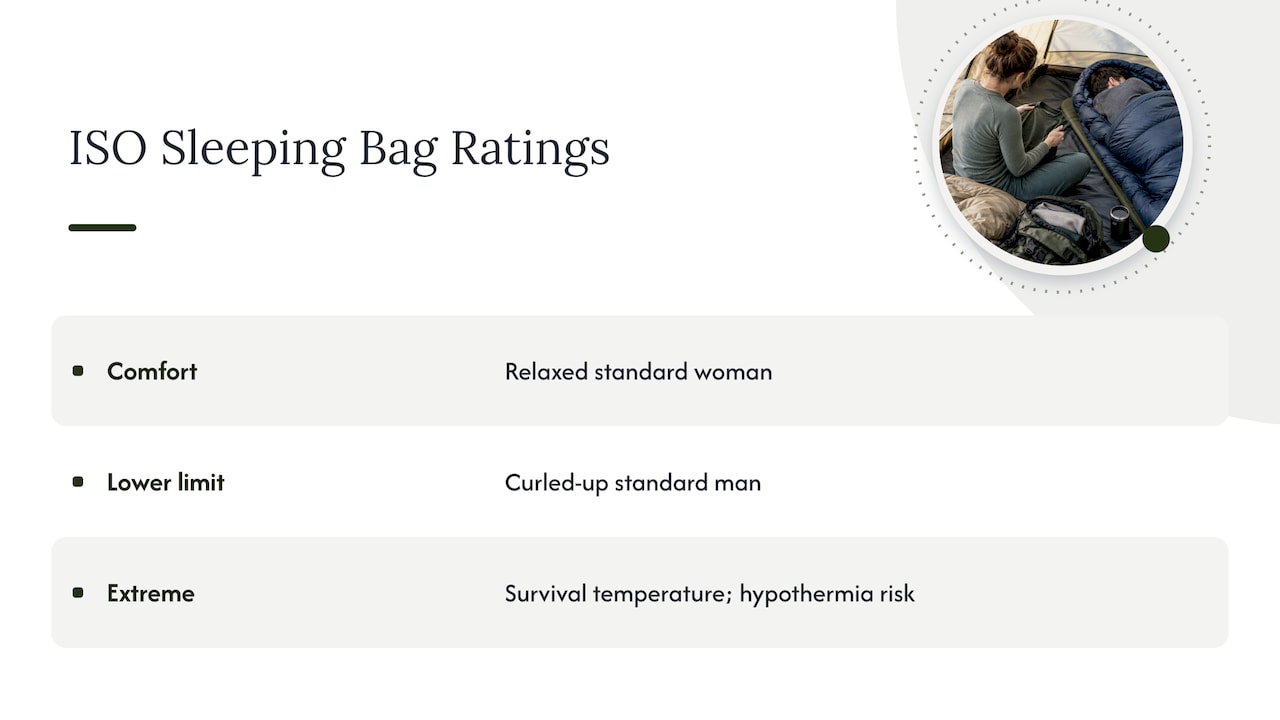
The Appalachian Trail Conservancy explains the standard (ISO) rating system. The comfort rating is the lower limit for a relaxed “standard woman,” the lower limit is for a curled-up “standard man,” and the extreme limit is a survival temperature where hypothermia is a risk. If you tend to sleep cold, use the comfort figure as your guide and put your sleepwear to work for you.
Choosing breathable fabrics for camp sleepwear
Breathable here means two things: air moves through or around the fabric, and moisture leaves the skin instead of sitting on it. Different nights call for different priorities.
Cold nights: avoid cotton
On cool and cold nights, outdoor guides agree on one rule. The Appalachian Trail Conservancy advises quality sleep clothing and avoiding cotton, and the Trailstead Guide gives the reason: cotton holds moisture and stops insulating when damp. If your night is cold, choose a dry thermal base layer and keep it for sleeping only.
Warm nights: light, loose and fast to release moisture
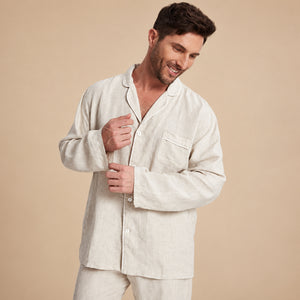
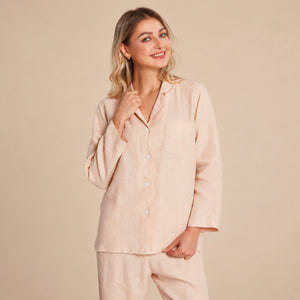
Warm nights are where natural, airy fabrics earn their place. Sleepwear for the heat should be loose, lightweight and moisture-managing. Hemp and linen are the fibers we build around: our sleepwear is designed with moisture-wicking natural fabrics that help regulate body temperature, which is why campers who overheat in synthetic or heavy pajamas often prefer them. If you want a deeper look at the fabrics, our guides on summer sleepwear fabrics and what to wear to sleep in the heat go fiber by fiber.
Fibers beyond hemp and linen come up too. A comparison of Tencel and cotton explains how those two differ for sleep comfort, which is useful if you are weighing modal and lyocell-type fabrics against conventional cotton.
What the sleep research says
A 2024 systematic review in PMC covering nine studies found that wool sleepwear showed benefits for sleep onset in adults in cool conditions and in older adults in warm conditions. Blended sleepwear showed potential benefits for specific groups, and the authors noted that the evidence on fibers and sleep is complex and needs standardized research. The practical takeaway: fabric matters for sleep, and your own comfort across a few nights is the best guide.
Wicking matters on any night
Moisture-wicking means the fabric moves sweat away from your skin so it can evaporate. This is what keeps a base layer comfortable instead of clammy. If you want the mechanics, an explainer on how moisture-wicking clothing works covers the basics of how such fabrics are built and chosen.
If you overheat or have night sweats in a tent
Tents trap warmth and humidity, so campers who run hot feel it first. A few steps help.
- Choose a lighter sleep system. Backpacker suggests ditching the mummy bag for a summer bag, an ultralight quilt or a liner, or even sleeping on top of the bag.
- Let air through. The same Backpacker piece recommends leaving the tent fly off for a cross breeze when the weather allows.
- Cool your feet before bed. Backpacker also notes that feet contain many blood vessels that help regulate body temperature, so cooling them in a stream before bed can help.
- Wear dry, loose, breathable sleepwear. This is the step in your direct control, and it is the one that works with all the others.
- Keep a light layer within reach. It is easier to add a layer at 4 a.m. than to undo a night of overheating.
If night sweats follow you from home to the campsite, our guides to fabrics for night sweats and natural fabrics for night sweats explain what to look for in a set. If night sweats are frequent, heavy or new for you, mention them to your doctor.
Build a simple camp sleep kit
A good camp sleep kit is small, and it is the same across seasons.
- A sleep top and bottom you wear only in the tent.
- Underwear that does not chafe. Hours in a bag on a pad are not forgiving of seams. Our underwear uses seamless, anti-chafe construction.
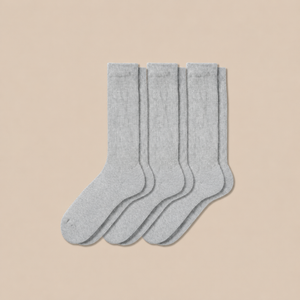
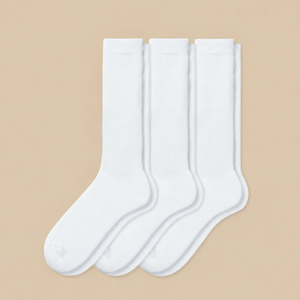
- One pair of dry socks reserved for the night.
- A hat or beanie, because the head is often the only part left outside the insulation. A widely repeated claim says most body heat leaves through the head, but a 2008 BMJ analysis found the real share is no more than about 10 percent. It still pays to cover it when it is the only exposed part.
- A dry bag or packing cube so the set stays dry no matter what the day does to your pack.
Change right before bed, ideally after you have cooled down from camp chores. If you are sweaty, towel off first. Then put the day clothes in a separate bag so damp fabric does not touch your sleep set or sleeping bag.
Why natural fibers fit the eco-minded camper
If you camp because you love the outdoors, it makes sense for your gear to treat it kindly. Sleepwear is a quiet place to make that choice, since you wear it for eight hours a night. Our guide to eco-friendly sleepwear fabrics walks through how to choose.
Plastic-free washing is another upside of choosing natural fibers over synthetic ones for sleepwear, but the main point is simpler: you get a breathable, comfortable set that you will want to wear again, trip after trip.
Camping sleepwear from Breevar
We make sleepwear, underwear and socks for men and women from breathable natural materials: hemp, linen and modal. The fabrics are moisture-wicking and designed to help regulate body temperature, which is the job of a camp sleep set. For a warm-weather trip, start with the men’s short-sleeve linen set, the men’s short-sleeve hemp set or women’s linen sleepwear. Browse more in men’s sleepwear and women’s sleepwear, and pair them with our underwear and socks.
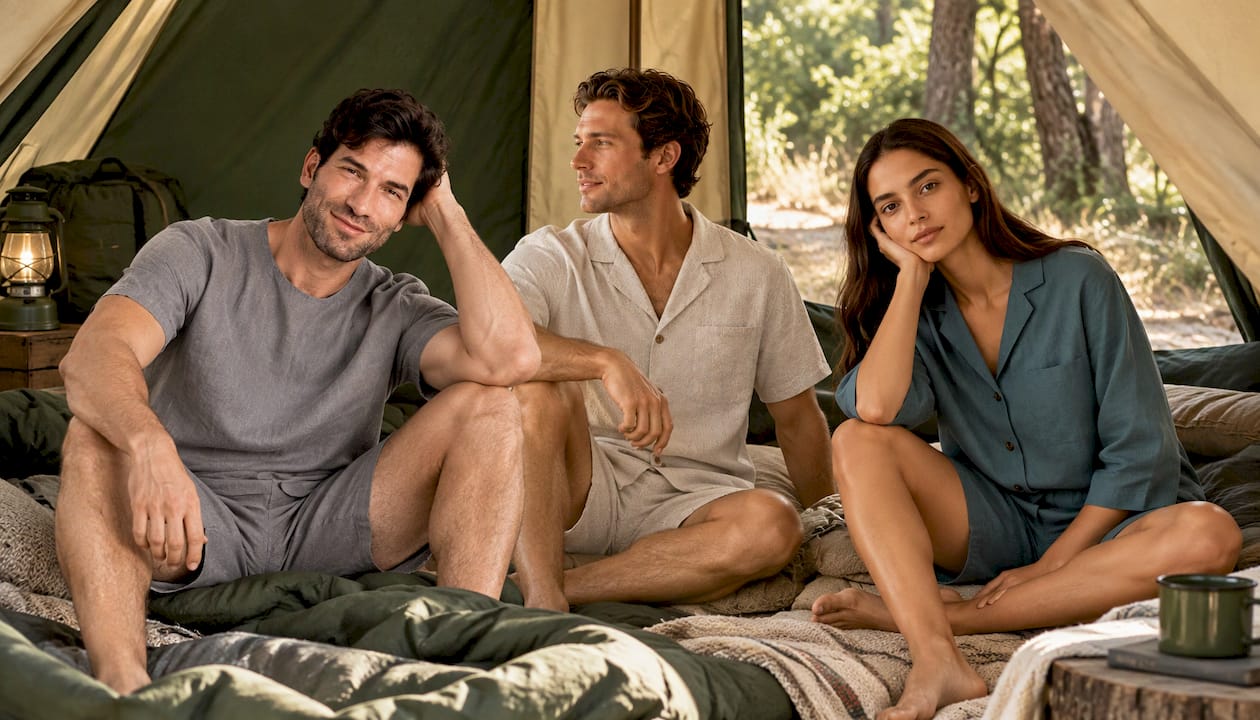
Buying for a camping partner? We offer curated gift sets and text monogram personalization, so a set can carry their initials. Every purchase supports nonprofit initiatives focused on climate action and social responsibility.
Our view: the best camp sleepwear is the set you stop noticing
We started Breevar around a simple idea: people sleep better when their clothes stop interfering with the night. That is true in a bedroom and even more true in a tent, where there is no thermostat and no spare bed to move to.
When we design sleepwear, we start with breathability and moisture. Hemp and linen are natural fibers we chose for their comfort, and our fabrics are designed to wick moisture and help regulate body temperature. For people who overheat while sleeping, that is the difference between waking up comfortable and waking up damp.
Camping adds a layer of discipline. Keep one set dry, change into it at night, match it to the low, and keep a layer within reach. Then pick fabrics and construction that you can forget about: seamless, anti-chafe seams, soft natural fibers and room to move.
We also think what you wear should line up with what you care about. That is why every purchase supports nonprofit climate and social initiatives, and why we make gift sets and monograms for people who want to give something personal.
Jason
Frequently asked questions
What should I wear to sleep when camping?
Wear a clean, dry set you did not hike in, plus dry socks and, on cool nights, a hat. Fit the thickness to the overnight low. Keep the set in a dry bag until bedtime, so the sleeping bag can do the work its rating promises.
Is cotton okay for camping sleepwear?
On cold or damp nights, outdoor guides advise against cotton because it holds moisture and stops insulating when wet. On warm nights, choose light, loose, breathable fibers such as hemp, linen or modal, which are the materials we use.
How do I stay cool sleeping in a tent?
Choose a lighter bag, quilt or liner, open vents or leave off the fly for airflow when conditions allow, cool your feet before bed, and wear loose, breathable sleepwear. Keep a light layer within reach in case the site cools before dawn.
Should I sleep in my base layer or separate sleepwear?
Separate sleepwear is the better habit, because your hiking base layer will be damp from sweat even if it feels dry. A dedicated set stays clean and dry, and it helps your sleeping bag perform as rated.
Sources
- SectionHiker: Should You Carry Sleeping Clothes For Backpacking?
- AAA Via: Camping Clothes to Stay Dry and Comfortable
- EcoFlow: How to Keep a Tent Cool in Summer
- Trailstead Guide: Camping in 30 and 40 Degree Weather
- Princeton Outdoor Action Guide to Winter Camping
- Field Mag: 8 Best Summer Sleeping Bags for Warm Weather Camping
- Appalachian Trail Conservancy: Sweet Dreams, Choosing a Sleeping Bag
- PMC: How do sleepwear and bedding fibre types affect sleep
- Backpacker: 5 Ways to Sleep Better in a Tent When It’s Boiling Hot Out
- How to sleep warm in a tent
- Tencel versus cotton differences
- How moisture-wicking clothing works


Leave a comment